A strong pool builder website should help a homeowner, developer, property manager, or commercial decision-maker answer four questions quickly: does this company build the type of pool I need, does its work match the quality and style I want, can I trust its design-and-construction process, and how do I begin a productive consultation? The best pool builder website design examples combine inspiring projects with practical service information, realistic expectations, and a clear path from early ideas to a qualified conversation.
The ten examples below show how pool construction companies can organize a website around the way customers actually evaluate custom pools, spas, remodels, outdoor environments, and commercial aquatic projects. Each approach is designed to turn visual interest into informed action while giving residential and commercial buyers the proof they need to move forward.
Pool builder website design examples: quick overview
- Results-first positioning: Lead with the type and quality of completed pools the company wants to build.
- Service and finish discovery: Help visitors explore pool types, features, materials, and remodeling options.
- Guided design consultations: Collect property, style, feature, timing, and inspiration details before the first meeting.
- Project case studies: Connect beautiful photography with scope, site conditions, selections, process, and completed results.
- Commercial capability: Present relevant markets, coordination, documentation, construction capacity, and bid intake.
- Process transparency: Explain discovery, design, engineering, selections, construction, startup, and handoff.
- Remodel education: Help pool owners understand common conditions and the range of potential upgrades.
- Local relevance: Connect services with real Dallas–Fort Worth markets, projects, and service limitations.
- Credible trust signals: Make the responsible team, operating standards, reviews, and warranty process visible.
- Bilingual customer experience: Offer complete English and Spanish journeys from research through follow-up.
What a high-performing pool builder website needs
Pool buyers may be planning a backyard centerpiece, replacing an outdated pool, comparing design-build partners, or evaluating a commercial aquatic scope. A high-performing website gives each audience a relevant path without forcing every visitor through one generic gallery or contact form.
| Website element | What it should accomplish |
|---|---|
| Clear service architecture | Separate custom pools, spas, remodels, outdoor-living features, and commercial work using language customers recognize. |
| Authentic project proof | Show completed work with project type, market, design intent, major features, materials, and useful construction context. |
| Guided consultation intake | Collect enough information to prepare for the conversation without asking the visitor to solve technical questions. |
| Residential and commercial paths | Direct homeowners, builders, developers, hospitality teams, property managers, and public buyers to relevant capabilities. |
| Local search relevance | Connect pool services with real service areas, market-specific projects, and accurate location information. |
| Trust and expectations | Explain the team, design-build process, communication, schedule factors, documentation, startup, and warranty process accurately. |
Beautiful pool photography can earn attention, but a focused website design strategy is what connects inspiration, project proof, service clarity, qualification, and follow-up into one conversion-focused system.
1. Lead with the pool projects you want to build
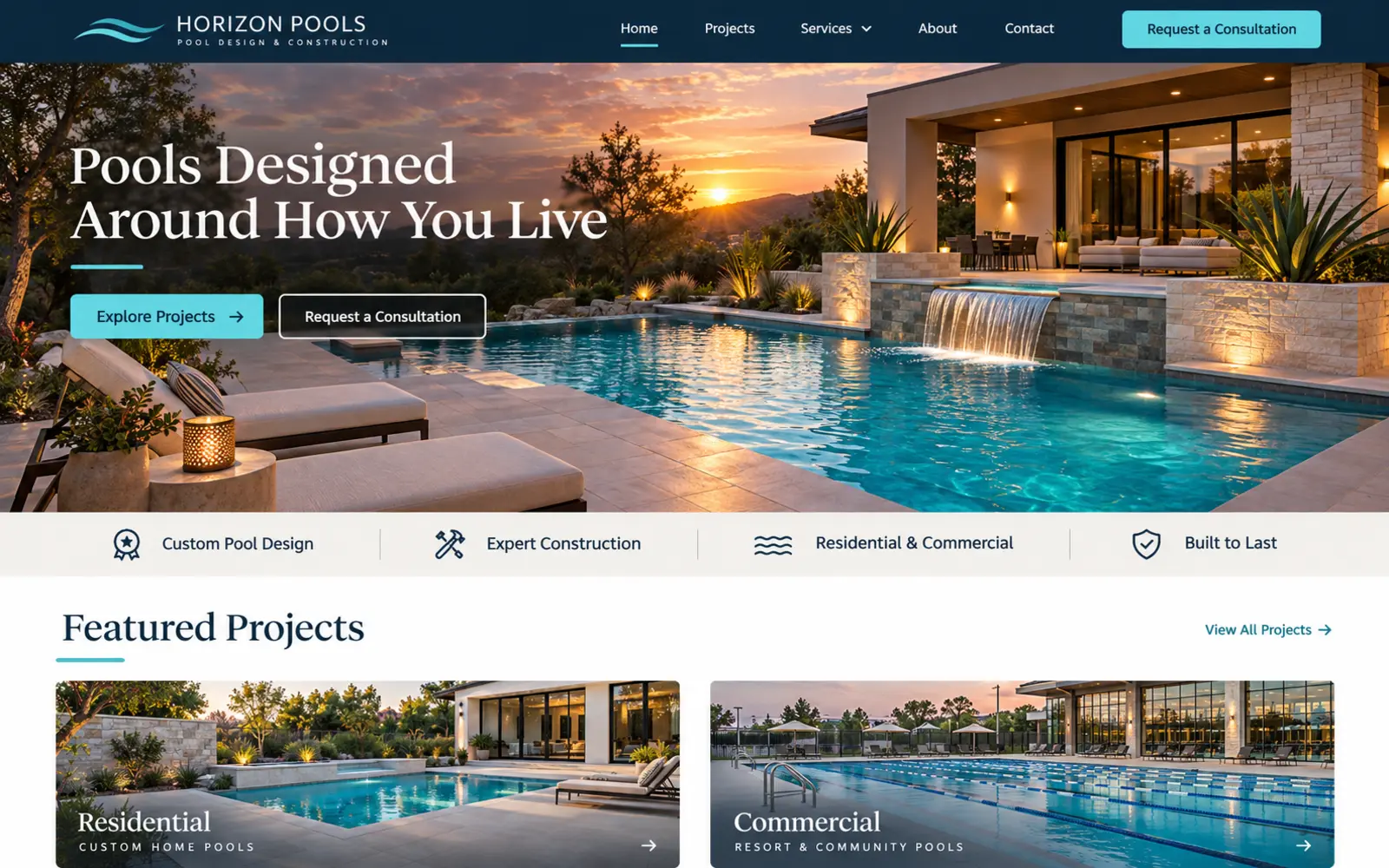
A pool builder's opening screen should establish design quality, project type, service area, and the next step before the visitor begins scrolling. This design uses a wide completed-pool image, a direct promise such as “Pools designed around how you live,” and two clear actions to explore projects or request a consultation.
The featured image should reflect the work the company wants to win. A custom residential builder may lead with a backyard that connects the pool, spa, deck, landscaping, and architecture. A company serving commercial buyers may introduce hospitality, multifamily, municipal, or athletic work through a secondary proof row. Video can add motion and atmosphere, but it should be compressed, muted, accessible, and supported by a strong still image so performance and readability do not suffer.
2. Let visitors explore pool types, features, and finishes
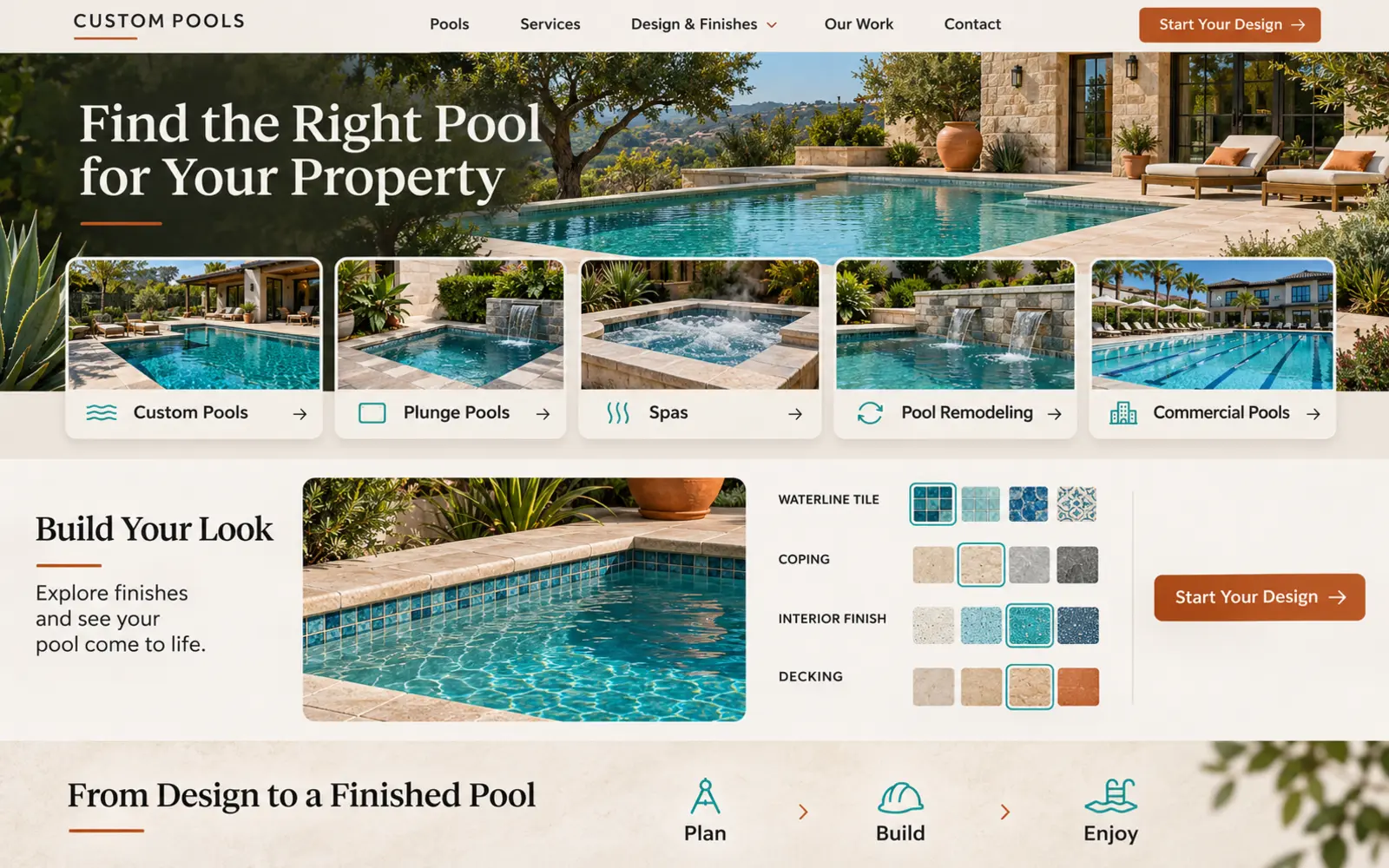
Many pool customers begin with inspiration rather than construction terminology. This design opens with recognizable paths for custom pools, plunge pools, spas, remodeling, outdoor-living features, and commercial pools. A visual finish explorer then introduces waterline tile, coping, interior finishes, and surrounding deck materials without turning the page into a confusing product catalog.
Each service path should explain who it serves, the decisions involved, the builder's role, and the factors that influence scope. Material galleries should use accurate names and clearly distinguish inspiration from final availability. Connect every option to relevant projects and a consultation action. This structure helps customers learn while giving search engines a clearer understanding of the company's services.
3. Turn the consultation form into a visual planning experience
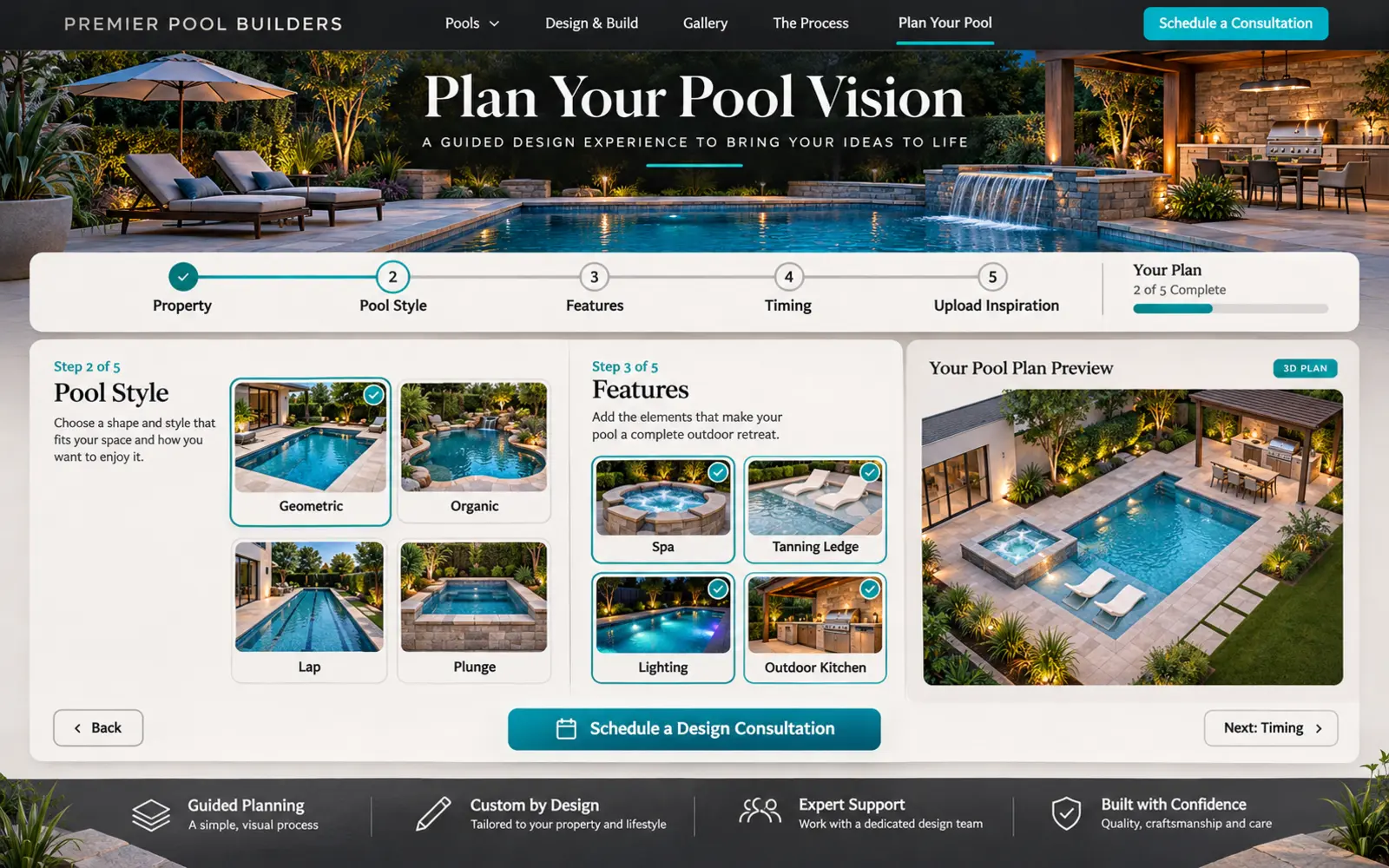
A form that asks only for a name and phone number leaves the designer without useful context. A form that demands engineering details, exact dimensions, and final selections creates friction. This design finds the middle ground with a visual, step-by-step consultation covering property type, general pool style, desired features, approximate timing, project location, and optional inspiration or site photographs.
Use conditional questions so a homeowner planning a new pool sees different prompts than an owner considering a remodel or a developer preparing a commercial project. A simple 3D concept preview can communicate the value of design planning, but it should not imply that a final design, price, or feasibility decision exists before the necessary site review, measurements, engineering, utility checks, and approvals.
4. Turn the gallery into project case studies
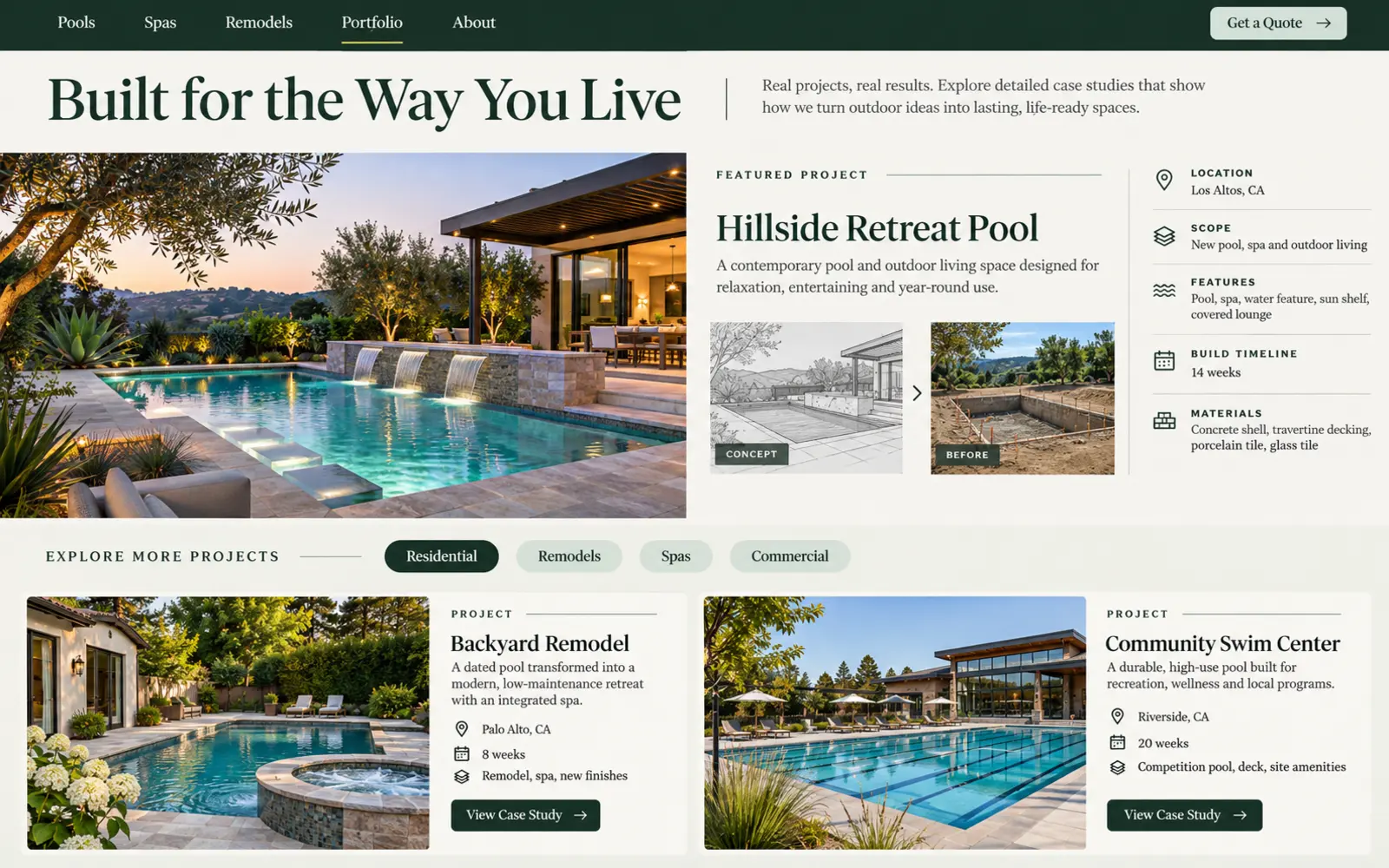
A wall of attractive pool images can create interest, but it does not tell a potential customer whether the builder has solved a comparable design or site challenge. This concept turns each featured project into a case study with market, property type, design objective, major features, materials, access or site considerations, construction context, and completed result.
Organize work by categories customers understand, such as geometric pools, natural forms, plunge pools, spas, remodels, outdoor environments, and commercial projects. Show the relationship between the early concept and the finished space when possible. Authentic photography, concise context, and multiple views make the portfolio more persuasive than a collection of unlabeled images.
5. Create a commercial capabilities and project-intake path
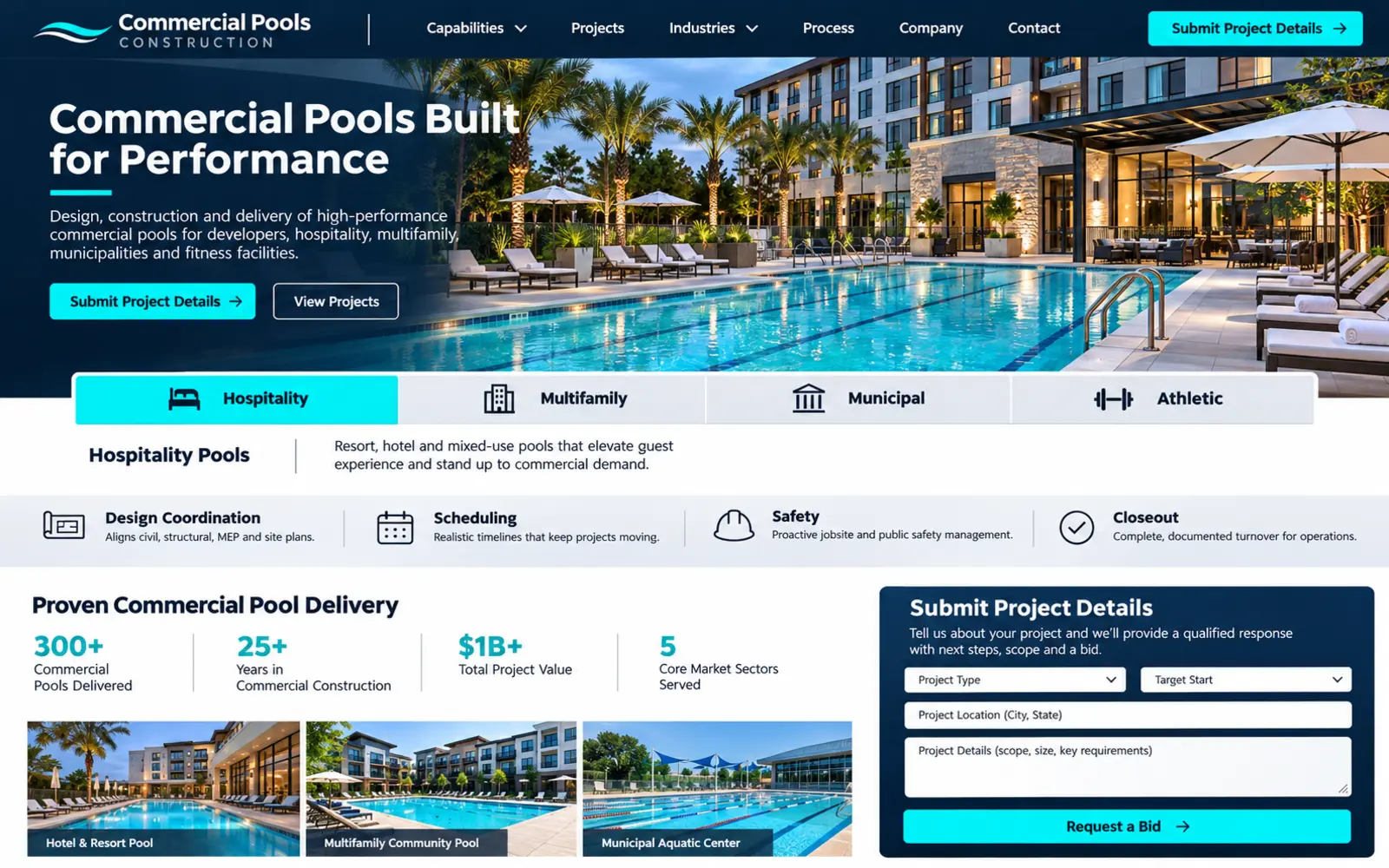
Developers, architects, general contractors, hospitality teams, property managers, municipalities, and fitness organizations evaluate more than visual style. This design gives professional buyers a dedicated path with markets served, scopes performed, design and engineering coordination, scheduling approach, documentation, safety practices, startup and closeout support, and representative commercial experience.
A project-intake area can collect the location, project type, anticipated schedule, delivery method, bid due date, scope notes, and plans or specifications. Keep all capacity, licensing, insurance, bonding, safety, and experience claims current and verifiable. The goal is to make early qualification easier while preserving a clear human contact for technical and procurement questions.
6. Explain the complete pool design-build process
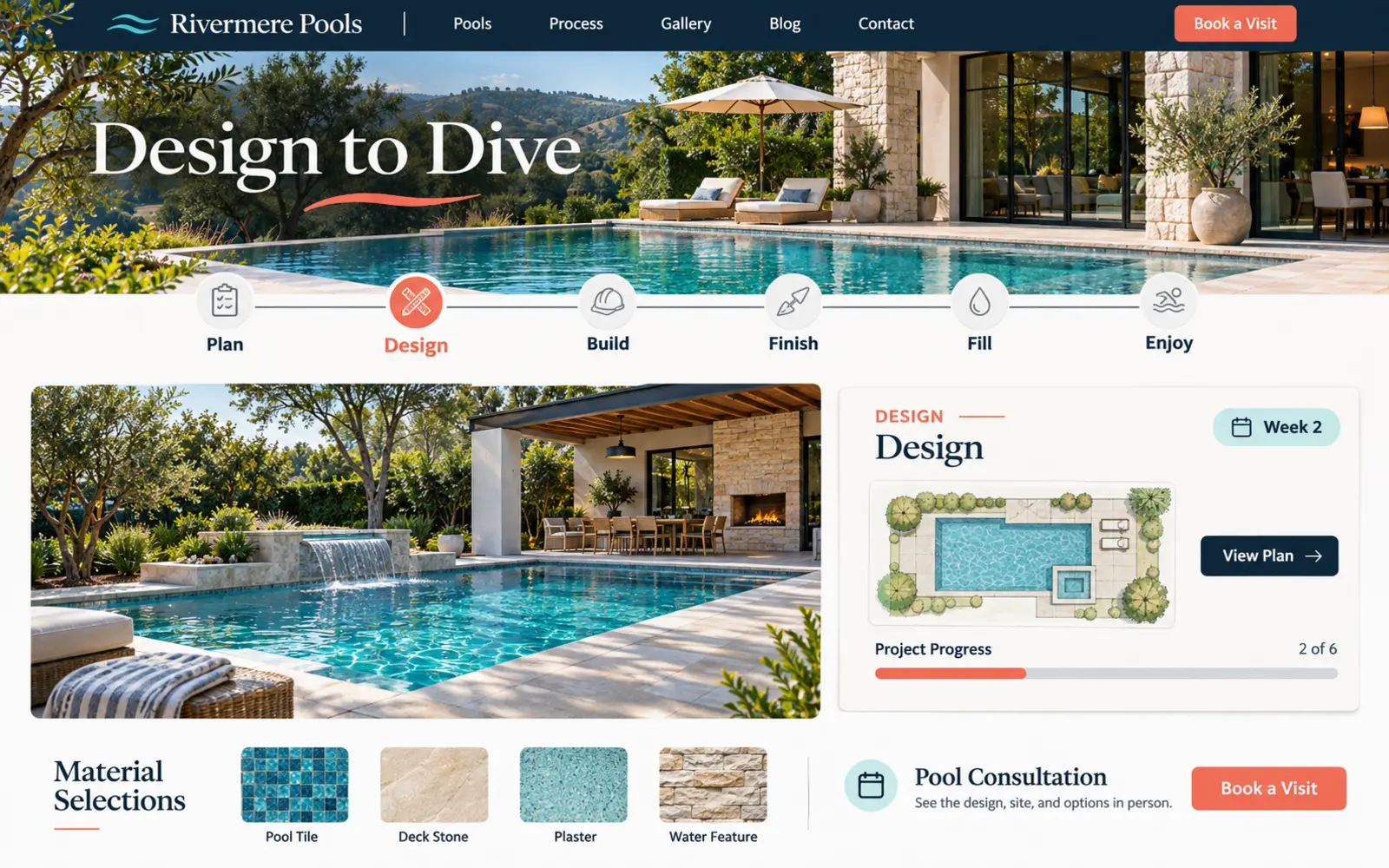
Pool construction involves property review, design development, budgeting, engineering, permitting, selections, excavation, structural work, plumbing, electrical coordination, equipment, finishes, decking, startup, and owner orientation. This design translates the process into a clear sequence so customers understand the purpose of each phase and the decisions that may be required.
Each step should explain what the builder does, what the customer reviews, and what conditions may affect schedule or scope. Avoid universal completion promises that ignore weather, inspections, engineering, material availability, change orders, access, utilities, or field conditions. A transparent process reduces uncertainty and positions the company as an organized project partner rather than simply a source of attractive renderings.
7. Help pool owners evaluate remodeling needs
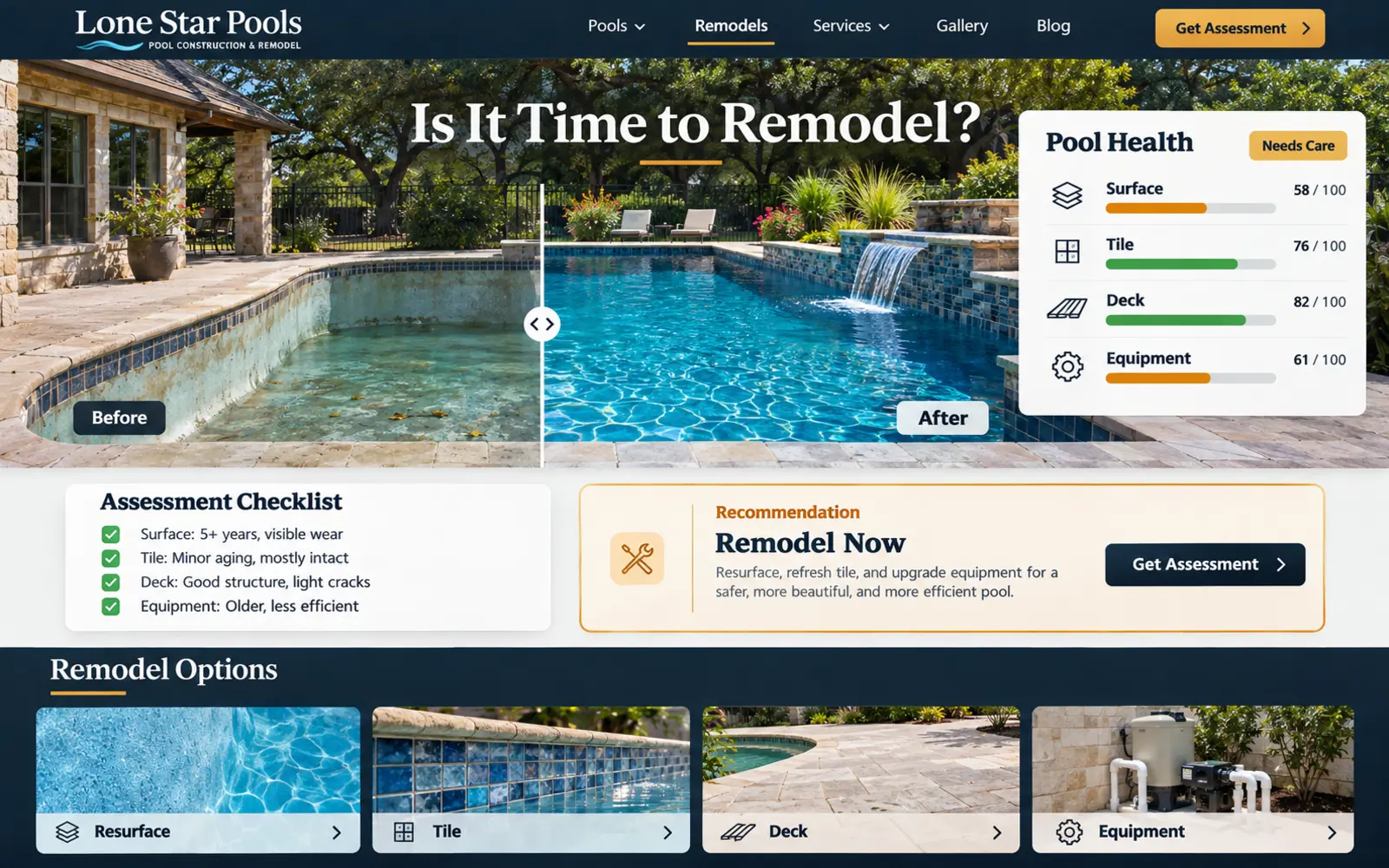
Pool owners may notice worn interior surfaces, outdated tile or coping, leaking components, inefficient equipment, deck deterioration, accessibility concerns, or a layout that no longer fits how they use the yard. This design uses a simple condition selector to explain common remodeling goals and the type of evaluation that may be necessary.
Show before-and-after examples with clear scope context, then organize upgrade possibilities into finishes, waterline tile, coping, decking, equipment, lighting, water features, spas, and surrounding outdoor spaces. Educational content should distinguish visible symptoms from professional diagnosis. Avoid suggesting that a photograph alone can confirm structural, hydraulic, electrical, or leak-related conditions.
8. Build service-area pages around local project relevance
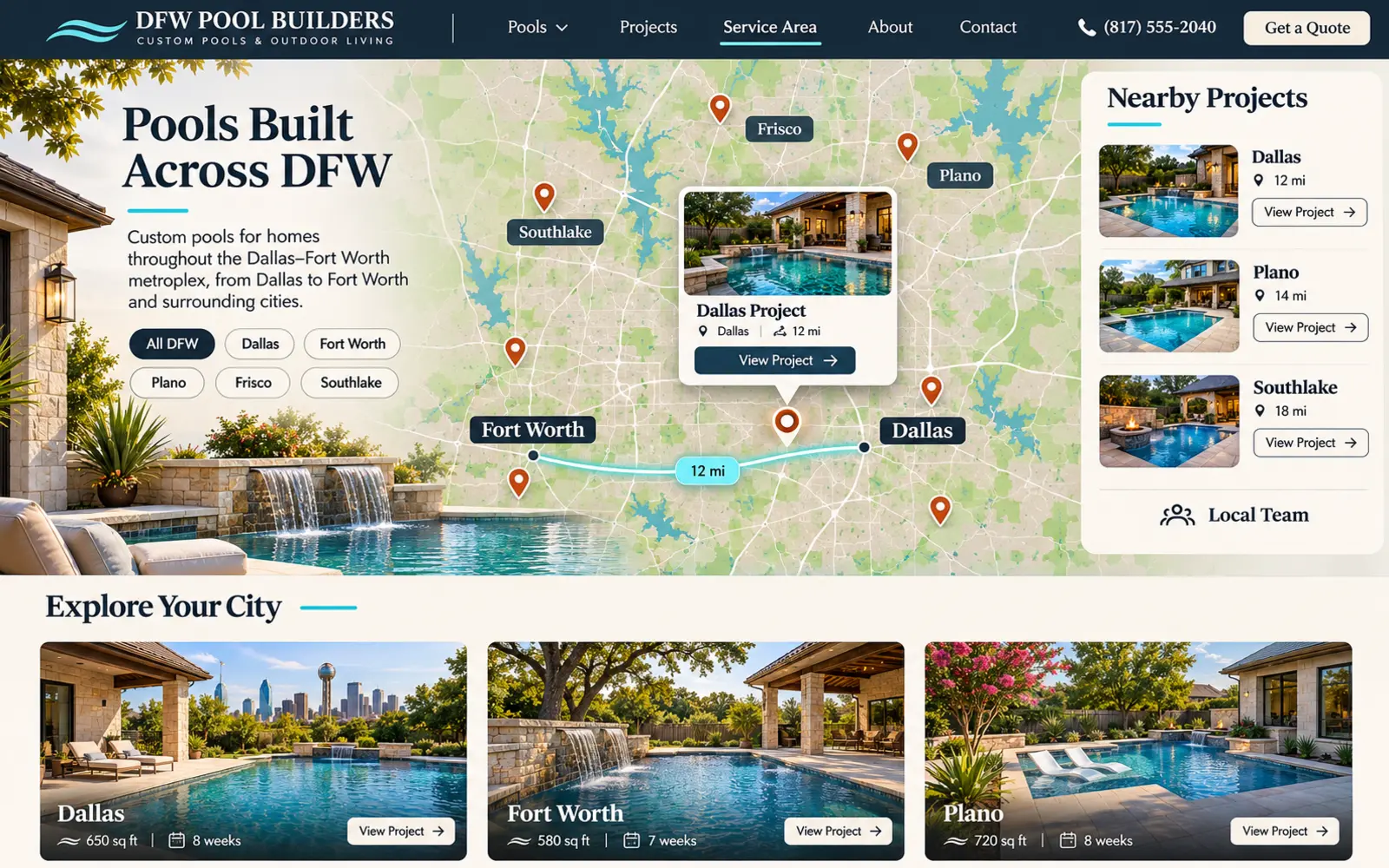
A useful service-area page should do more than replace one city name with another. This concept combines a Dallas–Fort Worth service map with nearby project examples, services offered in the market, project or travel limitations when relevant, and a direct way to confirm availability.
Local pages can address lot access, neighborhood or community coordination, permitting processes, soil and drainage awareness, architectural context, and project types common to the market without making unsupported legal or engineering claims. Connect each location page to authentic work and keep coverage accurate. Helpful local content strengthens both customer confidence and organic search visibility.
9. Make the team and operating standards visible
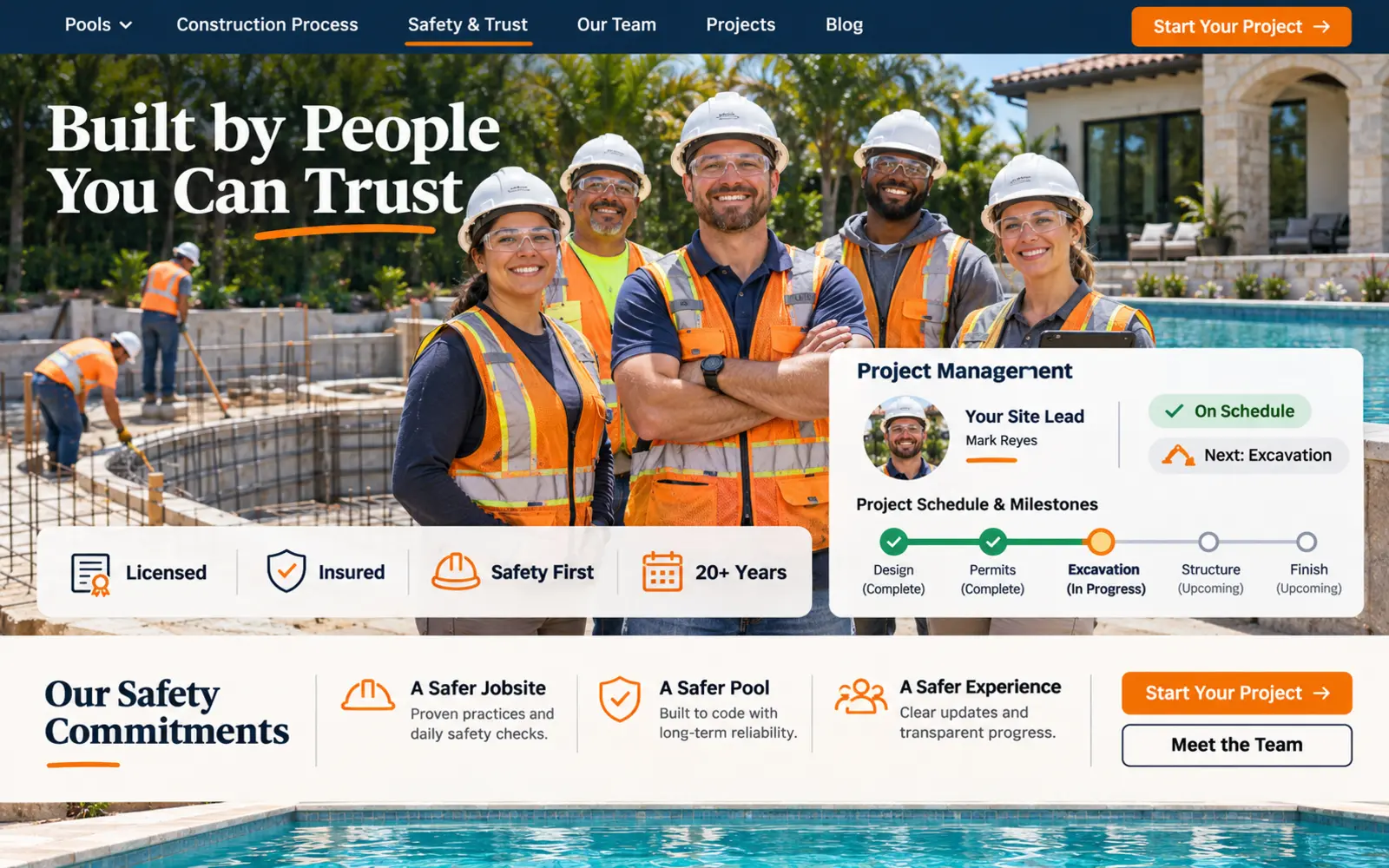
Pool customers are trusting a company with a major investment, an active construction site, and a process that may span many decisions. This design introduces the people responsible for design, project management, field supervision, selections, communication, startup, and service. It also explains how updates, approvals, changes, and warranty requests are handled.
Use specific proof rather than decorative badges. Show relevant project experience, authentic reviews, communication standards, site-protection practices, insurance information, and the warranty process. Publish licenses, certifications, affiliations, awards, safety records, or years in business only when current and verifiable. Clear responsibility and consistent communication are more persuasive than unsupported claims of being the “best” pool builder.
10. Create a complete bilingual pool customer journey
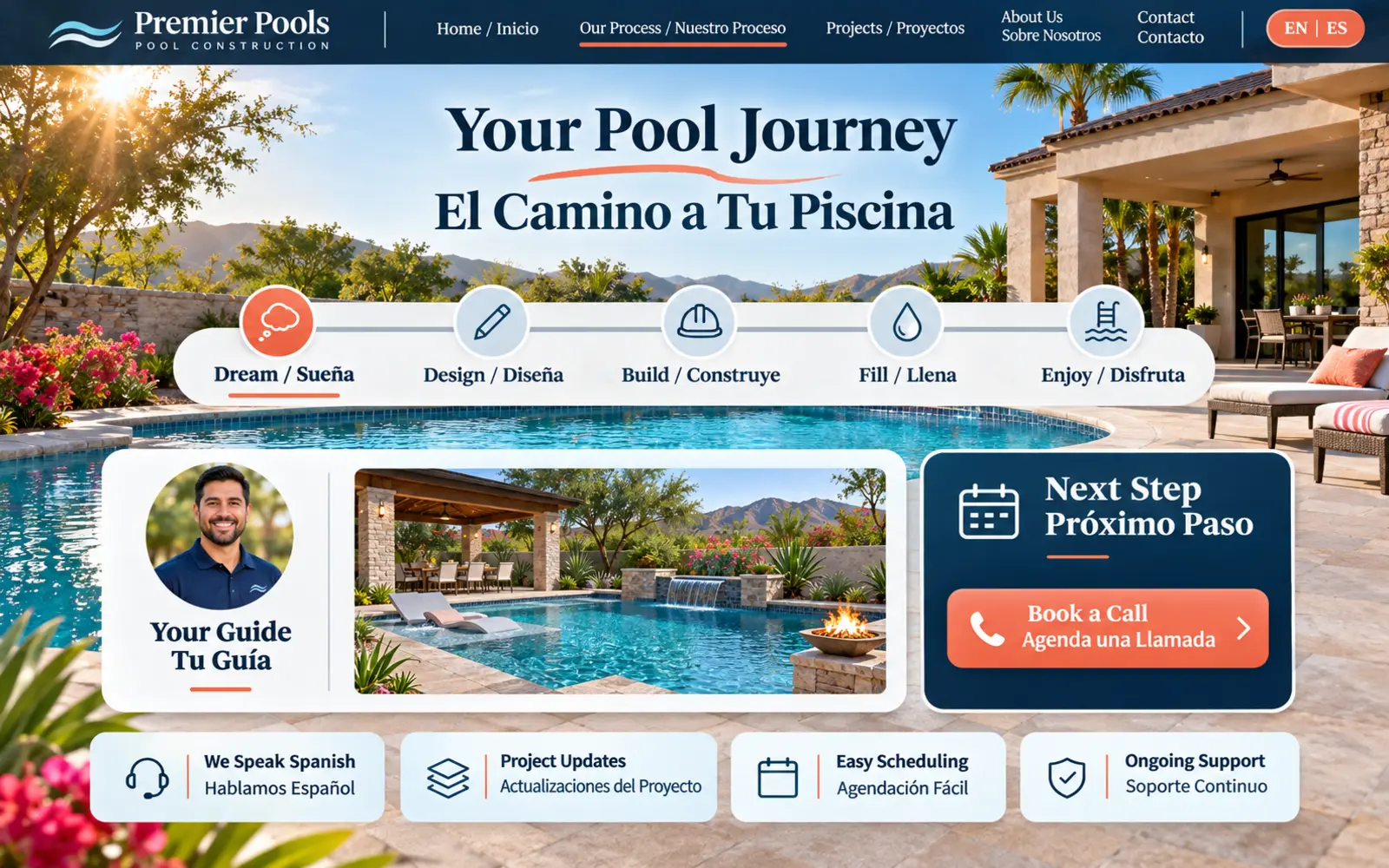
A translated hero statement does not create a complete bilingual experience. This concept gives English- and Spanish-speaking visitors equal access to services, pool types, material guidance, project examples, process explanations, consultation forms, uploads, confirmations, appointment details, and follow-up.
Professional translation should account for pool construction, design, equipment, remodeling, commercial, and scheduling terminology while remaining easy for the customer to understand. The operational experience must support the website: inquiries should reach someone who can respond accurately in the selected language. Hispanos Marketing treats bilingual communication as part of a complete multicultural customer journey, not as a decorative language switch.
Pool builder website design checklist
Before launching or redesigning a pool construction company website, confirm that it supports the way residential and commercial buyers evaluate design, experience, and the next step:
- Custom pools, spas, remodels, outdoor-living features, and commercial services have clear paths when offered.
- Every core service has a focused page with relevant projects, process context, and a clear consultation action.
- The portfolio uses authentic photography and identifies project type, market, design objective, features, or challenge.
- The consultation form collects useful details without requiring the customer to make technical conclusions.
- Commercial buyers can find relevant markets, coordination capabilities, documentation, experience, and project contacts.
- The process explains design, engineering, approvals, selections, construction, startup, and realistic schedule factors.
- Remodeling content distinguishes visible conditions from issues requiring professional evaluation.
- Service-area pages contain useful local information rather than near-duplicate city copy.
- Team, insurance, licensing, reviews, awards, and warranty information are current and verifiable.
- Pages load quickly despite galleries, video, maps, virtual design tools, and file uploads.
- English and Spanish journeys are complete when bilingual service is offered.
- Calls, forms, consultations, qualified opportunities, and lead sources are measured.
If the upfront cost and upkeep of a traditional website are barriers, explore our managed website plans. They combine a professional website framework with hosting, routine maintenance, and technical support in one monthly plan.
Frequently asked questions about pool builder website design
What should a pool builder website include?
A pool builder website should clearly present services, project types, service area, portfolio, design-build process, company information, reviews, consultation options, and contact details. Depending on the business, it may also need material galleries, remodeling resources, commercial capabilities, plan uploads, financing or promotion information, bilingual content, and maintenance or warranty guidance.
How can a pool construction website generate more qualified leads?
Help visitors identify the correct service, explore comparable projects, understand the process, confirm service availability, and provide useful project context. Focused service pages, local visibility, credible case studies, guided consultation forms, call tracking, and responsive follow-up work together to produce better opportunities.
Should a pool builder show prices online?
Show pricing only when the company can keep it accurate and explain what it represents. Pool costs vary with size, design, access, excavation, soil, engineering, utilities, structural requirements, equipment, finishes, decking, features, landscaping, permits, market conditions, and many other scope factors. Educational ranges may help set expectations, but they should not be presented as final pricing without the required review.
What projects should appear in a pool builder portfolio?
Feature the work the company wants to win and organize it by recognizable project type. Include different pool forms, property contexts, remodels, spas, outdoor-living environments, and commercial work when applicable. Add context such as market, design objective, features, materials, constraints, or finished result so the portfolio demonstrates relevant experience.
How many pages does a pool builder website need?
There is no universal number. A focused residential builder may need core pages for custom pools, spas, remodeling, projects, process, service area, company, FAQs, and contact. A company with multiple markets or commercial capabilities may need individual service pages, project case studies, location pages, material resources, commercial qualifications, plan uploads, recruiting, and support content.
How often should a pool builder website be updated?
Add completed projects, reviews, services, team information, credentials, service-area changes, forms, promotions, and commercial capabilities whenever they change. Review older content, tracking, integrations, calls to action, accessibility, mobile usability, and page speed routinely so the website reflects what the company currently delivers.
Build a pool builder website around the design decision
The best pool builder website is not simply the one with the most dramatic gallery. It is the one that helps the right customer recognize a relevant service, evaluate comparable work, understand the design-build process, and begin a qualified consultation with confidence.
Hispanos Marketing designs conversion-focused websites for pool builders, contractors, and professional service businesses in Dallas–Fort Worth and nationwide. We connect positioning, content, user experience, local relevance, and measurement so the website supports real growth. Explore our home builder website design examples, landscaping website design examples, concrete contractor website design examples, paving company website design examples, and construction website design examples for additional industry breakdowns, or review our website design service.
Book a call with Hispanos Marketing to discuss the right website structure for your pool construction company.