An effective landscaping website should help a property owner answer four questions quickly: does this company provide the service I need, does its work match the result I want, does it serve my location, and what should I do next? The strongest landscaping website design examples combine visual proof, clear service paths, local relevance, fast mobile performance, and an easy way to request an estimate or consultation.
The ten examples below show how landscaping companies can organize their websites around different customer decisions—from outdoor transformations and guided estimate requests to maintenance programs, design-build projects, commercial work, local expertise, and bilingual customer journeys. Each approach is designed to make the company easier to understand, easier to trust, and easier to contact.
Landscaping website design examples: quick overview
- Project transformations: Help visitors imagine a finished outdoor space and understand how the company created it.
- Estimate requests: Collect useful property and project information without making the first form difficult to complete.
- Service selection: Guide visitors toward landscape design, maintenance, irrigation, drainage, hardscaping, or another relevant service.
- Design-build process: Make planning, selections, installation, and project coordination understandable.
- Commercial landscaping: Give property managers, HOAs, builders, and business owners a dedicated path.
- Recurring maintenance: Explain service frequency, scope, communication, and the next step for ongoing care.
- Local relevance: Make Dallas–Fort Worth coverage and market-specific experience easy to confirm.
- Water-conscious landscaping: Explain how plants, irrigation, soil, shade, and drainage support a resilient property.
- Team standards: Show the people, communication, property protection, cleanup, and quality controls behind the work.
- Bilingual experience: Give English- and Spanish-speaking customers complete, equally useful journeys.
What a high-performing landscaping website needs
Landscaping customers do not all arrive with the same goal. A homeowner may want to redesign a backyard, another may need drainage or irrigation help, and a property manager may be comparing recurring maintenance providers. A high-performing website helps each visitor recognize the right service and next step without forcing every audience through one generic page.
| Website element | What it should accomplish |
|---|---|
| Clear primary action | Make requesting an estimate, consultation, property walk, or service quote obvious on desktop and mobile. |
| Service-specific paths | Separate design, installation, maintenance, irrigation, drainage, hardscaping, outdoor living, and commercial services when offered. |
| Visual project proof | Show relevant completed work with context instead of relying on a gallery of unlabeled photographs. |
| Trust signals | Support the decision with authentic reviews, team information, qualifications, service standards, and a clear process. |
| Local clarity | Confirm the service area and demonstrate useful knowledge of local property conditions and customer needs. |
| Reliable lead handling | Connect calls, forms, consultation requests, and campaign sources to a dependable follow-up process. |
Visual polish can earn attention, but structure is what helps a visitor make a decision. A focused website design strategy connects search intent, positioning, project proof, usability, and lead capture into one experience.
1. Lead with a completed-project transformation
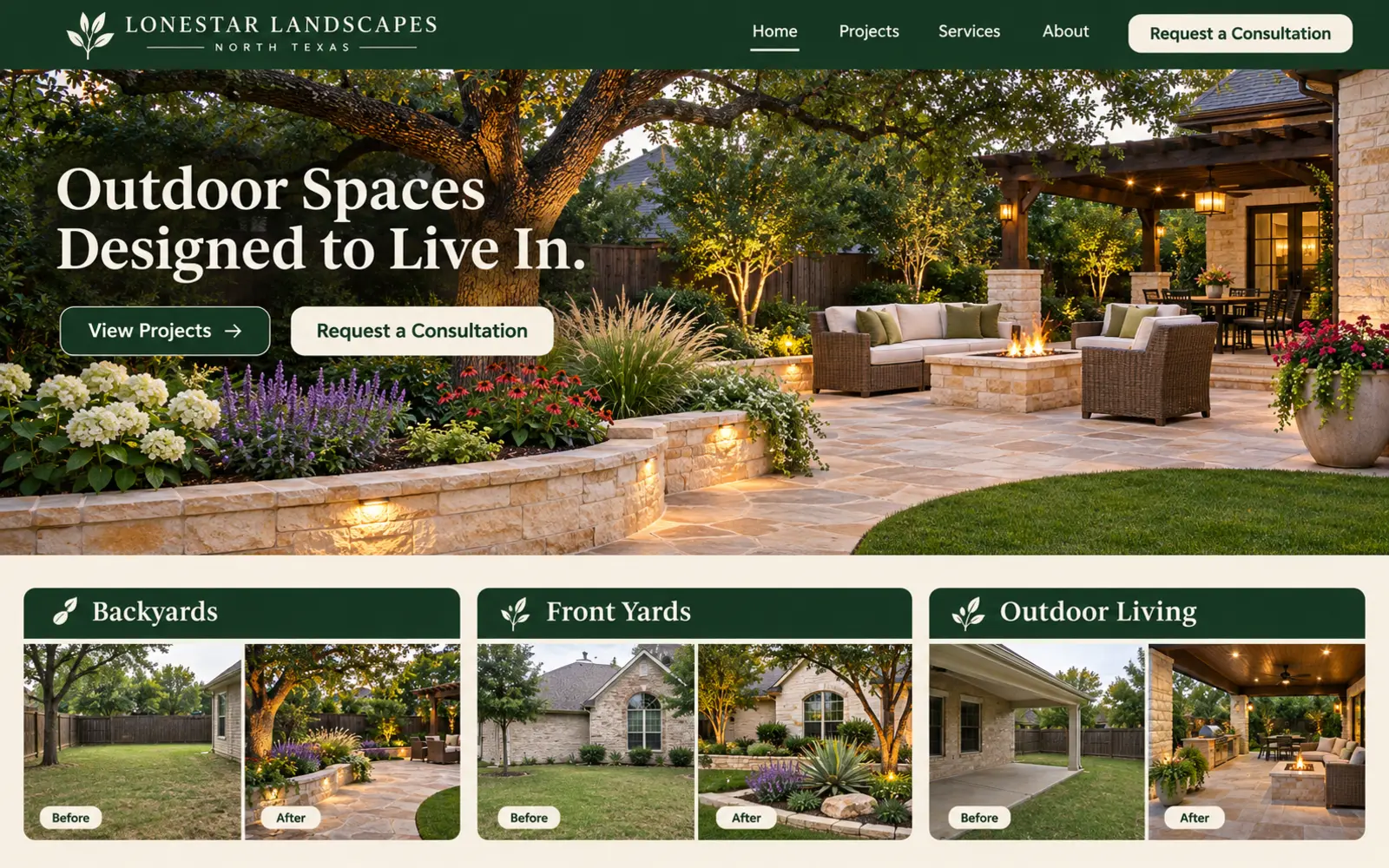
Landscaping is a visual service, so the opening screen should help visitors imagine a meaningful result. This design uses a large residential transformation—an inviting backyard, structured planting, lighting, and a finished patio—alongside one clear message and a prominent consultation action.
The strongest project presentations explain more than appearance. Add a short summary identifying the original challenge, property goals, services completed, important site considerations, and finished result. Organize the gallery by useful categories such as backyard, front yard, outdoor living, planting, hardscaping, or property type so visitors can find work related to their plans.
Avoid filling the hero with competing calls to action. The photograph earns attention; the supporting message should quickly confirm the services, location, and next step. On mobile, keep the headline, primary action, and first project easy to understand without requiring a long scroll.
2. Create a short, useful estimate-request path
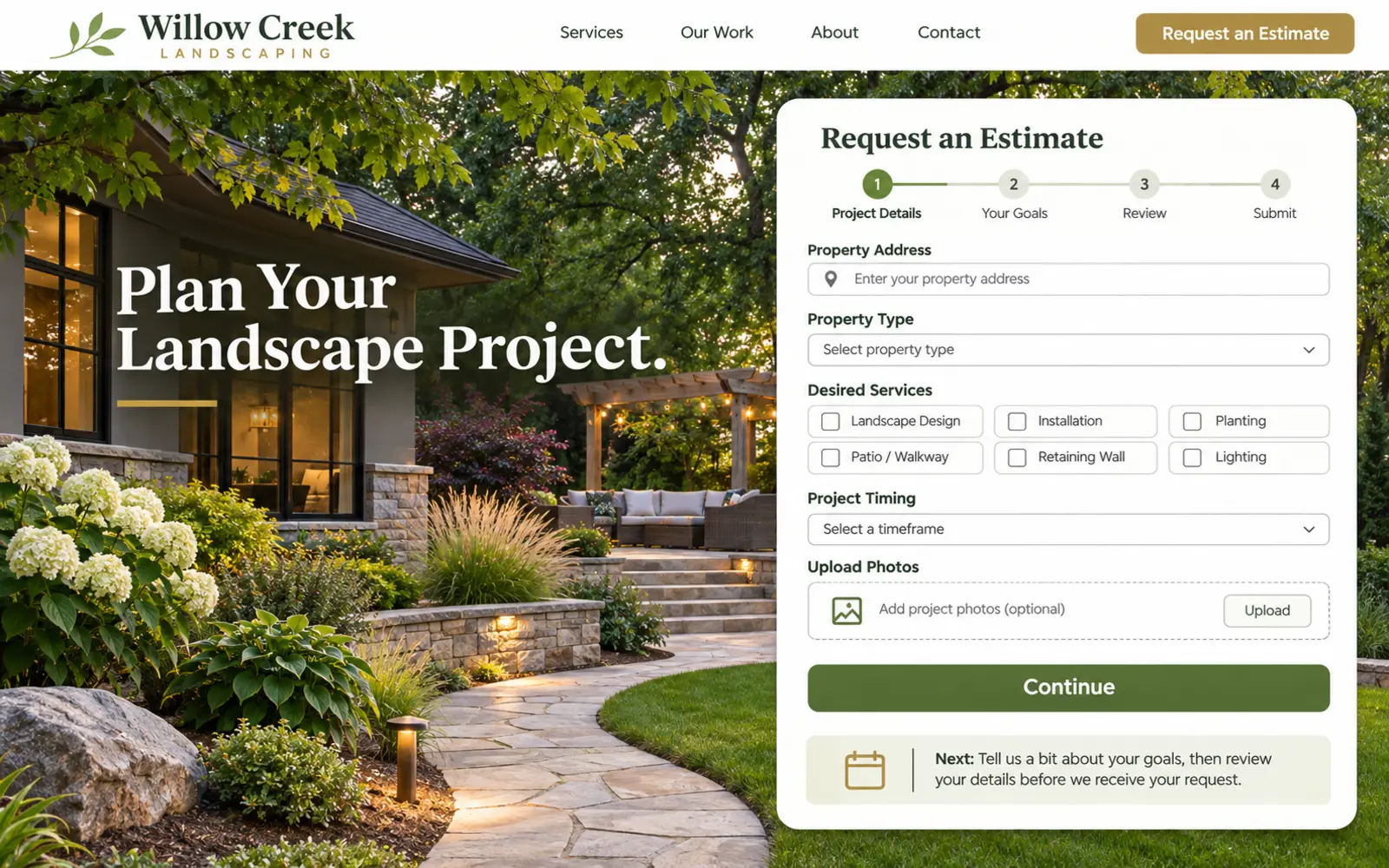
A landscaping form should collect enough information to prepare for the conversation without asking the customer to design the entire project. This layout begins with the property address, then asks for the general service, property type, project stage, preferred timing, and contact information. Optional photo upload gives visitors a simple way to share the current condition or inspiration.
Keep the first interaction manageable, especially on mobile. Detailed questions about measurements, plant counts, drainage, irrigation zones, materials, access, or engineering considerations can be addressed during qualification or a site visit. If the company uses project minimums or charges a design consultation fee, explain that clearly before the customer completes the request.
The confirmation message should state what happens next, how the team will respond, and whether the request is confirmed or pending review. Clear expectations make the operation feel organized before the first call.
3. Help visitors choose the right landscaping service
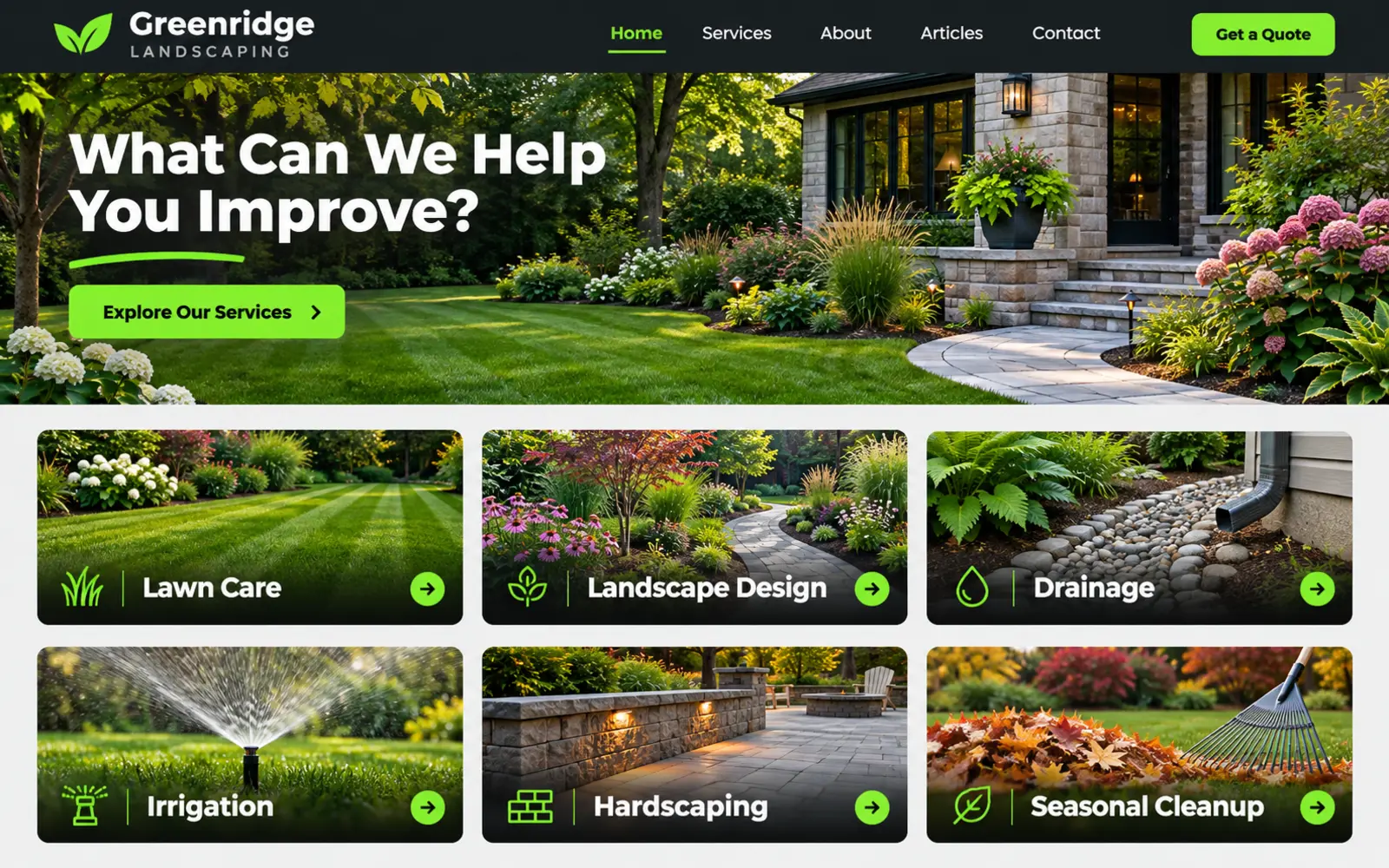
Many visitors know the result they want but may not know whether to request landscape design, hardscaping, irrigation, drainage, lawn care, or maintenance. This design turns the first decision into a clear service selector built around recognizable needs and outcomes.
Each choice should open a focused page that explains the relevant service, common property considerations, useful examples, service-area information, and the correct estimate or consultation action. Keep the same labels across navigation, forms, proposals, and follow-up so customers are not forced to translate different terminology at every stage.
Goal-based navigation should guide rather than diagnose. A website can help a visitor identify the appropriate conversation, but site conditions, plant selection, drainage, irrigation, scope, and pricing still require professional review.
4. Explain the landscape design-build process
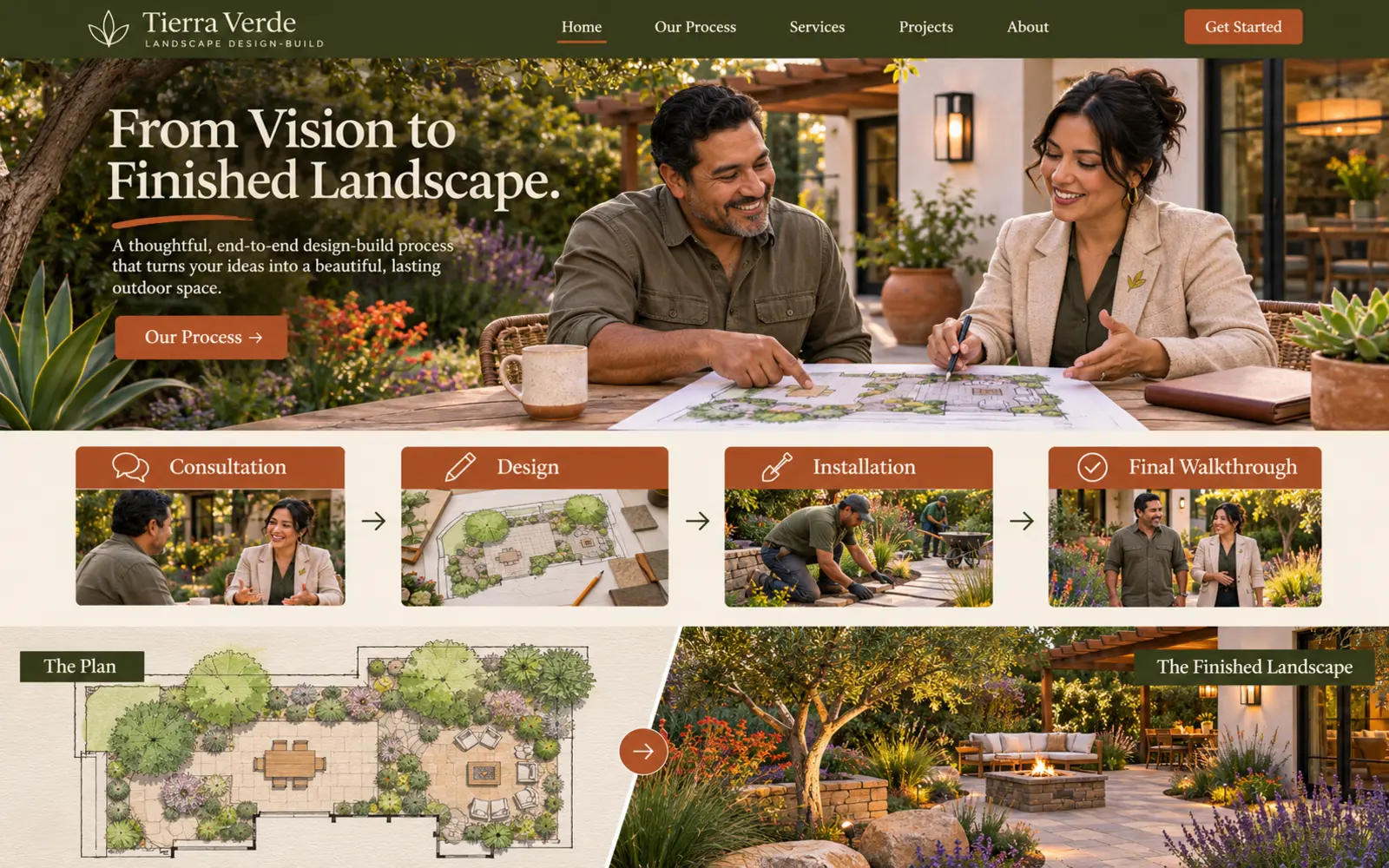
Larger outdoor projects can feel complicated because they may involve planning, material selections, hardscaping, planting, lighting, irrigation, drainage, permits, and coordinated installation. This design makes the process visible from the beginning: consultation, site evaluation, design development, selections, proposal, installation, and final walkthrough.
The page should explain what the client receives at each stage and which decisions will be required. If design fees, deposits, permitting, or separate trade coordination may apply, provide accurate general guidance and reserve project-specific details for the proposal. Plans, material boards, and realistic visualizations can help visitors understand the value of planning before work begins.
Use project stories to demonstrate how the process solves real constraints such as limited access, grade changes, drainage, existing trees, shade, entertaining needs, pets, or maintenance preferences. The goal is to show disciplined problem-solving, not simply a sequence of attractive photographs.
5. Give commercial buyers a dedicated path
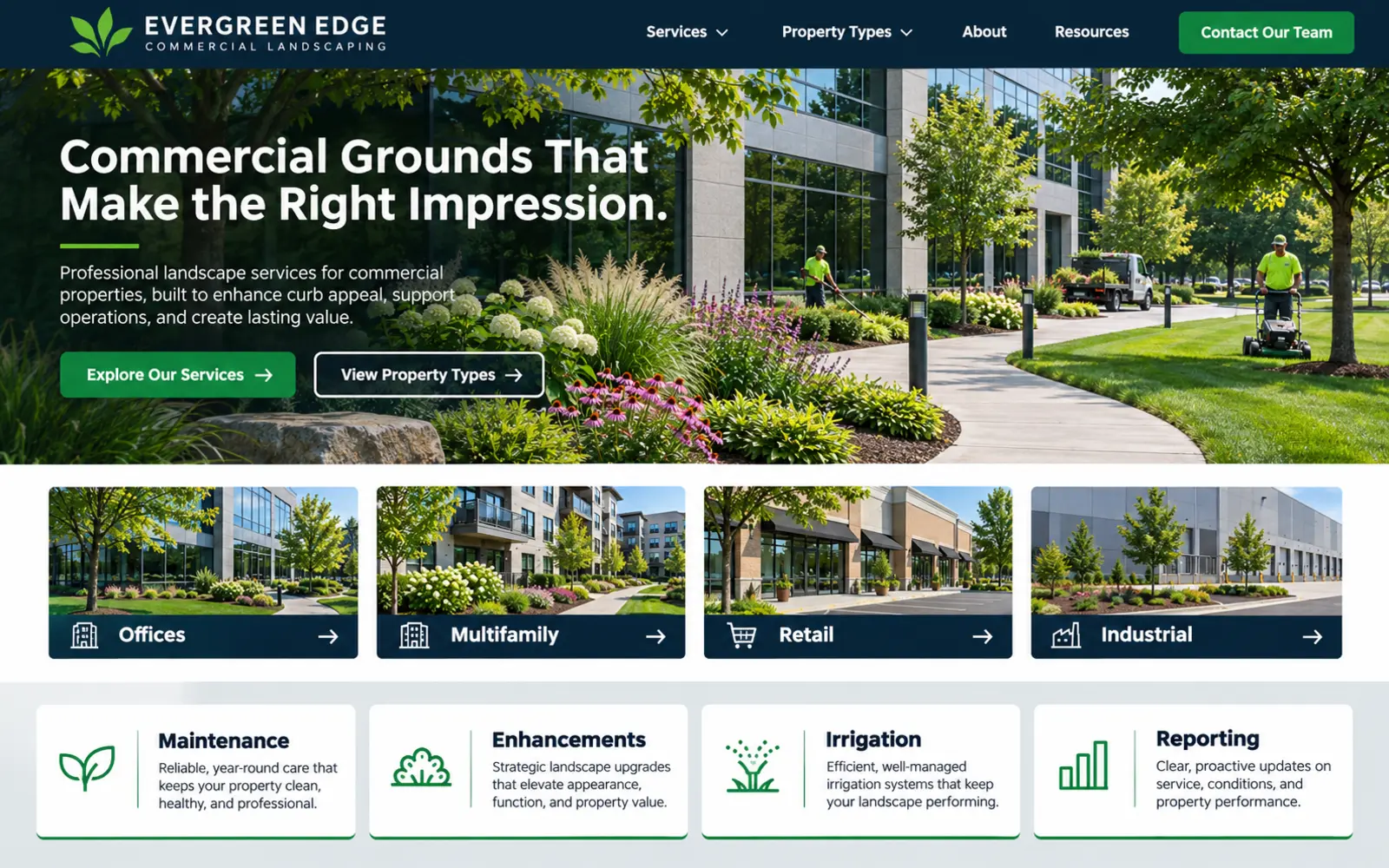
Property managers, HOAs, builders, municipalities, and business owners evaluate landscaping companies differently from homeowners. This design gives commercial visitors a distinct route built around property types, service capacity, communication, safety expectations, reporting, scheduling, and the request-for-proposal process.
Commercial case studies should identify the property type, scope, coordination needs, service frequency or project duration, and operational result. Relevant proof may include multifamily communities, retail centers, offices, industrial properties, new construction, common areas, or municipal work—only when those capabilities reflect the company’s actual experience.
The contact flow can collect property type, location, approximate size, requested scope, timeline, and procurement requirements. Keep the initial form concise and provide a clear way to share a scope document or schedule a property walk during qualification.
6. Make recurring landscape maintenance easy to understand
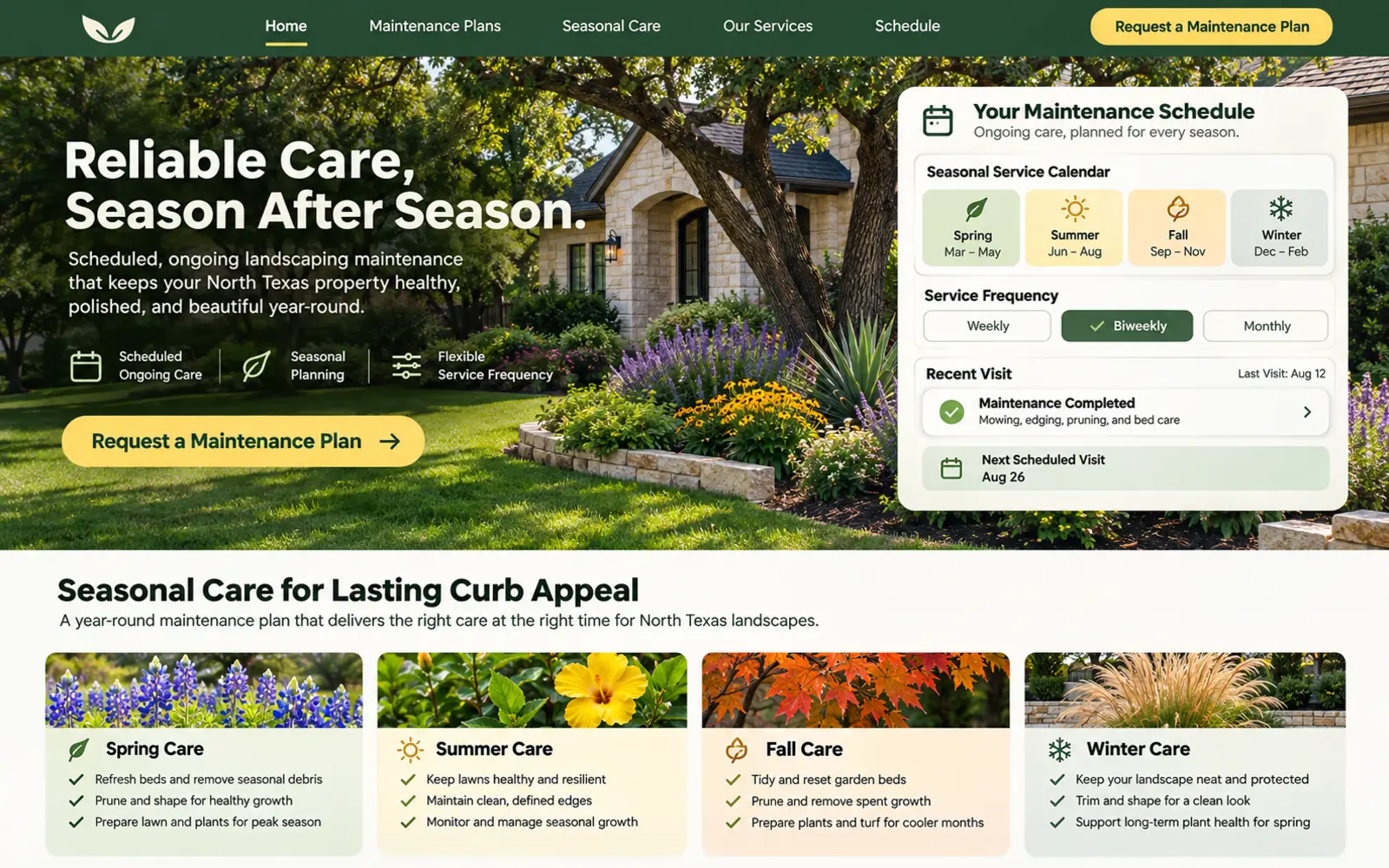
Recurring maintenance customers want to know what is included, how often service occurs, how communication works, and what happens when weather or seasonal needs change. This design introduces clearly differentiated maintenance paths without turning the page into a dense price sheet.
Service sections can explain the general scope—such as mowing and edging, bed care, pruning, seasonal color, irrigation observation, cleanup, or property reporting—while making clear that final recommendations depend on the property and agreement. Residential and commercial programs should be separated when their service standards and decision processes differ.
A service-update area can reinforce the operating experience with visit notifications, notes, photographs, and a way to request additional work. Only show features the company can consistently deliver. The website should set expectations that match the real service operation.
7. Establish Dallas–Fort Worth relevance immediately
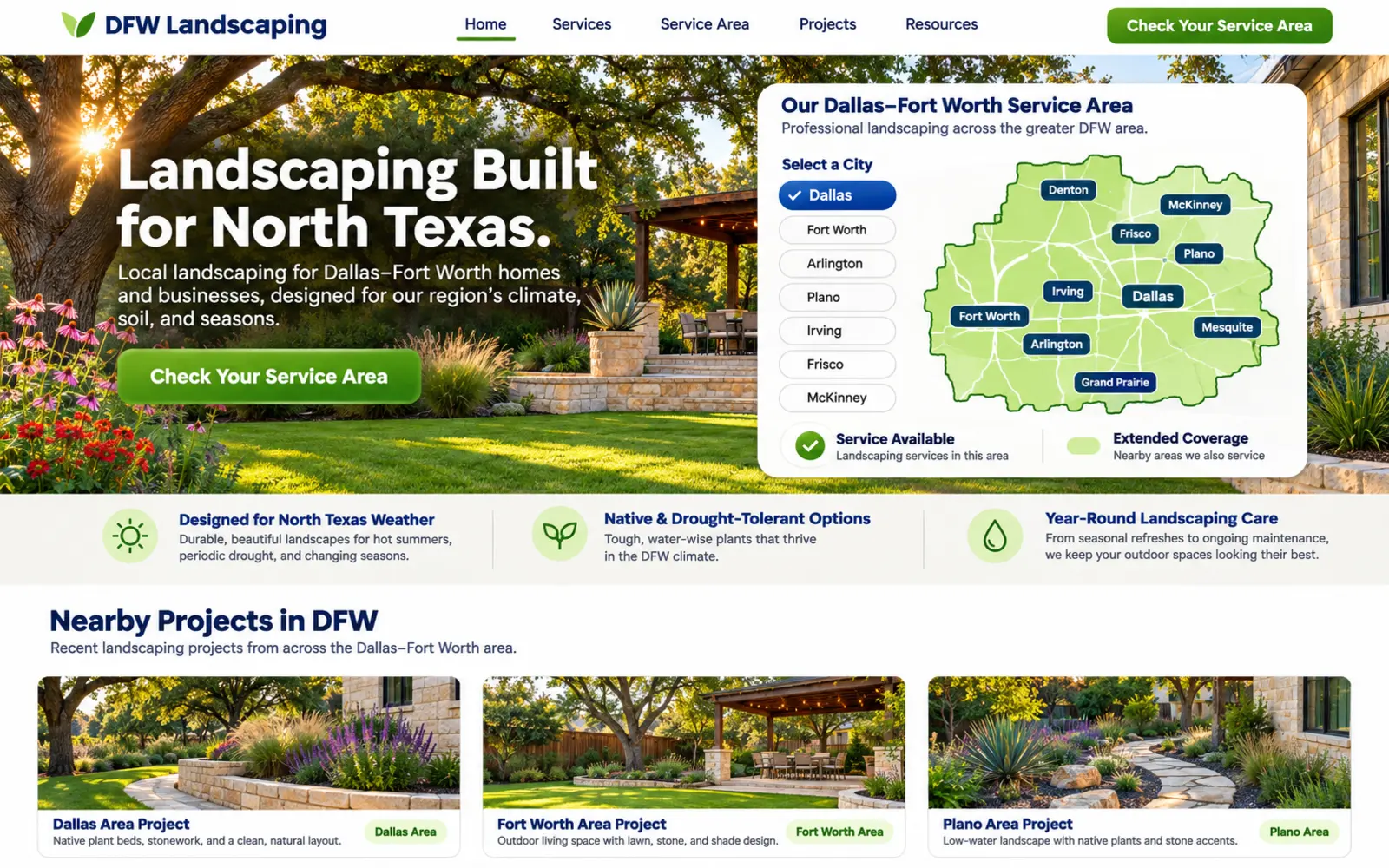
A property owner should not have to search the footer to learn whether the company serves the location. This design introduces Dallas–Fort Worth coverage near the opening message and provides a direct way to check availability or request an estimate.
Useful local pages go beyond repeating city names. They can explain the services available in that market, property types supported, realistic coverage, climate and site considerations, nearby project experience, and the correct contact process. A company serving Fort Worth, Arlington, Dallas, Plano, or surrounding communities should provide information specific enough to help customers make a decision.
If crews operate from multiple locations or service zones, forms can route requests by address while preserving one consistent brand experience. Keep service-area information accurate. Inflated location lists create poor leads and weaken trust.
8. Demonstrate water-conscious Texas landscape expertise
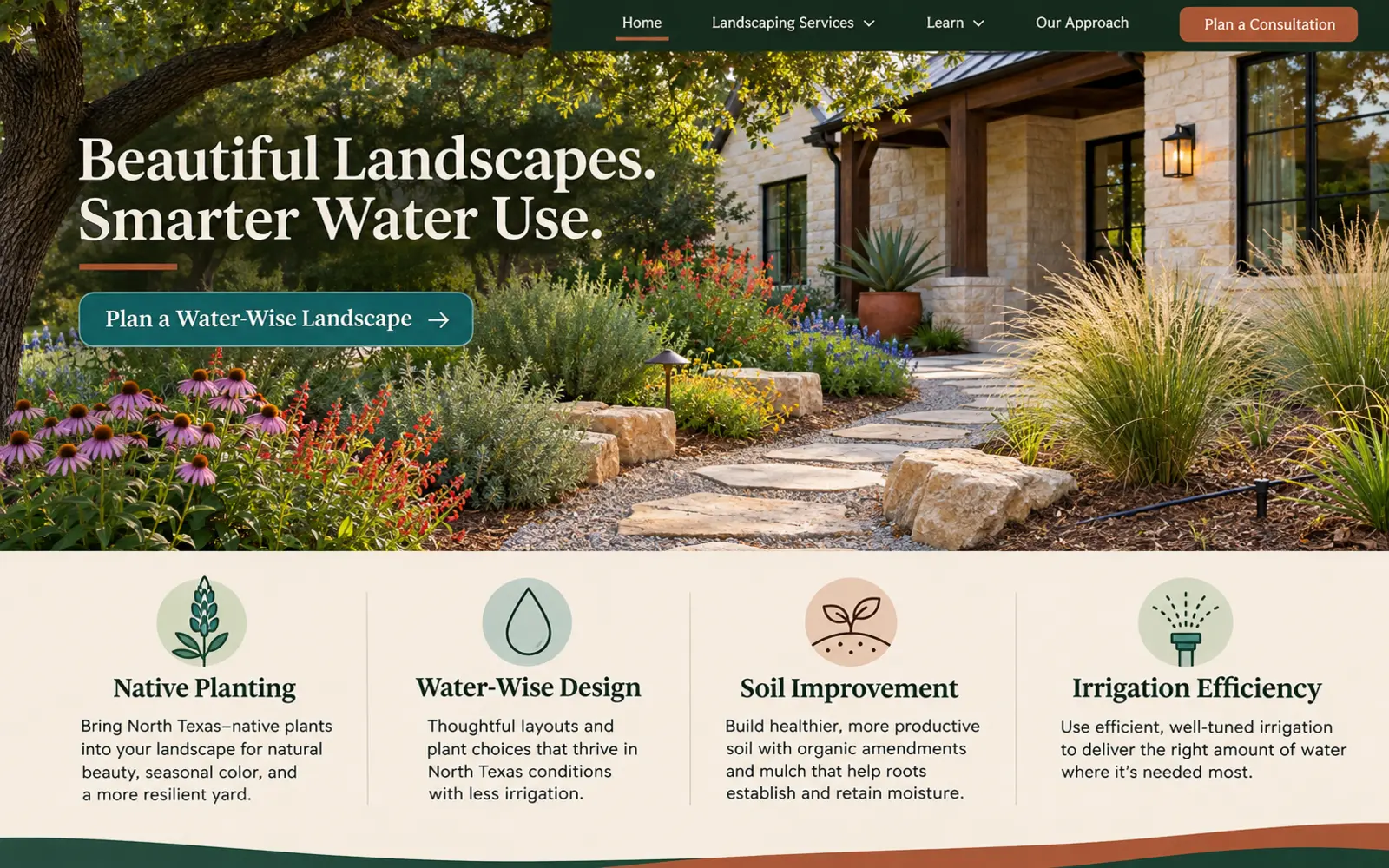
Dallas–Fort Worth properties face heat, intense sun, shade variations, soil and drainage concerns, watering limitations, and rapid seasonal changes. This design positions the company as a thoughtful local guide by explaining how plant selection, irrigation strategy, soil preparation, drainage, shade, and maintenance affect long-term performance.
Useful content can help visitors compare goals such as lower-maintenance planting, pollinator-friendly areas, native and adapted plants, improved shade, efficient irrigation, permeable surfaces, or a more resilient lawn and bed plan. Avoid promising that any landscape will be maintenance-free or guaranteeing savings without understanding the property.
Educational pages become more useful when they connect to actual services and stay current. A planting guide, drainage resource, irrigation evaluation, or seasonal planning page should lead naturally to a relevant consultation instead of functioning as disconnected content.
9. Build trust through people and workmanship standards
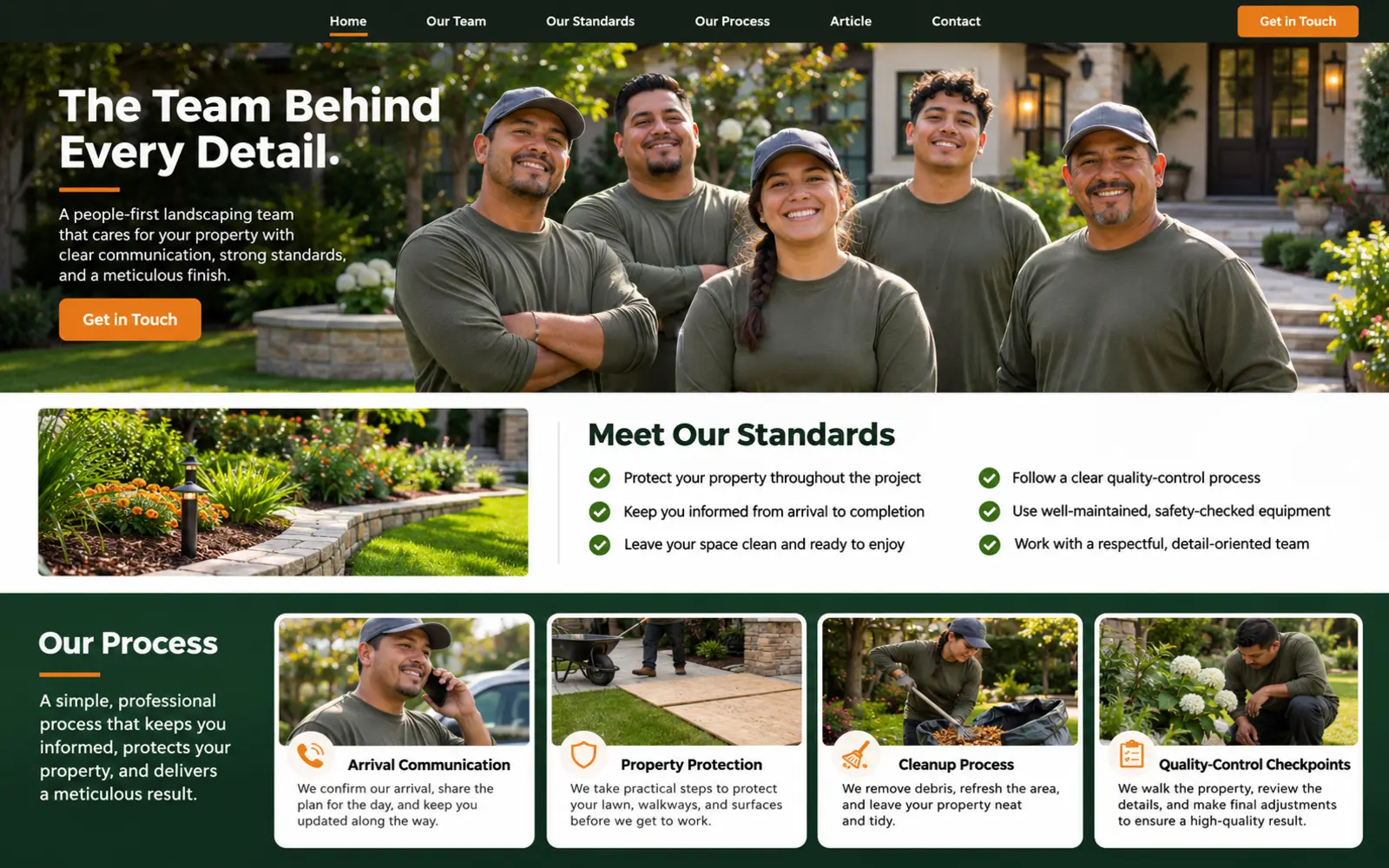
A landscaping project can affect access, irrigation, outdoor structures, pets, vehicles, neighbors, tenants, and the customer’s daily routine. This design makes the people and standards behind the work visible through authentic team photography, clear roles, arrival communication, property protection, cleanup, and quality-control checkpoints.
Place trust signals where they support a specific decision. A review about communication belongs near the process. A commercial reference can reinforce the commercial service path. Qualifications and professional affiliations should be current and explained rather than displayed as a row of unfamiliar badges.
Practical standards can be highly persuasive: protecting existing surfaces and plants, communicating schedule changes, controlling debris, managing access, confirming irrigation zones, documenting work, and completing a final walkthrough. These details matter when they reflect the company’s actual operation and are consistently delivered.
10. Create a complete bilingual landscaping experience
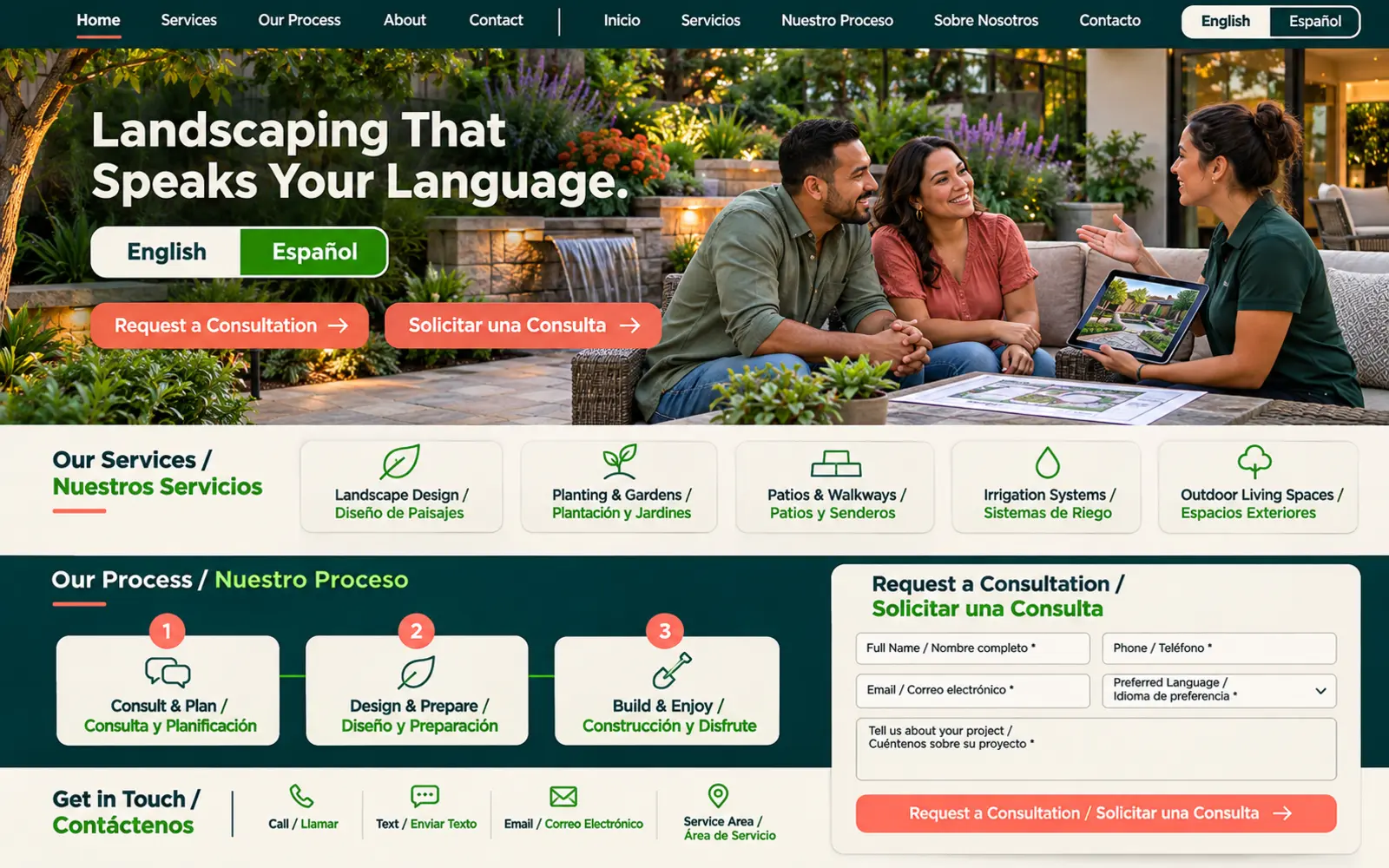
A language selector has limited value when only the headline is translated. This design gives English- and Spanish-speaking visitors equivalent access to services, project information, estimate requests, forms, confirmation messages, maintenance expectations, and customer support.
Professional translation should account for landscaping, irrigation, hardscaping, maintenance, and design terminology as well as regional language and tone. Navigation labels, form errors, automated replies, scheduling messages, proposals, and follow-up materials should remain consistent with the customer’s selected language.
The operational experience matters as much as the page. The company needs a dependable way to respond in the customer’s preferred language. Hispanos Marketing approaches bilingual work as part of a complete multicultural customer journey—not simply a translated paragraph.
Landscaping website design checklist
Before launching or redesigning a landscaping website, confirm that it supports the way property owners research, compare, and contact a provider:
- The estimate, consultation, property-walk, or phone action is visible on desktop and mobile.
- Landscape design, installation, maintenance, irrigation, drainage, hardscaping, outdoor living, and commercial services have clear paths when offered.
- Portfolios and case studies are organized with enough context to demonstrate relevant experience.
- Forms are short, usable, and connected to a reliable follow-up workflow.
- Reviews, qualifications, team details, service standards, and project processes are authentic and current.
- Pricing, minimums, consultation fees, promotional language, and scheduling expectations are accurate and understandable.
- Service areas are easy to confirm and supported by useful local information.
- Residential, commercial, and recurring-maintenance audiences receive appropriately different information.
- Pages load quickly and remain readable and actionable on mobile devices.
- English and Spanish journeys are complete when bilingual service is offered.
- Calls, forms, estimate requests, and campaign sources are measured as business outcomes.
If the initial cost and upkeep of a traditional website are barriers, explore our managed website plans. They combine a professional website framework with hosting, routine maintenance, and technical support in one monthly plan.
Frequently asked questions about landscaping website design
What should a landscaping company website include?
A landscaping website should clearly present services, project types, service areas, estimate or consultation options, completed work, authentic trust signals, company information, and the process customers can expect. Depending on the business, it may also need maintenance programs, commercial capabilities, irrigation or drainage information, design-build resources, bilingual content, online requests, and seasonal educational content.
How can a landscaping website generate more qualified leads?
It connects focused pages to the services and project goals customers search for, provides enough visual and written proof to establish relevance, and gives visitors a clear next step. Search visibility, advertising, reviews, accurate tracking, responsive follow-up, and the website experience must work together to produce qualified opportunities.
Should a landscaping website display prices?
It depends on how standardized the service is. Recurring maintenance or clearly defined services may support starting prices or scope ranges when they are accurate. Custom design-build work usually requires a consultation, site evaluation, or detailed scope. If project minimums, design fees, or consultation fees apply, explaining them clearly can help visitors self-qualify.
How many pages does a landscaping website need?
There is no universal number. A focused company may begin with core pages for services, service area, company information, projects, process, and contact. A larger operation may need separate pages for landscape design, installation, maintenance, irrigation, drainage, hardscaping, outdoor living, commercial work, property types, locations, case studies, careers, and educational resources. Page count should follow customer needs and search strategy.
How should a landscaping company organize its portfolio?
Organize work around the decisions customers make. Useful filters may include service, project type, residential or commercial, style, location, and property condition. Every project should include a short explanation of the starting challenge, goals, scope, important decisions, and result so photographs function as evidence rather than decoration.
How often should a landscaping website be updated?
Update service areas, team information, qualifications, project minimums, promotions, scheduling expectations, and service offerings whenever they change. Project galleries, forms, phone links, analytics, integrations, performance, seasonal resources, and older educational content should also be reviewed routinely so the website remains accurate and useful.
Build a landscaping website around the customer decision
The best landscaping website is not simply the one with the largest gallery or most dramatic outdoor photograph. It is the one that helps the right property owner recognize the service, understand the company, evaluate relevant work, trust the process, and request an estimate or conversation with confidence.
Hispanos Marketing designs conversion-focused websites for landscaping companies and service businesses in Dallas–Fort Worth and nationwide. We connect positioning, content, user experience, local relevance, and measurement so the website supports real growth. Explore our roofing website design examples, plumbing website design examples, HVAC website design examples, and construction website design examples for additional industry breakdowns, or review our website design service.
Book a call with Hispanos Marketing to discuss the right website structure for your landscaping company.