A strong home builder website should help a prospective buyer answer four questions quickly: does this builder create the kind of home I want, where are its homes or communities located, can I trust the quality and process, and what should I do next? The best home builder website design examples combine inspiring visuals with practical search tools, clear floor-plan information, credible project proof, and simple ways to request details or schedule a conversation.
The ten examples below show how custom home builders, production builders, and community developers can organize their websites around real buyer decisions—from finding available homes and comparing floor plans to understanding personalization, construction milestones, local communities, and bilingual customer support. Each approach is designed to turn interest into a more informed, qualified inquiry.
Home builder website design examples: quick overview
- Cinematic positioning: Establish craftsmanship and design perspective with a focused hero, strong imagery, and one clear message.
- Buyer-intent pathways: Separate custom homes, build-on-your-lot projects, communities, and move-in-ready inventory.
- Floor-plan discovery: Help visitors compare layouts based on household needs, lifestyle, size, features, and availability.
- Community exploration: Present neighborhoods, service areas, amenities, home offerings, and nearby availability clearly.
- Current home inventory: Make available and quick-move-in homes easy to browse, understand, and tour.
- Process and selections: Explain what happens from consultation through design, construction, walkthrough, and closing.
- Build-on-your-lot guidance: Help landowners understand site evaluation, utilities, access, plan direction, and consultation expectations.
- Project case studies: Use galleries, tours, plans, and project details to demonstrate design range and craftsmanship.
- Quality and homeowner proof: Support claims with the team, construction standards, inspections, reviews, warranties, and post-close support.
- Bilingual buyer experience: Offer complete English and Spanish journeys from discovery through inquiry and follow-up.
What a high-performing home builder website needs
Home buyers rarely arrive with the same goal or level of readiness. One visitor may be comparing neighborhoods, another may already own land, and another may need a move-in-ready home within a defined timeline. A high-performing home builder website helps each buyer narrow the possibilities without forcing every audience through one generic sales page.
| Website element | What it should accomplish |
|---|---|
| Clear buyer pathways | Direct visitors to custom building, available homes, communities, floor plans, or build-on-your-lot information. |
| Useful search and filters | Help buyers narrow options by geography, availability, home type, price guidance, size, bedrooms, and meaningful features. |
| Visual and project proof | Show completed homes, elevations, interiors, plans, tours, and project context rather than relying on unsupported claims. |
| Process and expectations | Explain consultation, land or community selection, design, financing coordination, construction, walkthrough, and closing. |
| Local market clarity | Connect homes and communities to the locations, lifestyle factors, and regional questions buyers actually consider. |
| Qualified lead capture | Collect enough information to route the inquiry while keeping forms clear, concise, and easy to complete on mobile. |
Beautiful homes can earn attention, but a focused website design strategy is what connects buyer intent, project proof, local relevance, usability, and follow-up into one conversion-focused experience.
1. Use a cinematic hero to establish craftsmanship and positioning
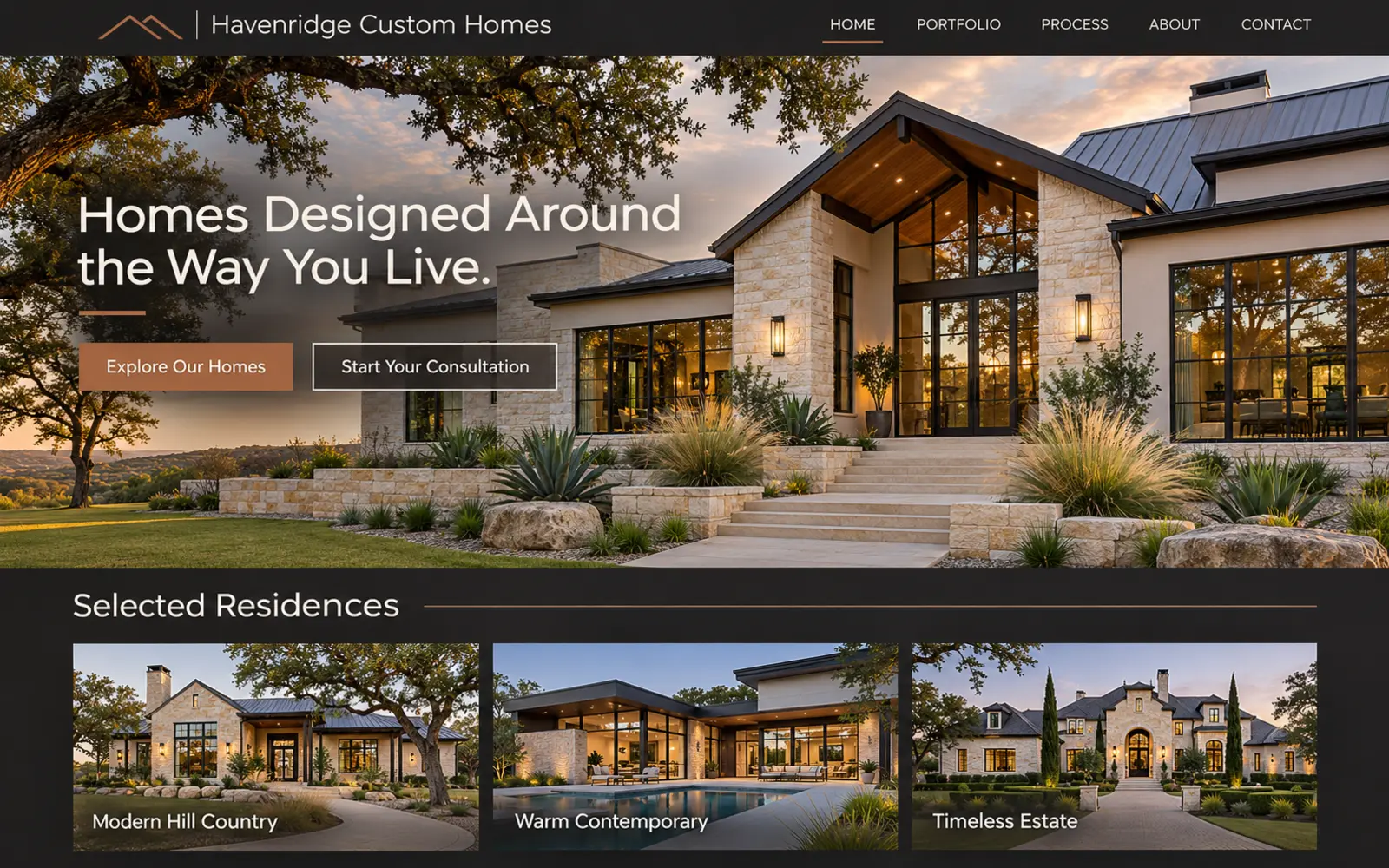
A home builder's opening screen should communicate more than luxury through a large photograph. This design pairs wide, architectural imagery or restrained video with one direct value proposition, a clear market or service area, and two useful actions: explore homes and begin a conversation. The visitor can understand the builder's point of view without reading a long introduction.
The visual should reflect the work the company actually wants to sell. A custom builder might feature craftsmanship, material detail, and one completed residence. A community builder may show a welcoming streetscape and direct visitors toward communities and available homes. Keep the movement subtle, preserve enough contrast for readable text, and provide a static fallback for slower connections or reduced-motion preferences.
Positioning should be specific enough to qualify. “Thoughtfully designed custom homes across Dallas–Fort Worth” communicates more than “building dreams.” Support the opening statement with authentic project proof, location clarity, and a next step that matches the sales process. Compress the media carefully so cinematic impact does not create a slow first impression.
2. Separate custom, build-on-your-lot, community, and move-in-ready journeys
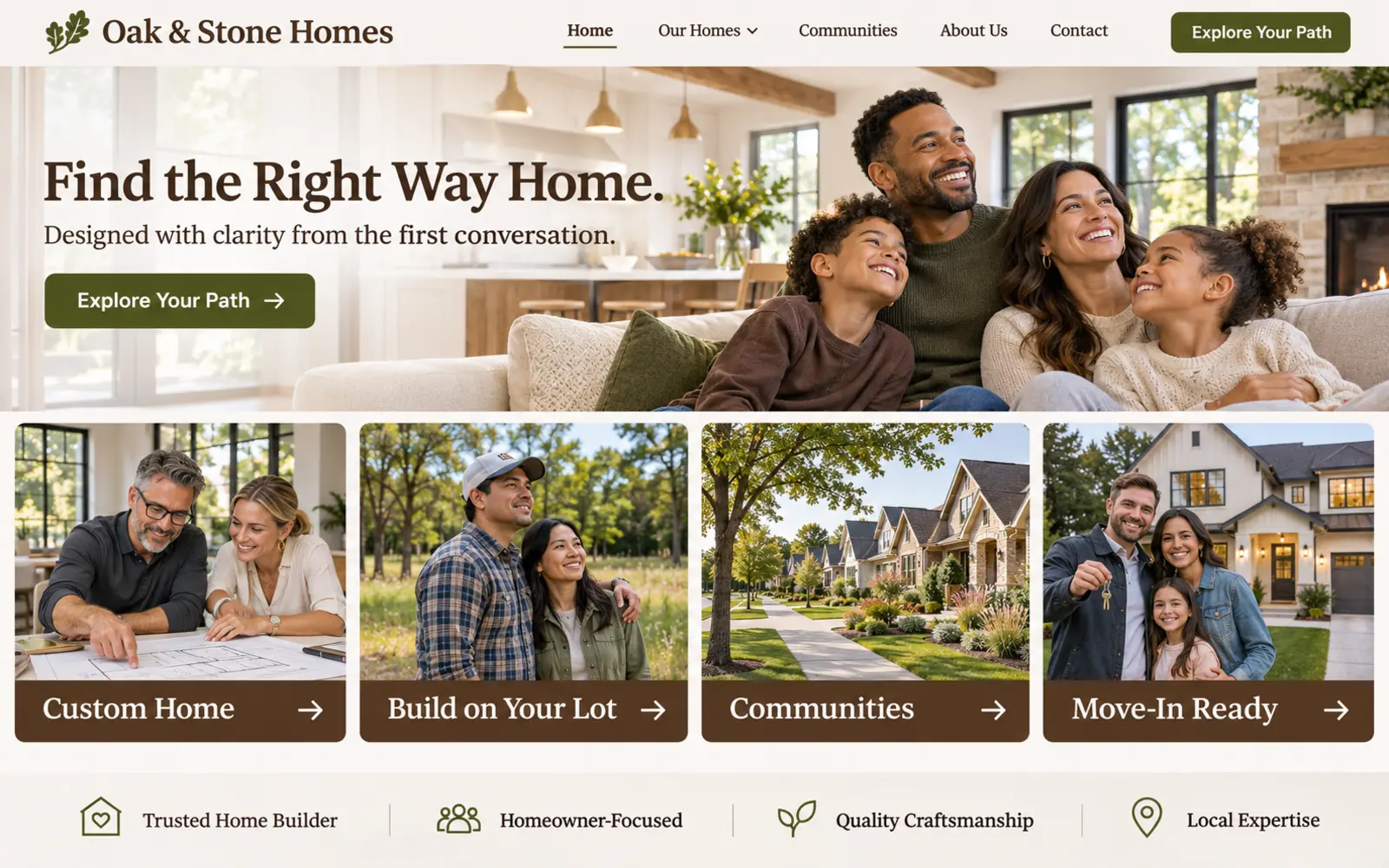
A visitor who owns land and wants a custom home has a different decision to make than a buyer comparing communities or searching for a home that can close soon. This design opens with four clear pathways: custom homes, build on your lot, explore communities, and view available homes. Each path gives the visitor a useful next step without requiring them to understand the builder's internal terminology.
The custom path can explain design collaboration and budget alignment. Build-on-your-lot should introduce site evaluation and planning. The community path should organize neighborhoods, floor plans, amenities, model locations, and available homes. The move-in-ready path should make current status, location, important features, and contact options easy to verify.
Keep the choices focused. Too many overlapping labels—such as “portfolio,” “collections,” “opportunities,” and “residences”—can make a straightforward buyer journey feel confusing. Use language customers recognize, then keep it consistent across navigation, forms, advertising, CRM routing, and sales follow-up.
3. Create a filterable floor-plan library
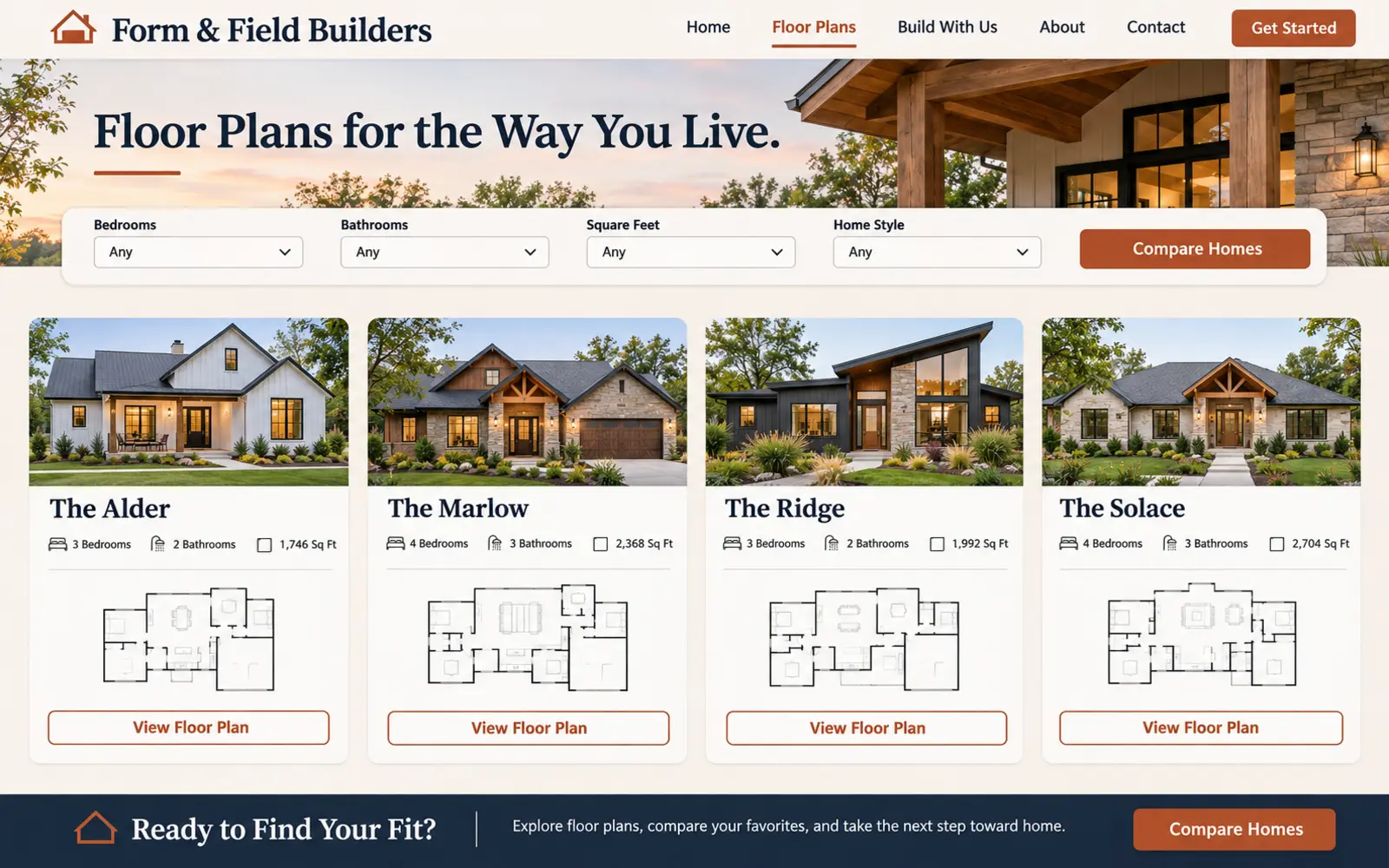
Most buyers do not begin by asking for a plan number. They think about bedrooms, work-from-home space, entertaining, accessibility, storage, outdoor living, multigenerational needs, and how the home may serve them over time. This design makes floor-plan discovery feel like a guided comparison rather than a technical catalog.
Useful filters may include one or two stories, square footage, bedroom and bathroom range, garage capacity, primary-suite location, home office, game room, flex space, outdoor living, architectural style, and community availability. Each plan page can include labeled dimensions, exterior options, key features, representative images, availability, and a direct way to ask a question or schedule a tour.
Make important plan information available as crawlable page content rather than relying only on a downloadable PDF or a filter interface search engines cannot interpret. Be precise about what can be changed and which images show upgrades. If a plan supports structural options or personalization, explain the boundaries and when those decisions occur.
4. Make communities and service areas easy to explore
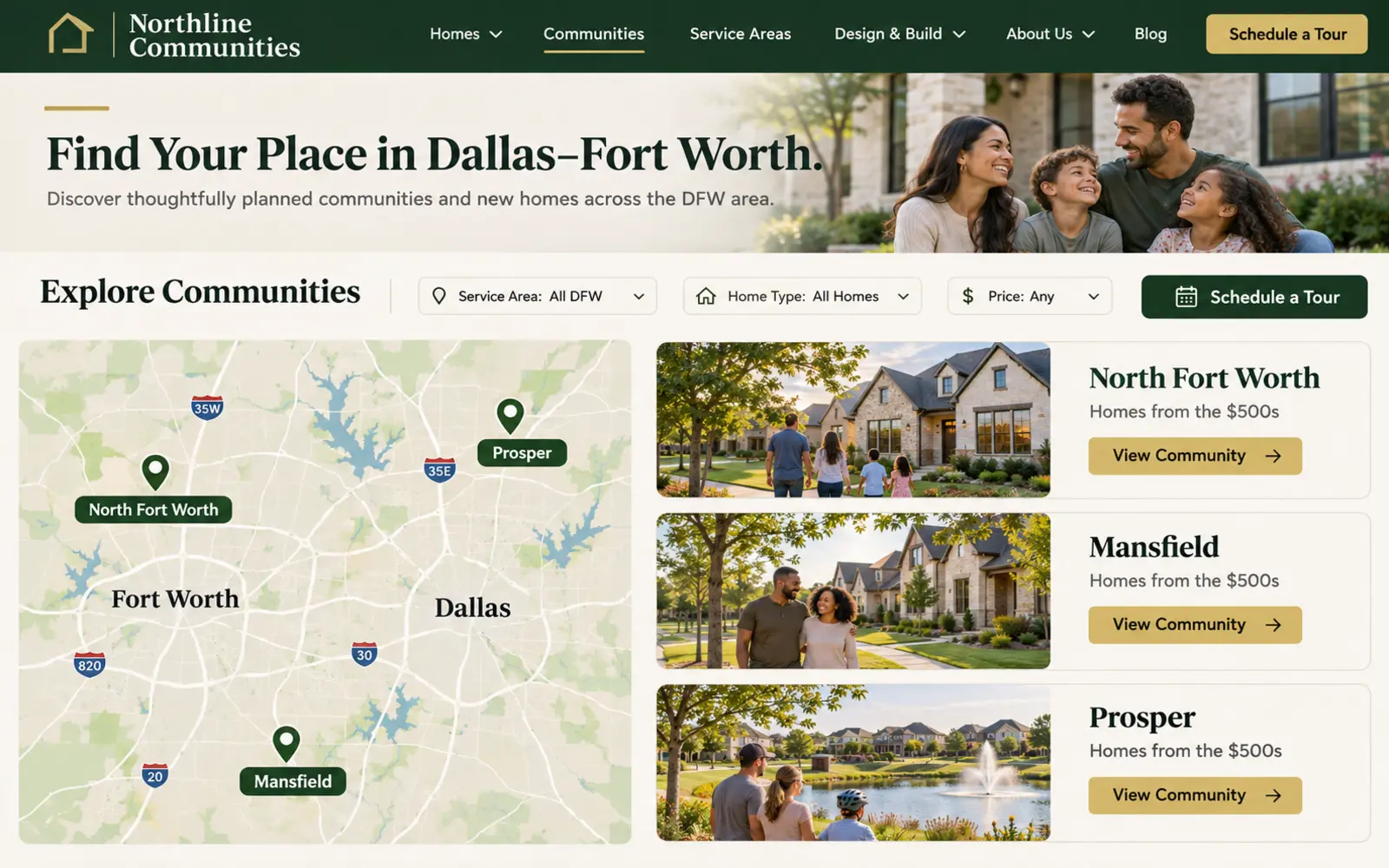
For many buyers, the location decision comes before the builder decision. This design combines a regional map with clear community cards so visitors can explore Dallas, Fort Worth, and surrounding cities by location, lifestyle, home offering, or availability. Every result leads to a useful destination rather than a pin with no supporting information.
Each community page can include a map, available homes and plans, model information, image gallery, amenities, nearby destinations, visit instructions, and the questions buyers commonly ask. A custom builder that does not develop communities can use the same structure to explain its service areas, regional experience, and build-on-your-lot availability.
Local content should be specific and current. School, tax, commute, association, and development information can change, so identify authoritative sources and encourage buyers to verify details that affect their decision. Local SEO works best when pages genuinely help buyers rather than repeating the same copy with a different city name.
5. Present available and quick-move-in homes as current inventory
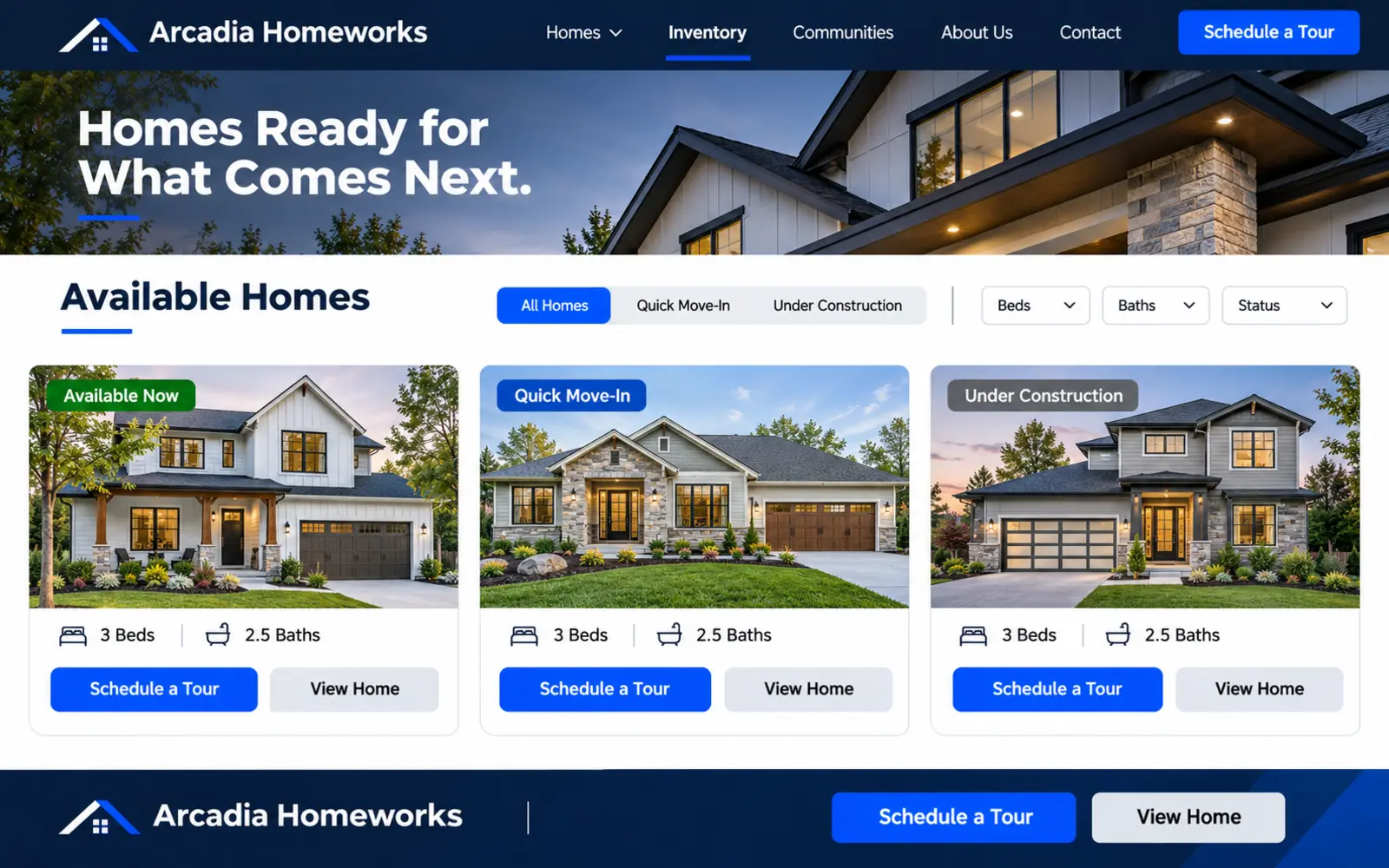
A long inventory page is difficult to use when buyers are trying to compare location, timing, size, and budget. This design turns available homes into a practical search tool with filters for city or community, home status, price guidance, bedrooms, bathrooms, square footage, story count, and move-in timing.
Each listing should provide enough context to support the next step: a strong image, address or homesite, plan name, location, key specifications, construction status, estimated availability when appropriate, and a clear tour or information request. Distinguish “available now,” “under construction,” “coming soon,” “model home,” and “sold” so buyers understand what each status means.
On mobile, filters should remain simple and results should load quickly. Preserve selections when a buyer opens a home and returns to the list. Inventory data needs a clear operational owner; outdated status, pricing, or availability can frustrate buyers and create unnecessary work for the sales team.
6. Explain the build process and design-selection experience
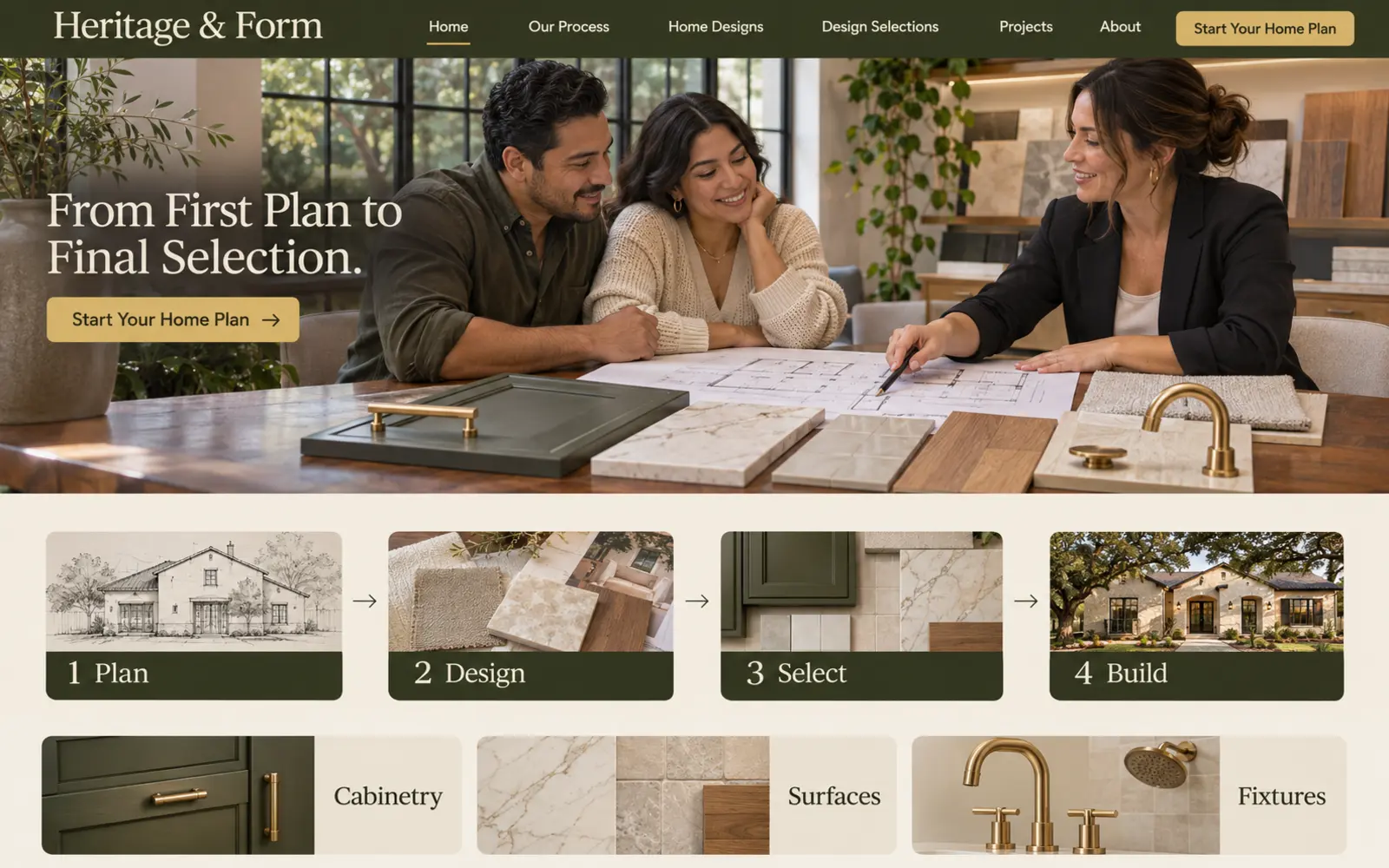
Building a home can feel complex because buyers are evaluating design decisions, financing, land or community requirements, construction milestones, inspections, and move-in timing at once. This design turns the process into a clear sequence: discovery, site or home selection, plan review, agreement, design selections, construction, walkthrough, closing, and post-close support.
The selection portion makes personalization tangible with cabinetry, flooring, countertops, fixtures, lighting, hardware, exterior materials, curated palettes, and examples of coordinated choices. Explain whether buyers visit a design studio, work with a consultant, select from packages, or make individual decisions within defined guidelines. Clarify which choices are structural, which are cosmetic, and when selections are due.
Each process step should explain the buyer's role, the builder's role, the decisions typically made, and what moves the project forward. Avoid promising completion dates or unlimited changes that the operation cannot guarantee. Instead, explain which factors affect timing, how updates are shared, and who communicates with the buyer.
7. Guide build-on-your-lot prospects through site evaluation
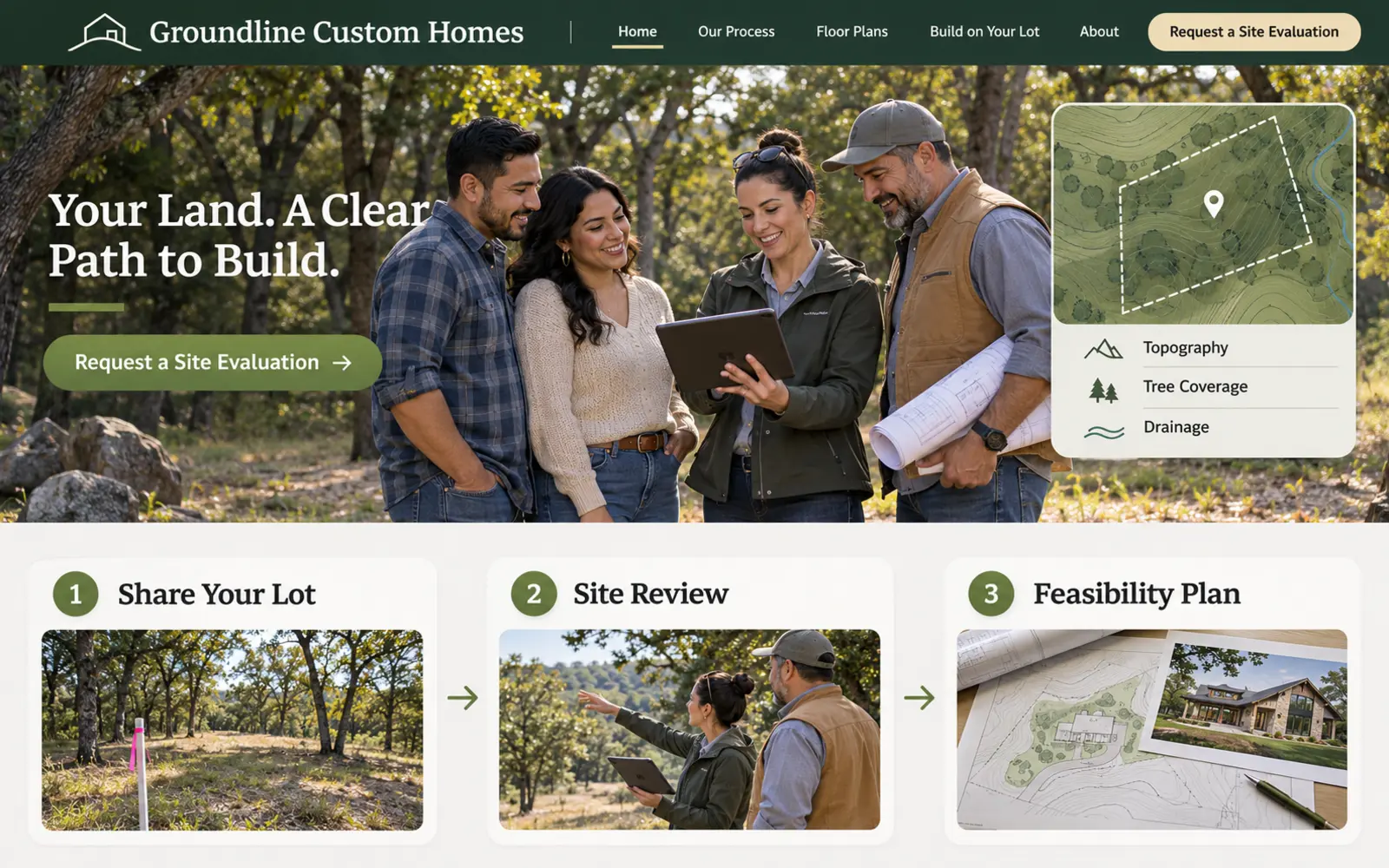
Landowners often know where they want to build but not which property conditions affect planning, design, cost, or schedule. This design introduces build-on-your-lot as a guided evaluation rather than a generic contact form. It explains how location, access, topography, utilities, drainage, soils, setbacks, permitting, existing structures, and the desired home may shape the next steps.
The initial form can ask for the lot address or general location, ownership status, utility information if known, approximate acreage, plan direction, target size, broad budget range, desired timing, and a way to share surveys or site documents. Keep technical questions optional; the prospect should not be expected to evaluate conditions that require a qualified professional.
Set clear expectations for the consultation. Explain what the builder can review initially, when a site visit may occur, which specialists might be involved, and when reliable pricing becomes possible. Avoid promising that a plan will fit, that utilities are available, or that site costs can be determined before the appropriate evaluation.
8. Turn project galleries into case studies
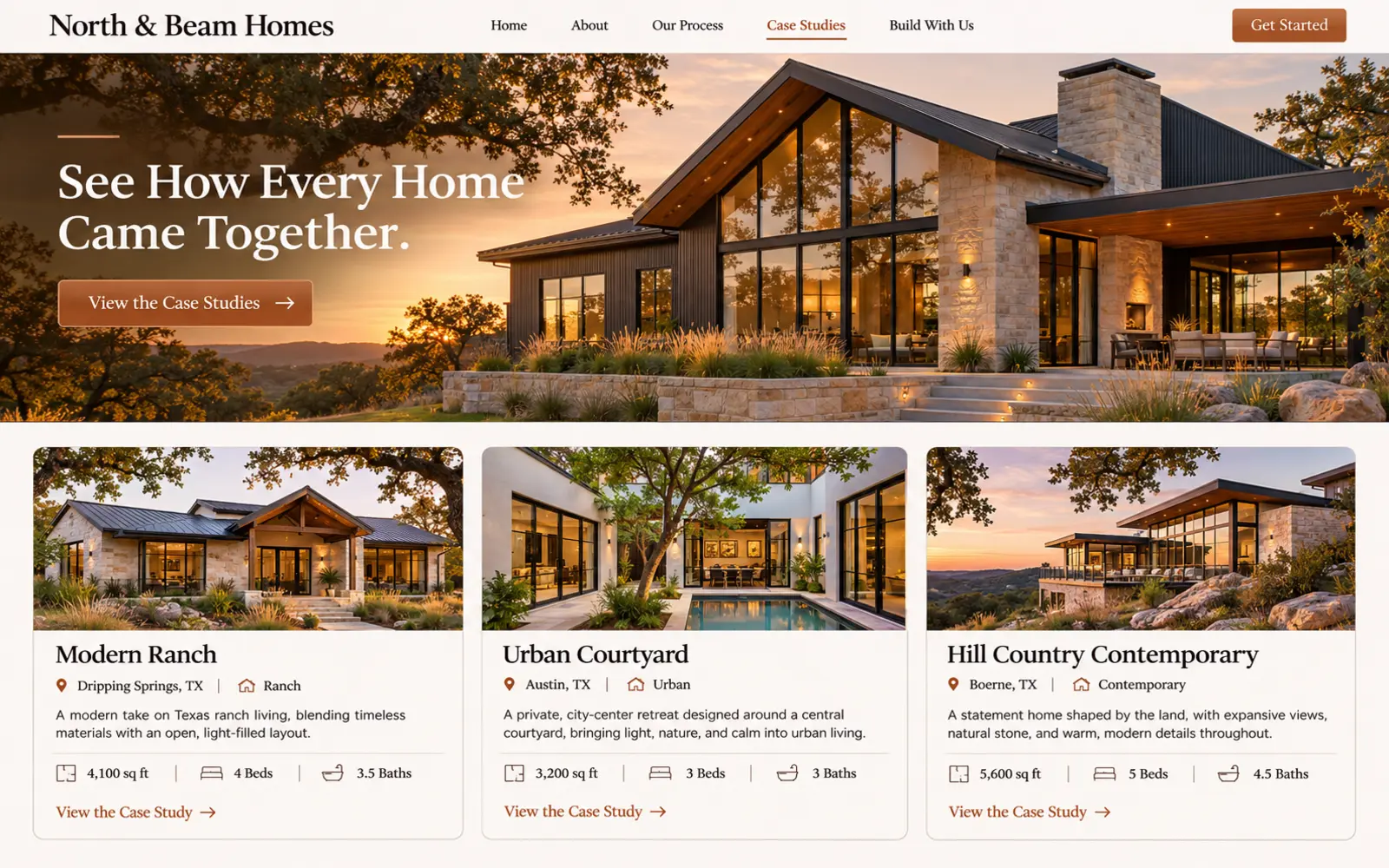
Home building is visual, but a gallery should do more than display attractive rooms. This design presents each completed home as a structured case study with exterior and interior photography, floor-plan context, architectural style, location or market, project scope, key features, constraints, and a short explanation of the client's goals and design decisions.
Organize projects in ways buyers can understand: modern, transitional, traditional, urban, acreage, multigenerational, first-floor living, or other categories that reflect the builder's real work. A buyer should be able to recognize relevant experience without scrolling through an unfiltered wall of images.
Use authentic photography whenever a project is represented as completed work. If renderings or inspiration images appear, label them clearly. Include tours, material close-ups, plan comparisons, or design notes when they help explain the builder's thinking. Captions and alt text should add meaning, while compressed files and responsive sizing protect page speed.
9. Make warranty, team, standards, and homeowner proof visible
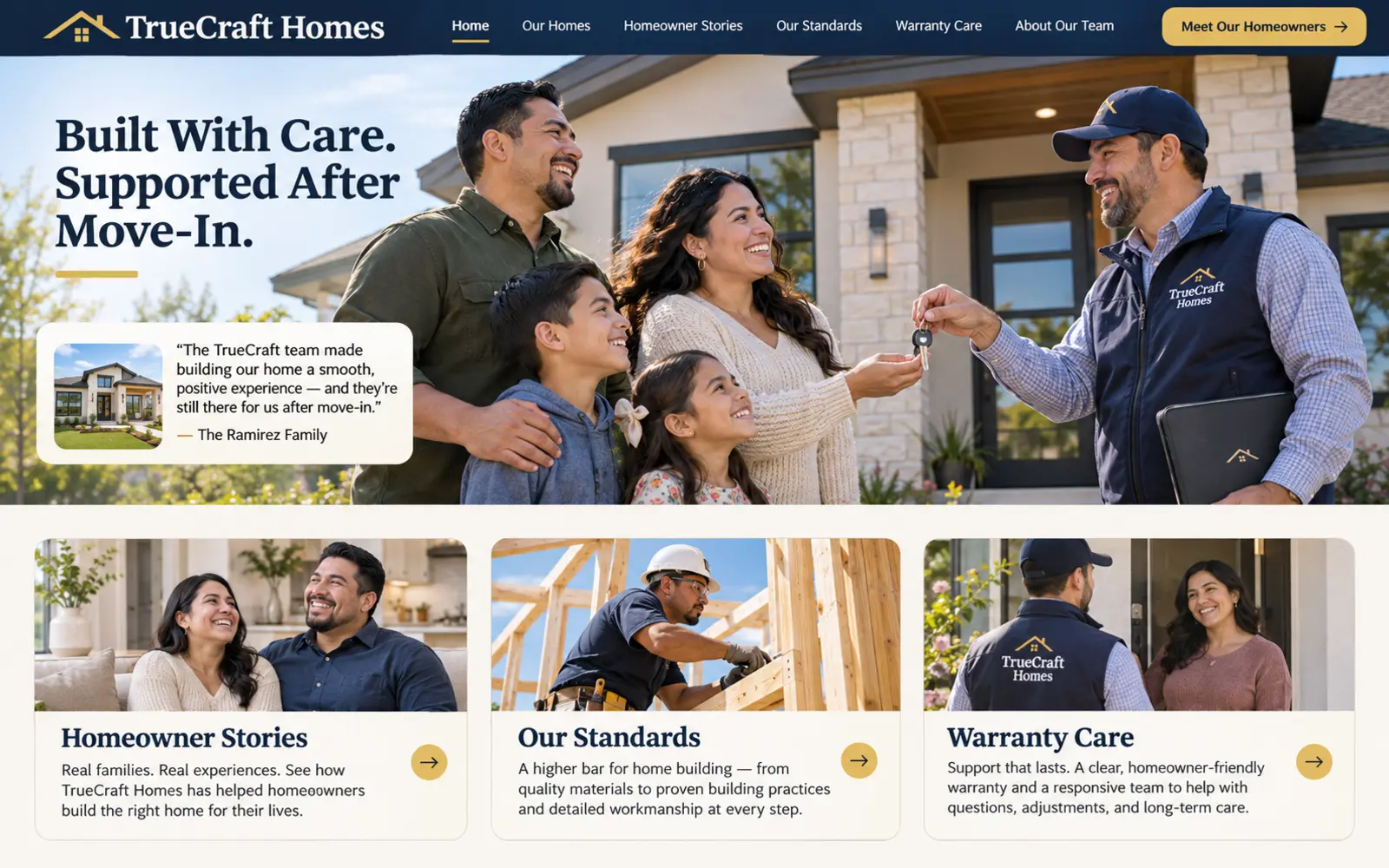
“Quality craftsmanship” appears on countless builder websites, but buyers need evidence that gives the phrase meaning. This design brings the responsible team, communication standards, construction practices, inspection milestones, homeowner reviews, and warranty process into one trust-focused page rather than scattering those details across the site.
Show the people buyers may work with and explain their roles. Add the operating details that reflect the builder's real process: project updates, site meetings, trade-partner expectations, documented selections, inspection coordination, walkthrough standards, and post-close communication. Avoid technical claims, certifications, or performance guarantees that cannot be verified.
Warranty information should explain coverage at an appropriate level, how homeowners submit requests, what happens next, and where complete terms are available. Reviews are strongest when they describe communication, problem-solving, workmanship, and the ownership experience. Specific, verifiable proof creates more confidence than decorative badges or broad promises.
10. Create a complete bilingual home-buying experience
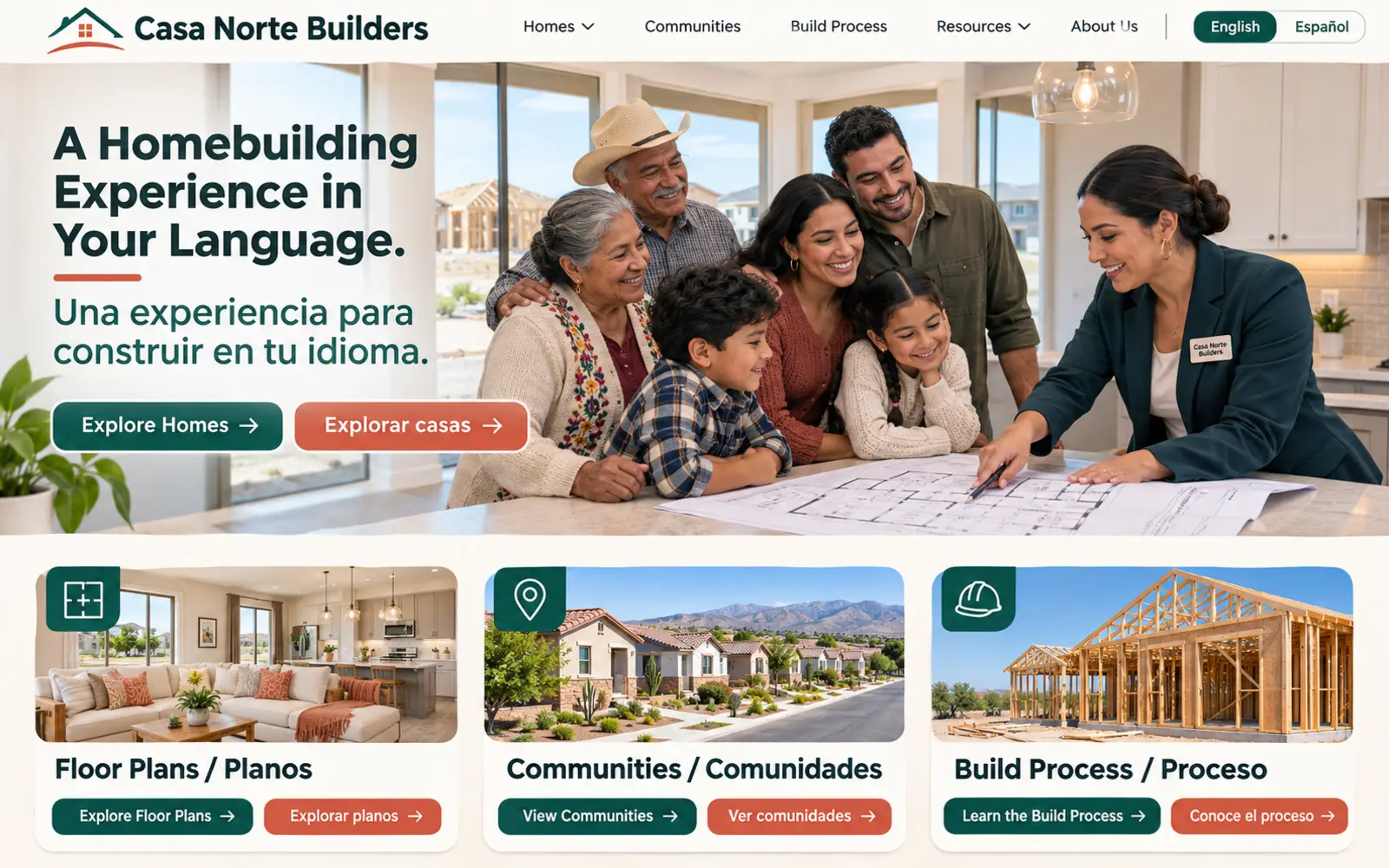
A translated headline does not create a complete bilingual buyer experience. This design gives English- and Spanish-speaking visitors equal access to communities, available homes, floor plans, features, process information, design selections, warranty guidance, forms, confirmations, appointment details, and sales support.
Professional translation should account for construction, financing, real estate, and design terminology while remaining clear to the buyer. Navigation, validation messages, downloadable materials, automated replies, virtual-tour instructions, and follow-up communication should remain consistent with the selected language.
The operational experience matters as much as the website. The builder needs a dependable way to respond in the customer's preferred language and accurately explain availability, options, next steps, and documents. Hispanos Marketing treats bilingual communication as part of a complete multicultural customer journey—not as a decorative translation layer.
Home builder website design checklist
Before launching or redesigning a home builder website, confirm that it supports the way buyers research locations, compare homes, evaluate a builder, and begin a conversation:
- Custom homes, communities, available homes, and build-on-your-lot services have distinct paths when offered.
- Homes, communities, and floor plans can be searched or filtered with useful, current information.
- Project galleries use authentic visuals and provide context about style, features, location, or goals.
- Floor-plan pages explain dimensions, features, availability, options, and the correct next step.
- The building process clarifies buyer responsibilities, builder responsibilities, milestones, and communication.
- Pricing, availability, upgrades, renderings, and representative images are labeled accurately.
- Construction standards, inspections, reviews, warranties, and post-close support are explained with credible proof.
- Community and location pages include useful local content rather than near-duplicate city copy.
- Inquiry forms are concise, mobile friendly, and connected to a reliable sales follow-up process.
- Pages load quickly despite large galleries, video tours, maps, and interactive floor-plan tools.
- English and Spanish journeys are complete when bilingual service is offered.
- Tour requests, calls, form submissions, qualified appointments, and sales-source data are measured.
If the initial cost and upkeep of a traditional website are barriers, explore our managed website plans. They combine a professional website framework with hosting, routine maintenance, and technical support in one monthly plan.
Frequently asked questions about home builder website design
What should a home builder website include?
A home builder website should clearly present the homes or services offered, locations, communities, available inventory, floor plans, project galleries, building process, company information, quality standards, reviews, warranty guidance, and contact options. Depending on the business model, it may also need landowner resources, virtual tours, design selections, realtor information, financing resources, and multilingual content.
How can a home builder website generate more qualified leads?
It should help buyers identify the correct location, home type, floor plan, availability, and next step before they submit an inquiry. Focused community and plan pages, useful filters, credible proof, local search visibility, clear calls to action, accurate campaign tracking, and responsive sales follow-up work together to turn traffic into qualified conversations.
Should home builders display prices online?
Display pricing when the builder can keep it current and explain what it represents. Depending on the offering, the website may show an exact price, starting price, price range, or a prompt to request current information. Clearly identify upgrades, lot premiums, incentives, taxes, fees, and other items that may not be included. Accuracy and context are more important than forcing every offering into one pricing format.
How should a builder present floor plans and renderings?
Use readable plans, clearly labeled rooms and dimensions, key specifications, representative elevations, available options, and a direct inquiry or tour action. Distinguish conceptual renderings from completed photography and disclose when images contain upgrades, furnishings, landscaping, or features not included. Plans and availability should be reviewed whenever the offering changes.
How many pages does a home builder website need?
There is no universal number. A focused custom builder may need core pages for services, process, portfolio, company, service area, FAQs, and contact. A production or community builder may need individual pages for communities, plans, available homes, models, galleries, design options, warranty, real estate professionals, and local markets. Page count should follow the buyer journey and the builder's actual inventory.
How often should a home builder website be updated?
Update availability, pricing guidance, incentives, model hours, communities, team contacts, floor plans, and home statuses whenever they change. Galleries, reviews, warranty information, forms, integrations, search filters, tracking, page speed, accessibility, and older local content should also be reviewed routinely. Assign clear ownership so the website reflects what the sales team can currently offer.
Build a home builder website around the buyer decision
The best home builder website is not simply the one with the largest photo gallery. It is the one that helps the right buyer find a relevant home or service, understand the location and process, evaluate credible proof, and take the next step with confidence.
Hispanos Marketing designs conversion-focused websites for home builders, contractors, and professional service companies in Dallas–Fort Worth and nationwide. We connect positioning, content, user experience, local relevance, and measurement so the website supports real growth. Explore our electrician website design examples, landscaping website design examples, roofing website design examples, plumbing website design examples, HVAC website design examples, and construction website design examples for additional industry breakdowns, or review our website design service.
Book a call with Hispanos Marketing to discuss the right website structure for your home building company.