A strong painting company website should help a homeowner, property manager, general contractor, or commercial decision-maker answer four questions quickly: does this company perform the painting work I need, does it serve my property type and location, can I trust the crew inside or around the property, and how do I request an estimate? The best painting company website design examples combine clear residential and commercial service paths, strong project proof, practical color guidance, and a simple route from research to a qualified inquiry.
The ten examples below show how painting contractors can organize a website around the way customers evaluate interior painting, exterior painting, cabinet refinishing, commercial repainting, occupied-property work, and specialty coatings. Each approach is designed to reduce uncertainty, demonstrate professionalism, and turn a search into an estimate request.
Painting company website design examples: quick overview
- Residential and commercial paths: Let each audience reach relevant services, proof, and estimate questions immediately.
- Color-decision support: Help customers move from inspiration to a productive consultation without promising exact on-screen color.
- Guided estimate requests: Collect property type, spaces, surfaces, condition, timing, location, and photos.
- Before-and-after proof: Add project context so visitors understand the work behind the transformation.
- Commercial capabilities: Present scheduling, occupied-space coordination, safety, documentation, and project scale.
- Service clarity: Separate interior, exterior, cabinet, commercial, and specialty work using customer-friendly language.
- Process transparency: Explain protection, preparation, repairs, application, walkthrough, and cleanup.
- Local visibility: Connect services with the Dallas–Fort Worth markets and property types the company serves.
- Credible trust signals: Support claims with the team, insurance, reviews, warranty terms, and operating standards.
- Bilingual experience: Offer complete English and Spanish journeys from service research through follow-up.
What a high-performing painting company website needs
Painting customers may be homeowners planning a room-by-room refresh, builders preparing a new home, property managers coordinating occupied units, or commercial teams managing larger facilities. A high-performing website gives each audience the information and next step it needs without forcing every visitor through the same generic page.
| Website element | What it should accomplish |
|---|---|
| Clear service architecture | Separate residential interiors, exteriors, cabinets, commercial painting, and specialty services according to what the company actually offers. |
| Authentic project proof | Show completed spaces with property type, surfaces, preparation, products or finish context, location, and useful before-and-after views. |
| Qualified estimate intake | Collect enough property and project detail to route the inquiry while keeping the mobile experience quick. |
| Residential and commercial journeys | Direct homeowners, builders, property managers, general contractors, and facility teams to relevant capabilities. |
| Local search relevance | Connect painting services with real service areas, local project examples, and market-specific customer questions. |
| Trust and expectations | Explain protection, preparation, communication, crew standards, cleanup, insurance, and warranty terms accurately. |
Attractive color palettes can earn attention, but a focused website design strategy is what connects service clarity, visual proof, local relevance, estimate intake, and follow-up into one conversion-focused system.
1. Give residential and commercial customers a clear first step

A painting contractor's opening screen should identify the property types served, the geographic market, and the next step before the visitor begins scrolling. This design leads with a polished transformation, a direct statement such as “Professional painting for homes, businesses, and managed properties,” and two visible paths: Residential Painting and Commercial Painting.
The imagery and proof beneath each path should match the work the company wants to win. Residential visitors may need interior, exterior, cabinet, and occupied-home information. Commercial visitors may need project scale, off-hours scheduling, safety coordination, documentation, and a direct estimating contact. Keep both audiences within one coherent brand while giving each a relevant journey.
2. Turn color inspiration into a productive consultation
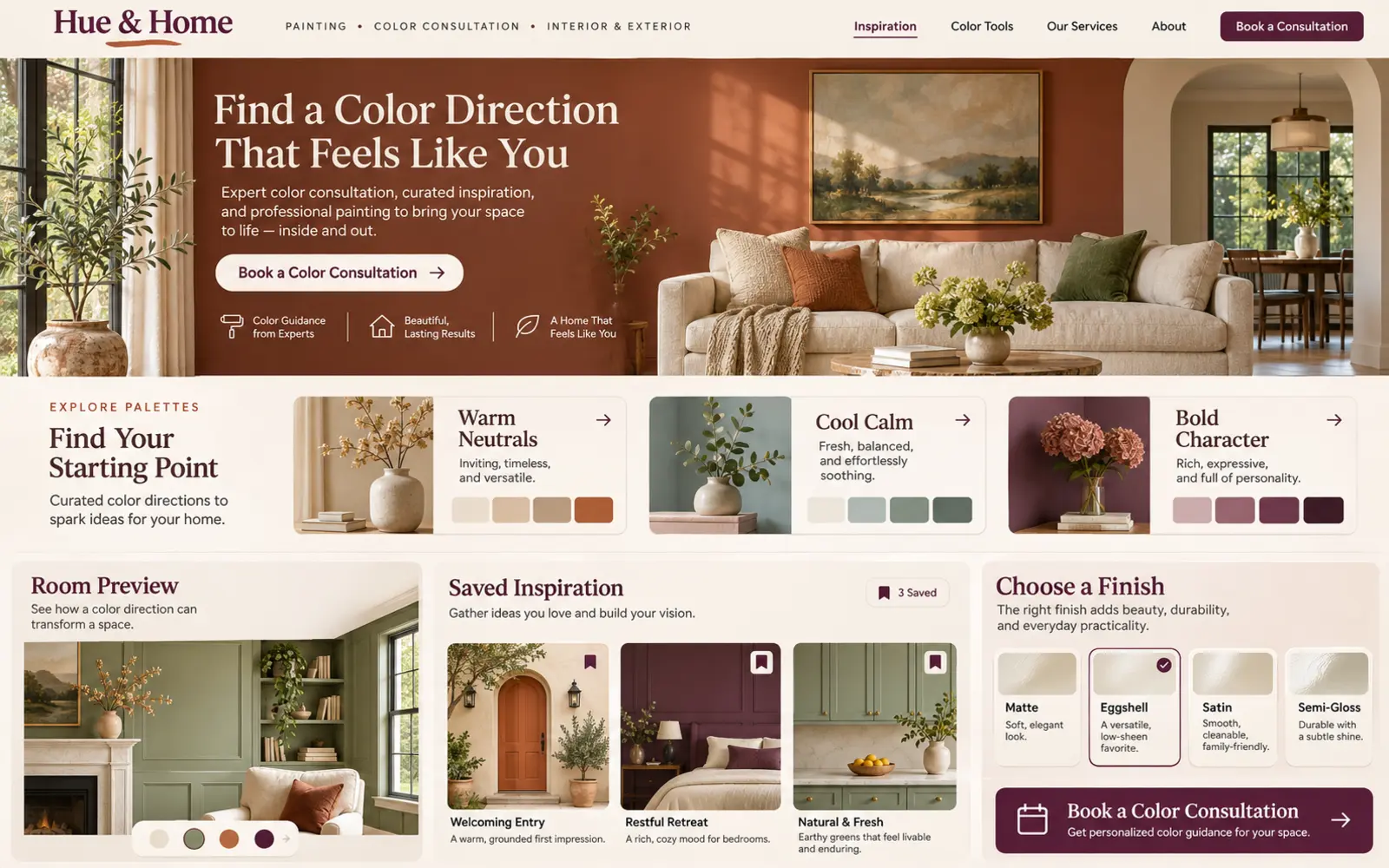
Color is often the most exciting and overwhelming part of a painting project. This design combines curated room palettes, finish education, inspiration boards, and a color-consultation request. Visitors can explore warm, cool, neutral, bold, and brand-aligned directions, save ideas, and share the rooms or surfaces they are considering.
Digital tools should support—not replace—physical samples and professional judgment. Screens, lighting, surrounding materials, sheen, and surface conditions can change how a color appears. Explain that final selections should be reviewed with appropriate samples in the actual environment. This builds confidence without suggesting that an online preview is an exact representation.
3. Build an estimate form around the information painters need
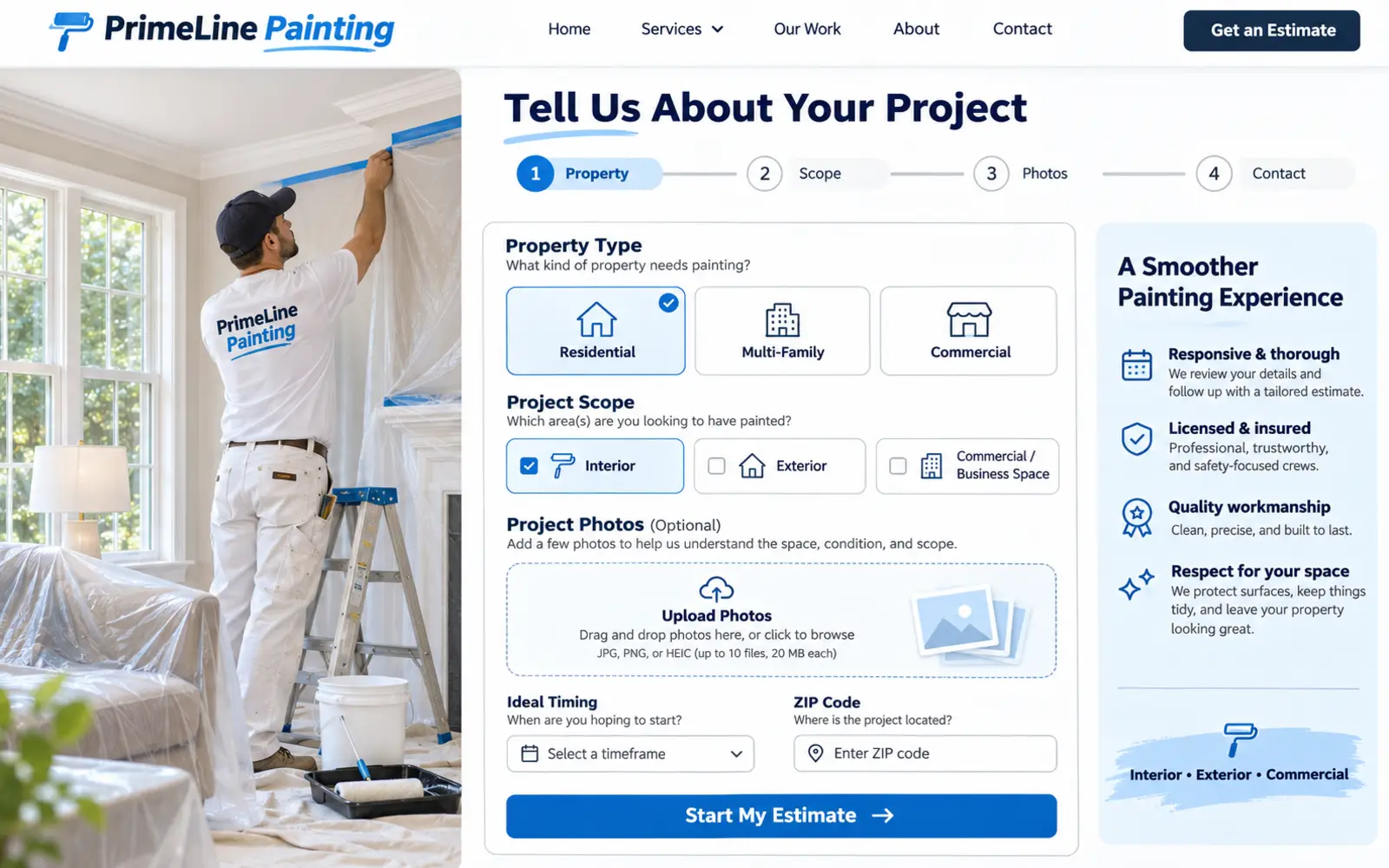
A form that asks only for contact information creates extra back-and-forth. A form that expects customers to calculate every square foot can stop them from submitting. This design collects property type, interior or exterior scope, approximate number of rooms or areas, surface condition, current occupancy, location, timing, and optional photographs.
Conditional questions keep the experience relevant. An interior homeowner may see prompts about ceilings, trim, cabinets, furniture, and access. A property manager may see unit count, occupancy, scheduling, documentation, and bid dates. Explain what happens after submission, when the company typically responds, and whether an on-site walkthrough is required before pricing.
4. Make every before-and-after image tell the project story
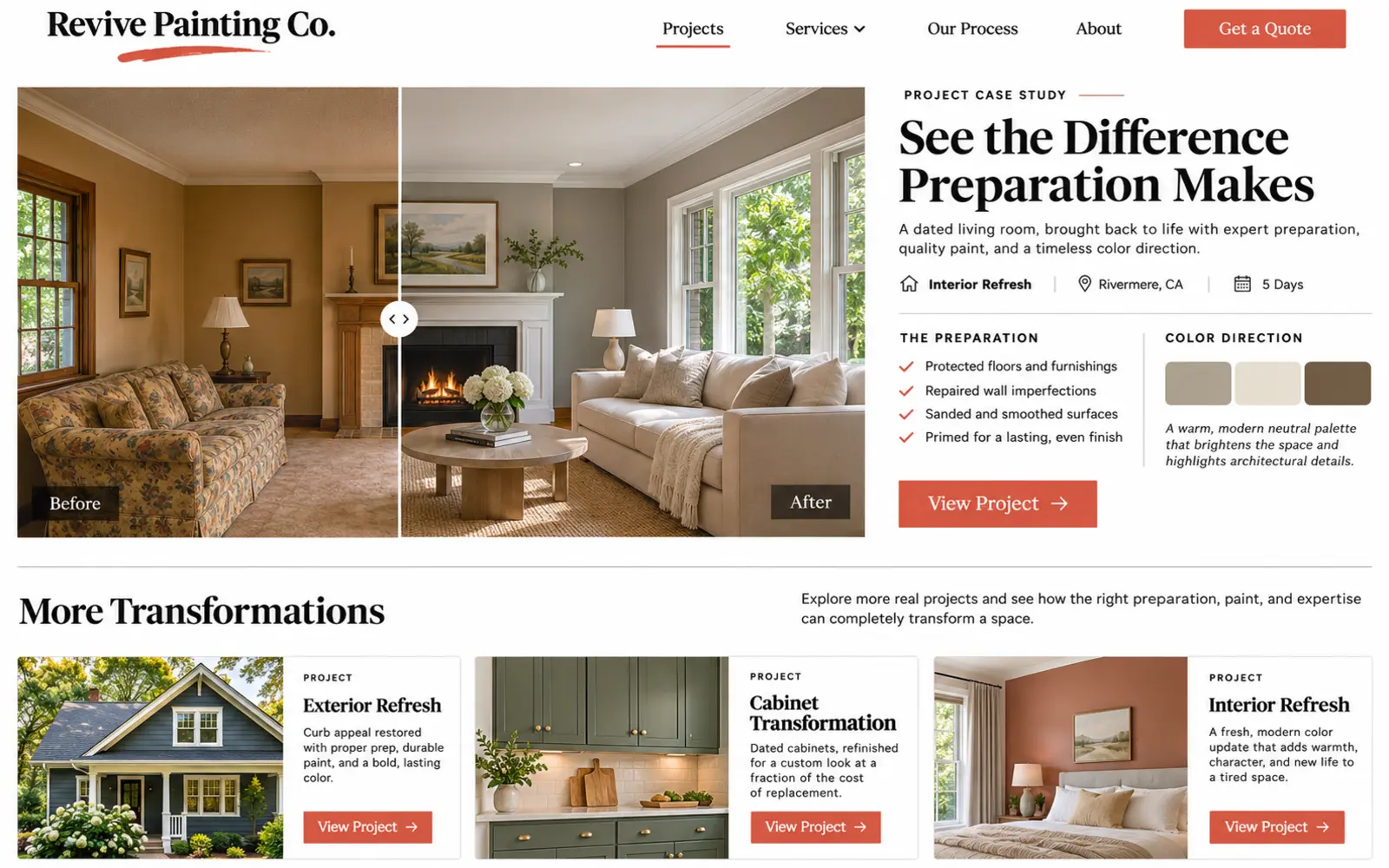
A dramatic slider earns attention, but context is what makes it persuasive. This design turns each transformation into a short case study with property type, location or market, surfaces painted, preparation performed, color direction, finish context, access or scheduling considerations, and the completed result.
Organize the portfolio by categories customers understand: living spaces, kitchens and cabinets, exterior homes, retail, offices, multifamily, hospitality, and other commercial environments. Use authentic photographs and label renderings or representative visuals accurately. Close details of edges, repairs, trim, protection, and cleanup can communicate craftsmanship better than a distant room photo alone.
5. Create a commercial painting capabilities center
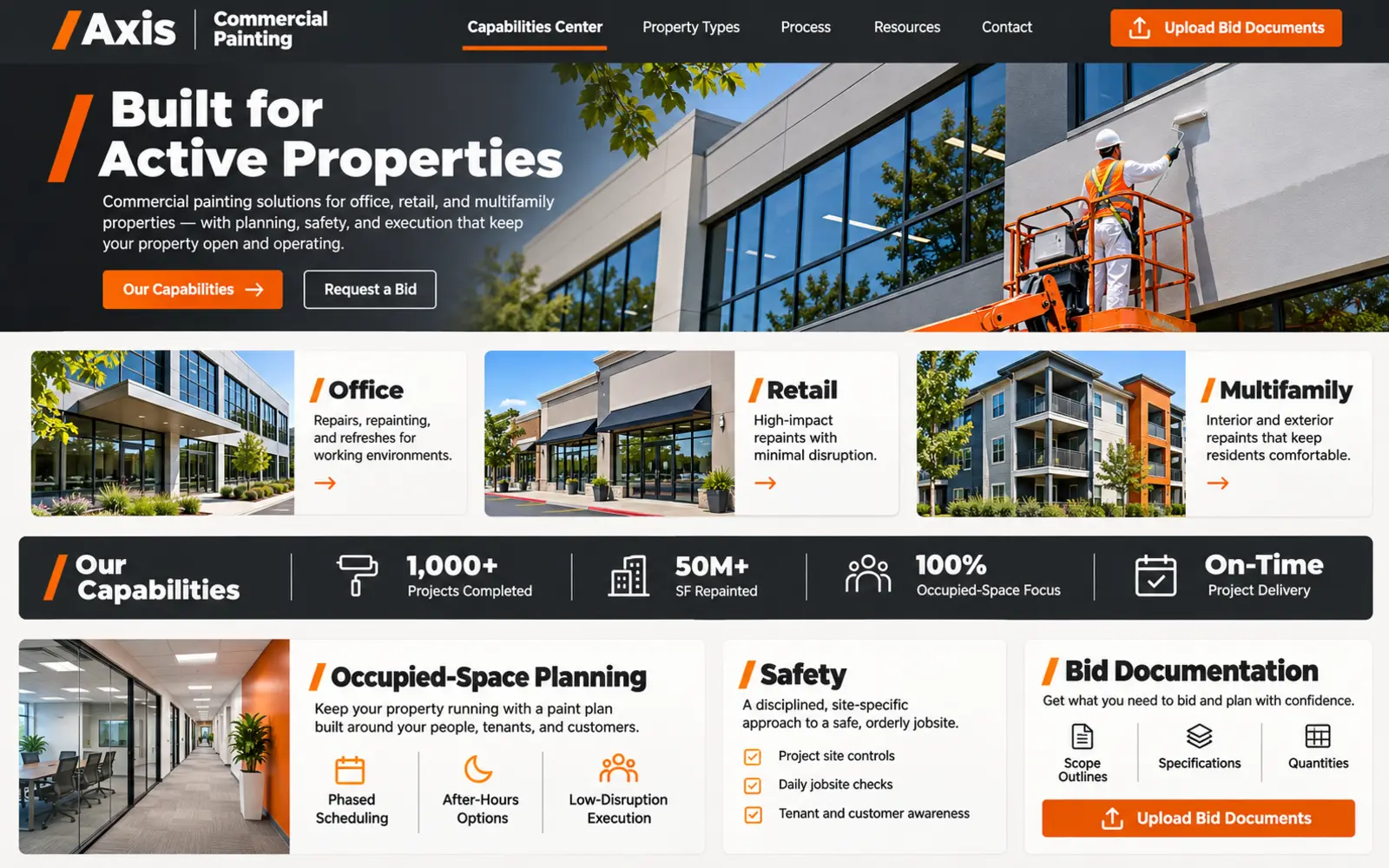
Commercial buyers evaluate more than the final color. This design gives general contractors, property managers, facility teams, owners, and developers a dedicated path with environments served, project range, crew coordination, occupied-space planning, off-hours options when available, surface preparation, safety practices, insurance or bonding information when applicable, and representative project experience.
A bid center can provide a direct estimating contact, secure document upload, project location, bid date, anticipated schedule, scope notes, and access requirements. Keep claims precise and verifiable. Do not publish capacity, certifications, licenses, bonding limits, product approvals, or safety performance that the company cannot support.
6. Organize services around surfaces and customer goals
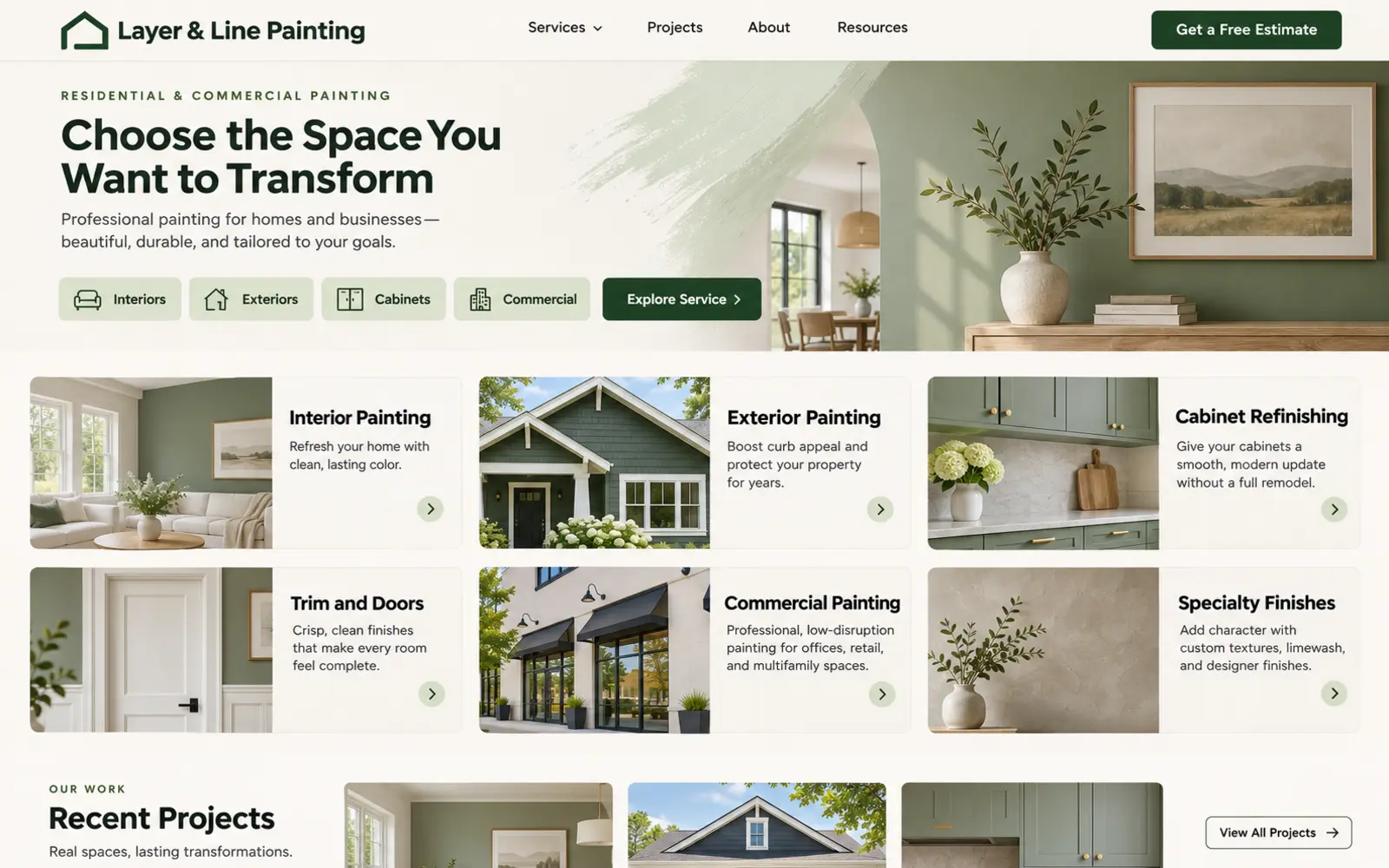
Customers often search by the space or result they want rather than the technical process. This design offers clear paths for interior painting, exterior painting, cabinet refinishing, trim and doors, commercial painting, and specialty services the company actually performs. Each option leads to a focused page with relevant proof, preparation information, and an estimate action.
Service pages should explain suitable property types, typical surfaces, preparation, finish considerations, protection, and the factors that affect scope. Keep related services connected without combining every capability into one dense page. Clear architecture improves usability and helps search engines understand what the company does.
7. Explain the preparation and project process
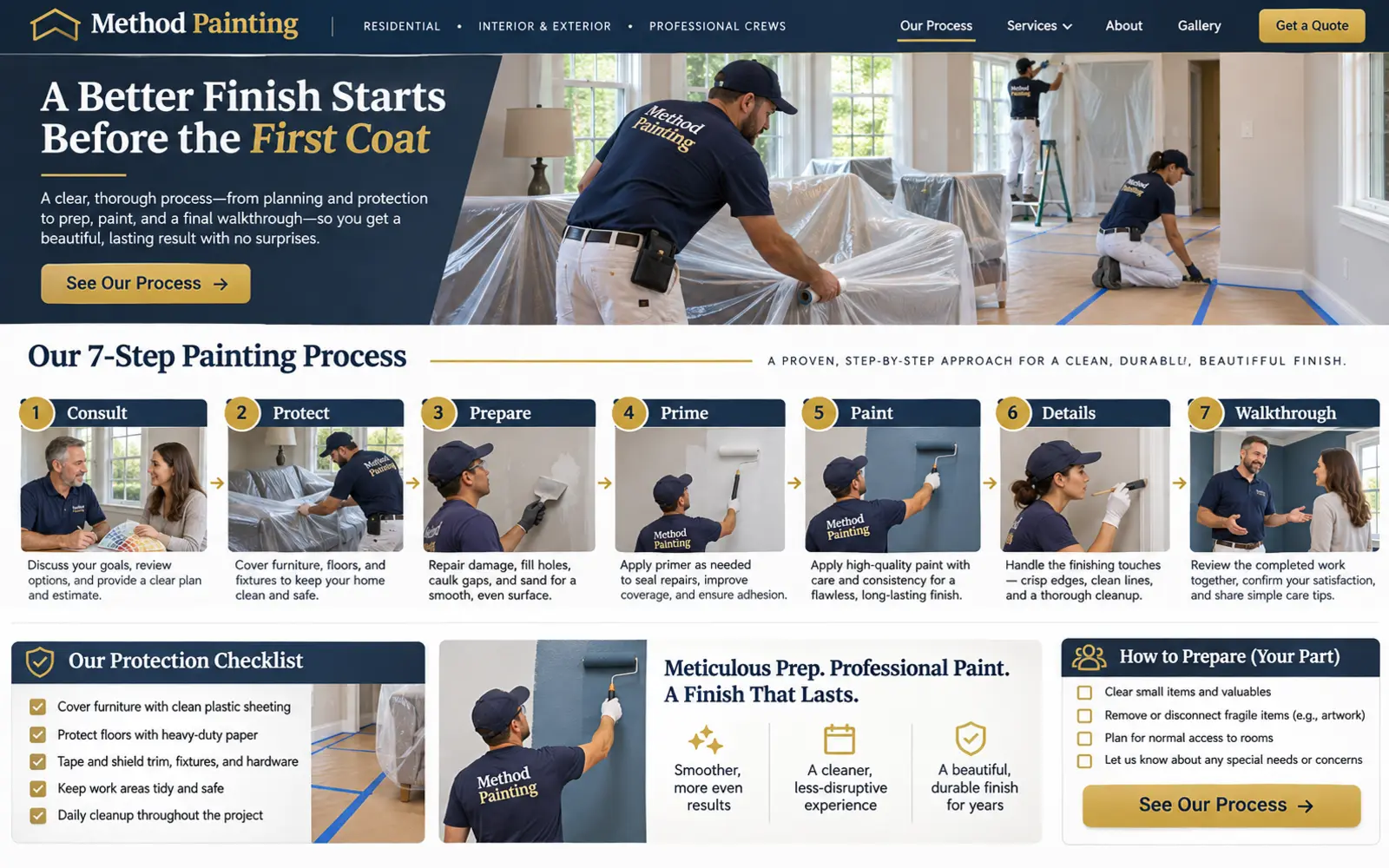
Customers want to know how their home, furnishings, landscaping, inventory, employees, tenants, and adjacent surfaces will be protected. This design translates the project into a clear sequence: consultation, scope confirmation, color and finish decisions, site protection, preparation and repairs, application, walkthrough, touch-ups, and cleanup.
Each step should explain what the crew handles, what the customer may need to prepare, and which conditions can affect the schedule. Address furniture, pets, access, drying, ventilation, weather, occupancy, and change documentation where relevant. Avoid universal timing or coverage promises that ignore product requirements, substrate condition, humidity, temperature, or project complexity.
8. Build local pages around real painting needs
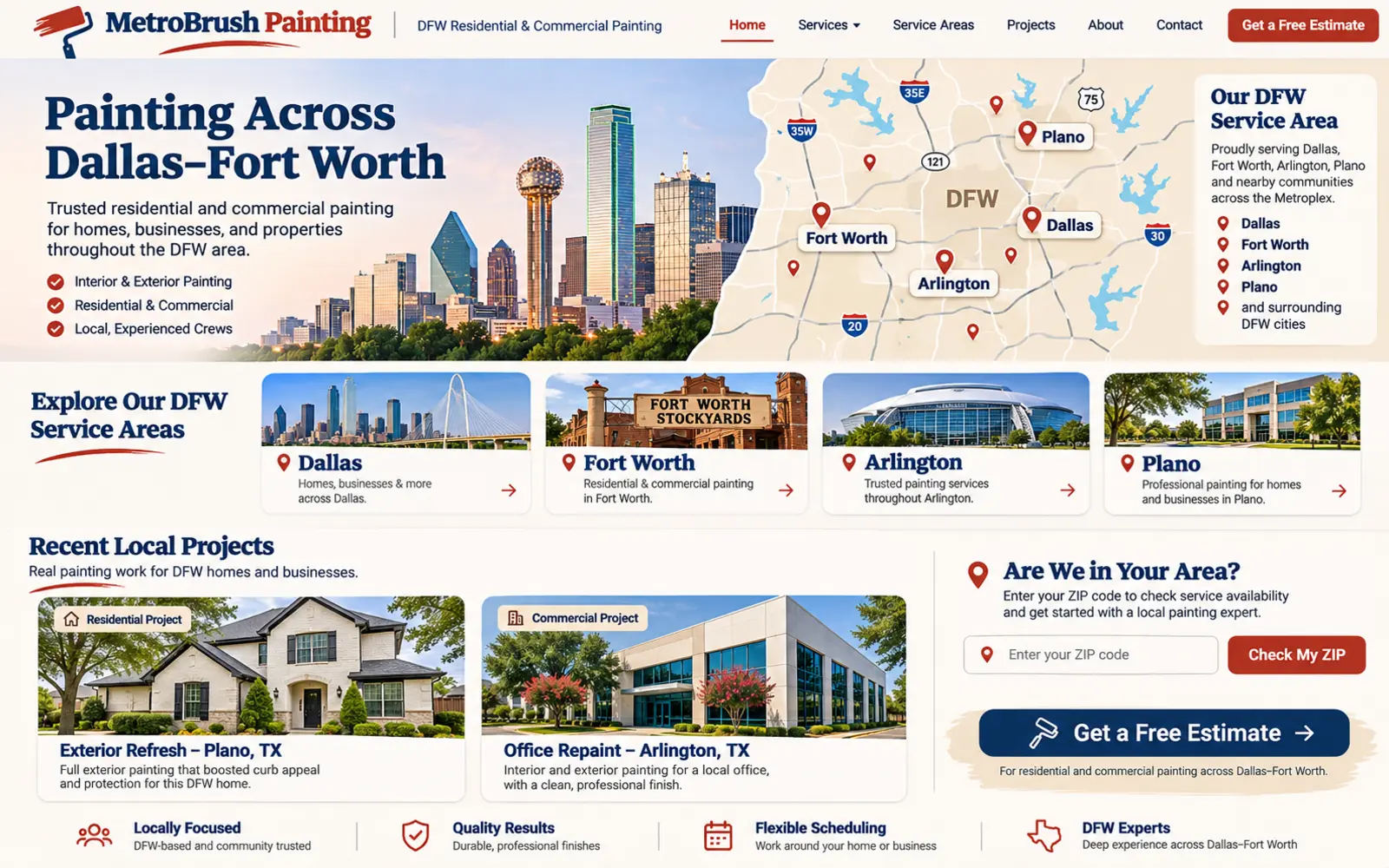
A useful service-area page should do more than repeat the same copy with a different city name. This design combines a Dallas–Fort Worth service map with the residential and commercial painting services offered in each market, nearby project examples, property types served, and a direct way to confirm availability.
Local content can answer practical questions about exterior exposure, neighborhood or property access, occupied commercial scheduling, builder coordination, and common surfaces—without making unsupported technical claims. Connect each market page to real work and accurate coverage. Helpful local content strengthens customer confidence and organic search visibility.
9. Make crew standards and customer protection visible
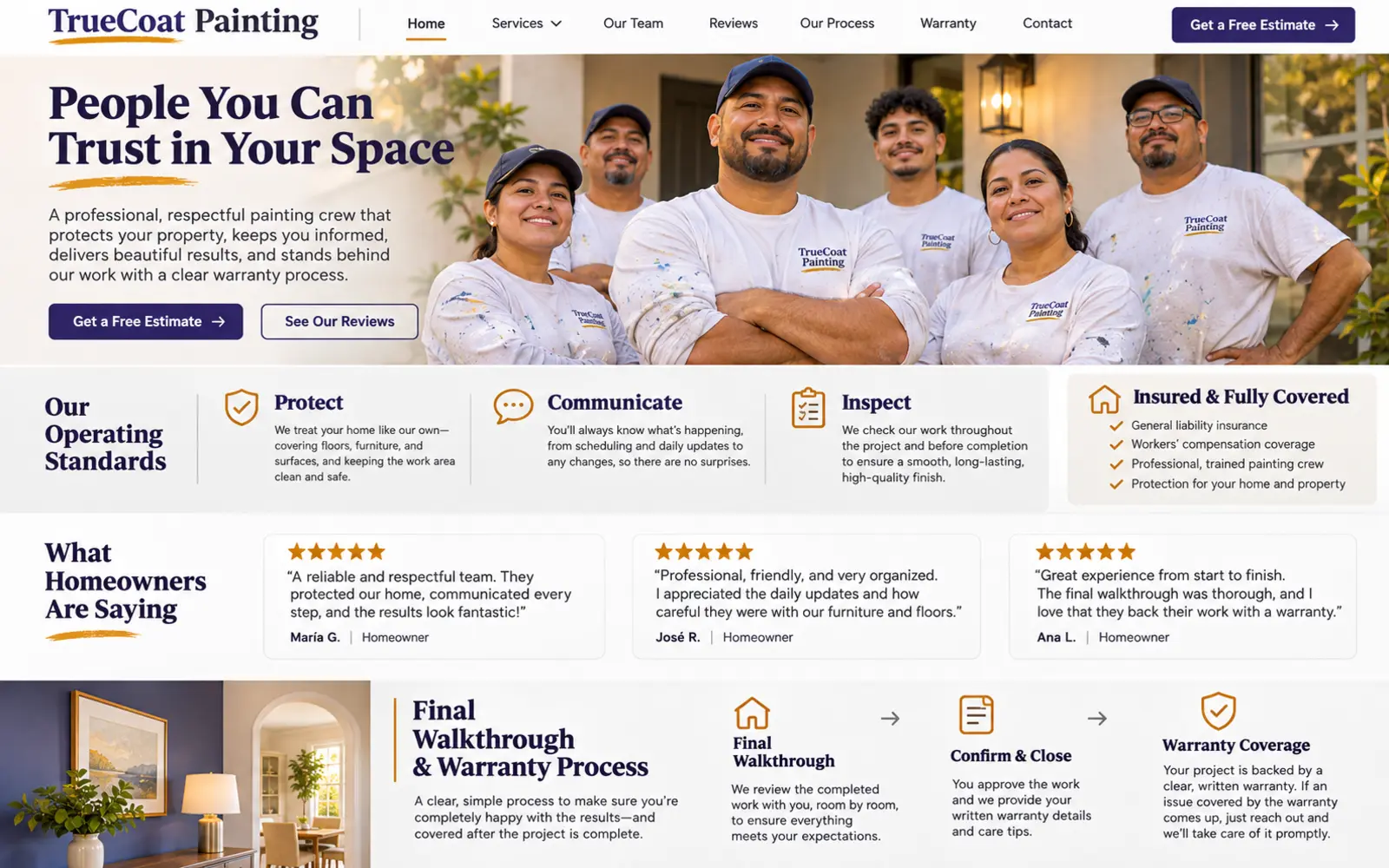
Inviting a crew into a home or active business requires trust. This design introduces field leadership, explains communication and site-protection standards, and provides specific proof such as insurance information, verified reviews, background or screening practices when accurate, quality-control steps, and a clearly described warranty process.
Show who manages estimates and projects, how daily communication works, how changes are documented, and how final walkthroughs or warranty requests are handled. Publish licenses, certifications, affiliations, insurance, product credentials, or warranty terms only when current and applicable. Specific operating standards are more credible than broad claims about being the “best painter.”
For older homes, explain how the company evaluates painted surfaces and follows any applicable lead-safe requirements. If the company advertises lead-safe certification or regulated-work capabilities, make sure every credential is current, accurately named, and supported by the field process.
10. Create a complete bilingual painting customer journey
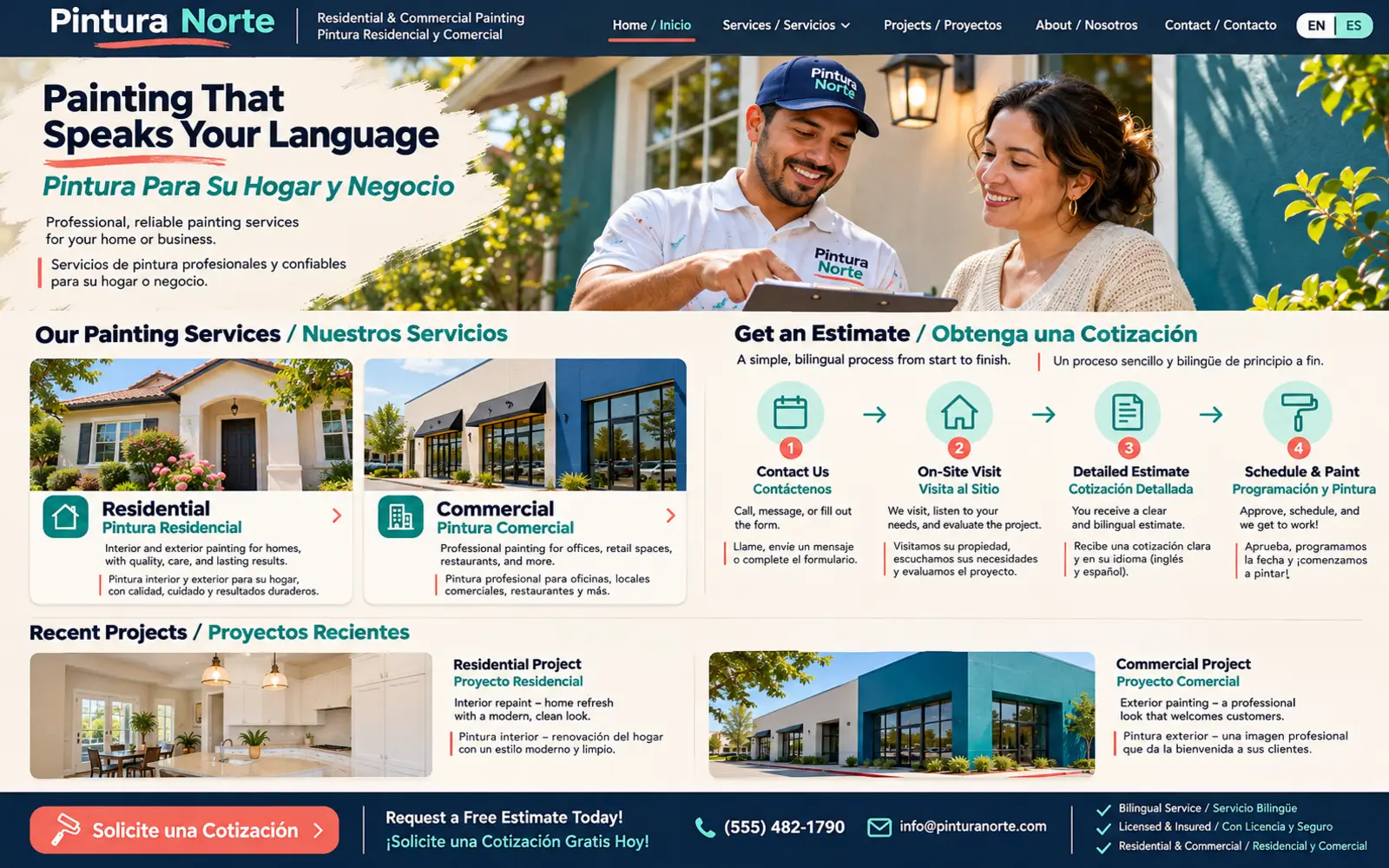
A translated headline does not create a complete bilingual experience. This design gives English- and Spanish-speaking visitors equal access to residential and commercial services, project examples, preparation guidance, color-consultation information, estimate forms, confirmations, appointment details, and follow-up.
Professional translation should account for painting, surface preparation, finish, estimating, and commercial terminology while remaining clear to the customer. The operational experience must support the website: inquiries need to reach someone who can respond accurately in the selected language. Hispanos Marketing treats bilingual communication as part of the full customer journey—not as a decorative language toggle.
Painting company website design checklist
- Residential and commercial visitors have clear, relevant paths.
- Every core service has a focused page with preparation context, proof, and a clear action.
- The portfolio identifies property type, surfaces, preparation, color or finish context, and completed result.
- The estimate form collects useful details without requiring technical diagnosis or exact measurements.
- Commercial buyers can find capabilities, service territory, coordination practices, documentation, and bid contacts.
- The process explains protection, preparation, application, communication, walkthrough, and cleanup.
- Color tools explain the limitations of screens and the importance of physical samples.
- Service-area pages contain useful local information rather than near-duplicate city copy.
- Team, insurance, reviews, credentials, and warranties are current and verifiable.
- Pages load quickly despite large galleries, sliders, video, maps, and file uploads.
- English and Spanish journeys are complete when bilingual service is offered.
- Calls, forms, estimate requests, qualified opportunities, and lead sources are measured.
If the upfront cost and upkeep of a traditional website are barriers, explore our managed website plans. They combine a professional website framework with hosting, routine maintenance, and technical support in one monthly plan.
Frequently asked questions about painting company website design
What should a painting company website include?
A painting company website should clearly present residential and commercial services, service area, project portfolio, preparation and painting process, company information, reviews, estimate options, and contact details. Depending on the business, it may also need cabinet refinishing, color consultation, occupied-property coordination, commercial capabilities, bid uploads, warranty guidance, recruiting, and bilingual content.
How can a painting contractor website generate more qualified leads?
Help visitors identify the right service, view comparable projects, understand the preparation and project experience, confirm the service area, and submit useful property details. Focused service pages, local search visibility, authentic before-and-after proof, clear estimate forms, call tracking, and fast follow-up work together to produce better opportunities.
Should painters show prices online?
Show pricing only when the company can keep it accurate and explain what it represents. Painting costs vary with surface area, height, condition, repairs, access, protection, number of colors, coats, products, sheen, occupancy, scheduling, and other scope factors. Educational ranges can be useful, but they should not be presented as a final quote without the required project review.
What projects should appear in a painting website portfolio?
Feature the work the company wants to win. Include interiors, exteriors, cabinets, residential transformations, and commercial environments when those services are offered. Add context such as property type, location, surfaces, preparation, finish, challenge, scheduling, and completed result. Authentic, well-labeled projects are more persuasive than generic stock rooms.
How many pages does a painting company website need?
There is no universal number. A focused residential painter may need core pages for interior, exterior, cabinets, projects, process, service area, company, FAQs, and contact. A company serving commercial clients may also need capabilities, property-type pages, case studies, bid resources, safety or qualifications, and recruiting content. Page count should follow the services, audiences, and search opportunities.
How often should a painting contractor website be updated?
Add completed projects, reviews, service changes, service-area updates, team information, credentials, forms, and commercial capabilities whenever they change. Review older pages, tracking, integrations, calls to action, accessibility, mobile usability, and page speed routinely so the website reflects what the company can currently deliver.
Build a painting company website around the customer's decision
The best painting company website is not simply the one with the boldest colors. It is the one that helps the right customer identify a relevant service, evaluate comparable work, understand the experience, and request an estimate with confidence.
Hispanos Marketing designs conversion-focused websites for painting companies, contractors, and professional service businesses in Dallas–Fort Worth and nationwide. We connect positioning, content, user experience, local relevance, and measurement so the website supports real growth. Explore our concrete contractor website design examples, paving company website design examples, home builder website design examples, construction website design examples, and roofing company website design examples, or review our website design service.
Book a call with Hispanos Marketing to discuss the right website structure for your painting company.