An effective roofing website should help a property owner answer four questions quickly: does this company handle my type of roof, does it serve my location, can I trust its work, and what should I do next? The strongest roofing website design examples combine clear service paths, visible proof, local relevance, fast mobile performance, and a focused way to request an inspection or estimate.
The ten examples below show how roofing companies can organize their websites around different customer decisions—from storm damage and inspection requests to problem-based navigation, restoration education, replacement options, commercial work, project proof, and bilingual customer journeys. Each approach is designed to reduce uncertainty and help qualified visitors move toward a useful conversation.
Roofing website design examples: quick overview
- Storm damage: Help customers recognize the next safe step and request an inspection without exaggerated urgency.
- Inspection and estimate requests: Give visitors a short, understandable path from their address and concern to the next step.
- Problem-based navigation: Help visitors find the right service by visible problem, project goal, or roof type.
- Restoration education: Clarify documentation and insurance communication while avoiding promises about coverage or claim outcomes.
- Roof replacement: Explain materials, financing, warranties, and the evaluation process in plain language.
- Trust: Place authentic reviews, qualifications, team visibility, and workmanship standards near the decision.
- Local relevance: Make Dallas–Fort Worth coverage and location-specific service information easy to confirm.
- Residential and commercial: Give homeowners, property managers, and commercial buyers distinct paths.
- Project proof: Use organized galleries and case studies to demonstrate relevant experience.
- Bilingual experience: Give English- and Spanish-speaking customers complete, equally useful journeys.
What a high-performing roofing website needs
Roofing customers do not all arrive with the same problem. One homeowner may have noticed a leak after a storm, another may be comparing replacement materials, and a property manager may be planning a multi-building maintenance program. A high-performing website helps each visitor find the relevant information without forcing everyone through one generic sales page.
| Website element | What it should accomplish |
|---|---|
| Clear primary action | Make requesting an inspection, estimate, or consultation obvious on desktop and mobile. |
| Service-specific paths | Separate repair, replacement, storm-related work, commercial roofing, and maintenance when offered. |
| Relevant project proof | Show completed work by roof type, property type, service, and market instead of relying on a generic gallery. |
| Trust signals | Support the decision with authentic reviews, qualifications, warranties, team information, and clear standards. |
| Local clarity | Confirm the service area and provide useful information for the communities and property types the company serves. |
| Reliable lead handling | Connect calls, forms, inspection requests, and campaign sources to a dependable follow-up process. |
Visual polish can earn attention, but structure is what helps a visitor make a decision. A focused website design strategy connects search intent, positioning, project proof, usability, and lead capture into one experience.
1. Make storm-damage help clear and responsible
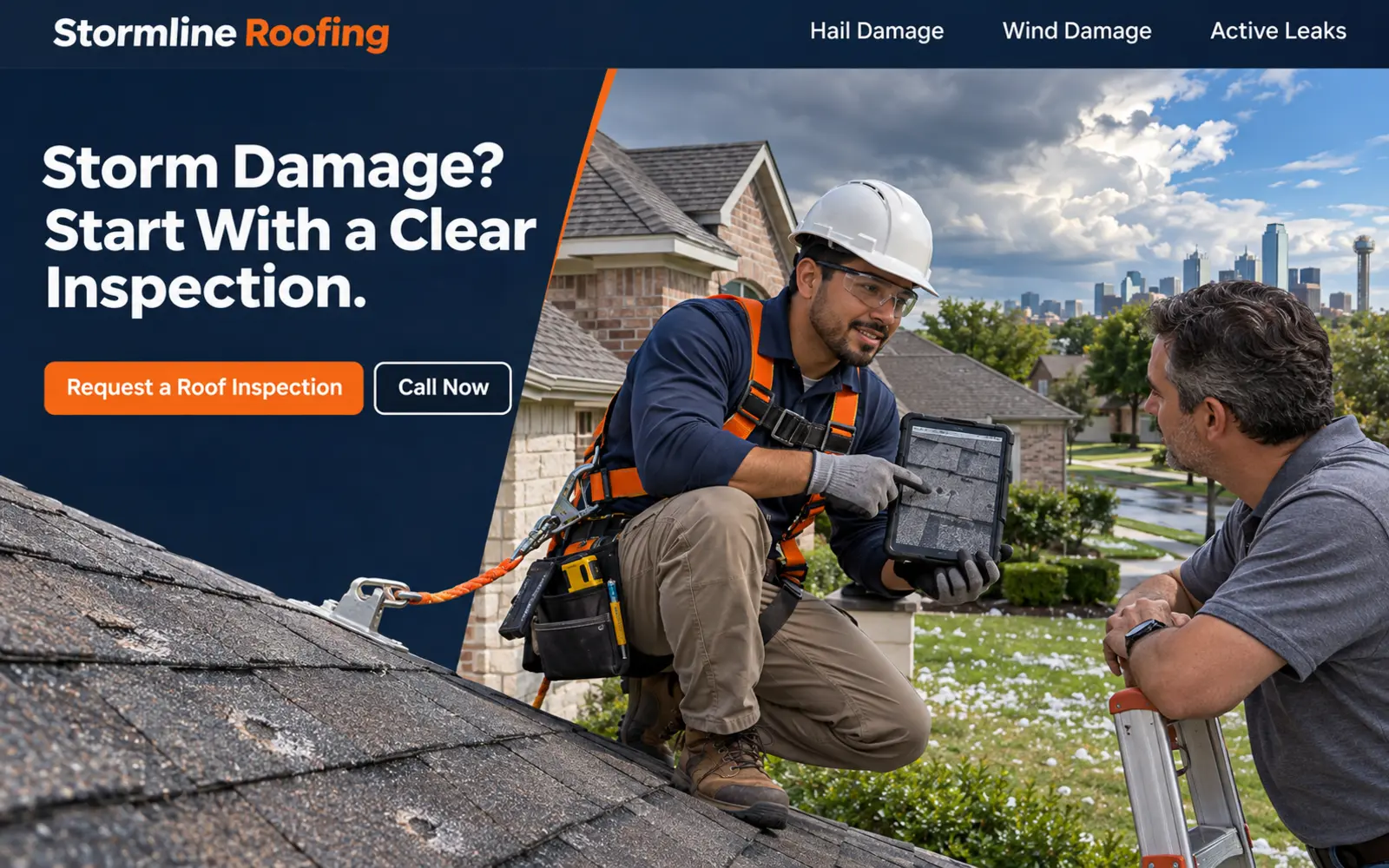
After high winds, hail, or a sudden leak, a property owner may be concerned without knowing whether the roof has sustained damage. This design places storm-related service, the inspection request, phone contact, and service area in the first screen. It also gives the visitor a short list of safe observations to note without encouraging anyone to climb onto the roof.
Urgency should come from clarity rather than fear. The page can explain what happens after a request, how the inspection is scheduled, what the company evaluates, and when temporary protection may be discussed. Avoid countdowns, unsupported damage claims, or language suggesting that every storm requires a replacement.
On mobile, the primary actions should remain easy to reach while leaving enough room for useful information. Immediately below the hero, answer the next questions: which roof types are serviced, which locations are covered, what information the customer should provide, and what to expect after contact.
2. Create a short inspection and estimate-request path
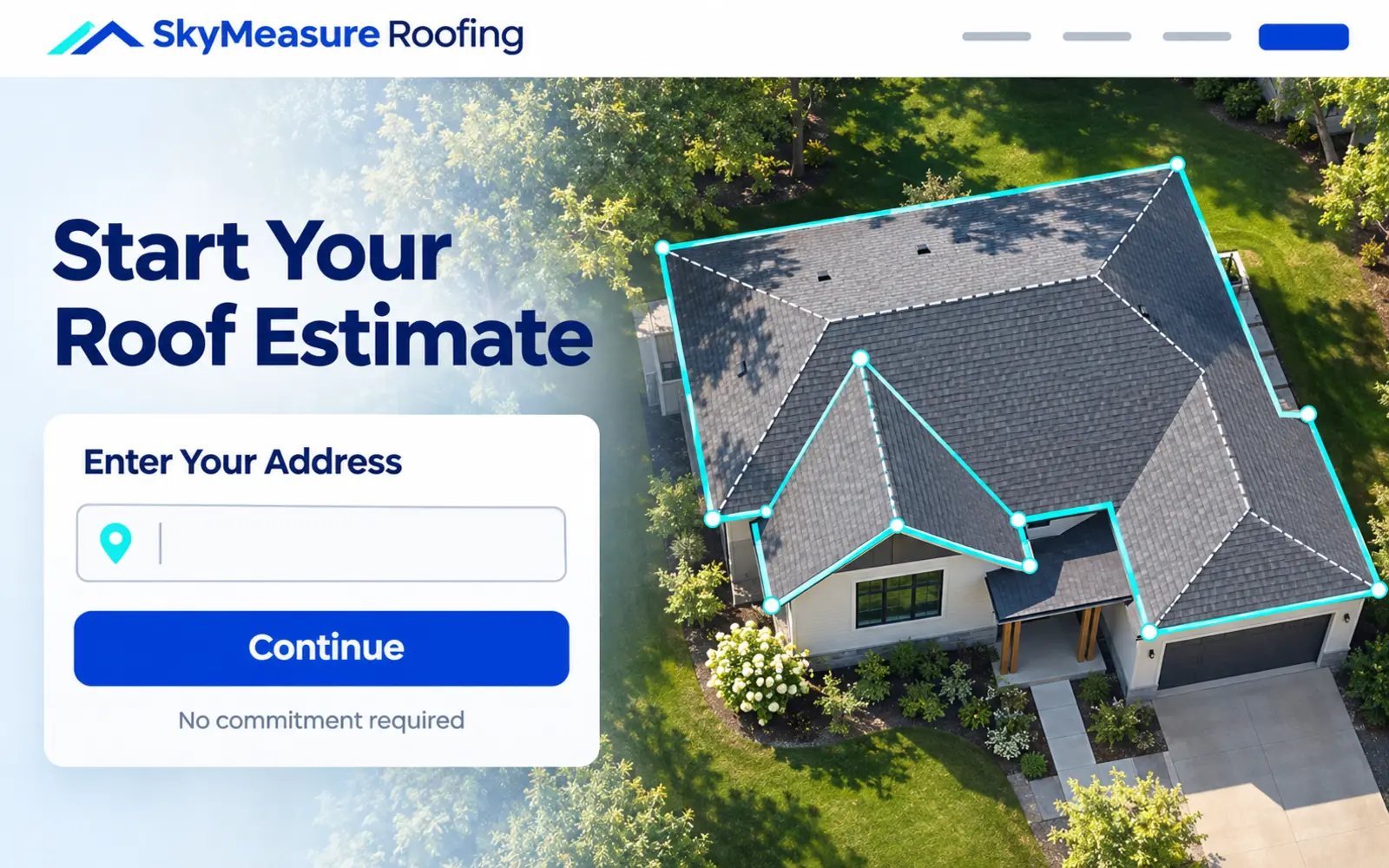
A roofing lead form should make the next step feel manageable. This design begins with the property address, then uses a short guided flow to collect the general concern, roof or property type, preferred timing, and contact information. Optional photo upload gives customers a way to share visible conditions without making the form difficult to complete.
The form should collect only what the team will actually use. Asking for too much information before the first conversation can reduce completion, especially when a customer is using a phone. Questions that require professional evaluation—such as the exact cause of a leak or the remaining service life—belong in the inspection process rather than the intake form.
If the website uses aerial measurement or an estimate tool, explain what the result represents and what still requires professional review. The confirmation message should state whether an appointment is confirmed or pending and provide a phone option for time-sensitive conditions. That clarity makes the company feel organized before anyone has spoken with a representative.
3. Help visitors find the right roofing service
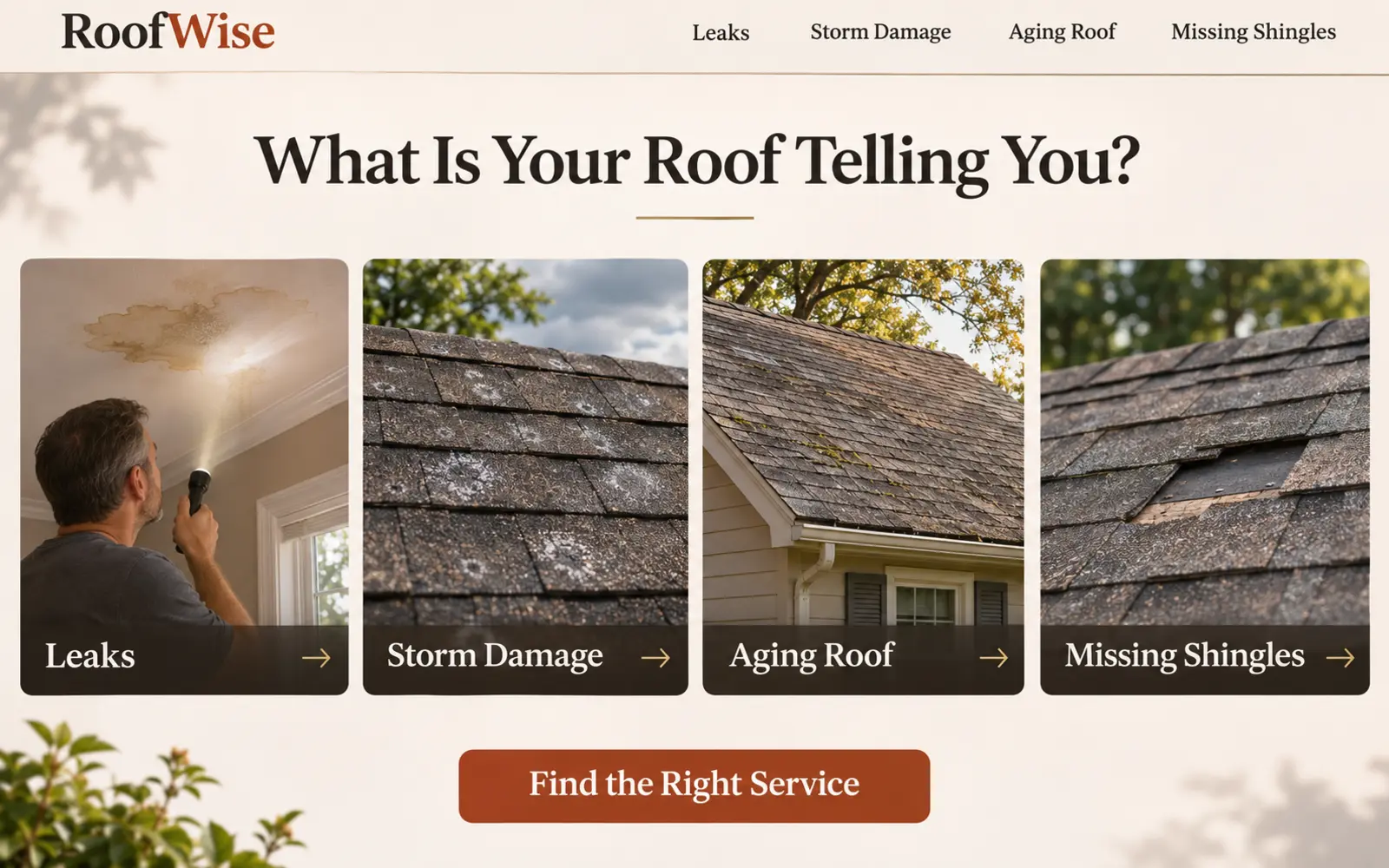
Property owners often know what they see—a ceiling stain, missing shingles, hail marks, or a roof that appears worn—but not which service to request. This design organizes the opening experience around recognizable problems, helping visitors choose a useful path without first understanding roofing terminology.
Each problem card should lead to a focused page that explains common signs, the evaluation process, possible next steps, relevant roof types, service-area information, and a clear inspection or estimate action. The same labels should remain consistent across navigation, forms, and follow-up so the customer does not have to translate one set of categories into another.
Problem-based navigation should guide rather than diagnose. The website can help a visitor recognize when professional evaluation may be appropriate, but it should not promise a cause, scope, or replacement before the roof has been inspected. Pairing problem labels with standard service names also supports customer understanding and search visibility.
4. Explain restoration documentation and insurance communication
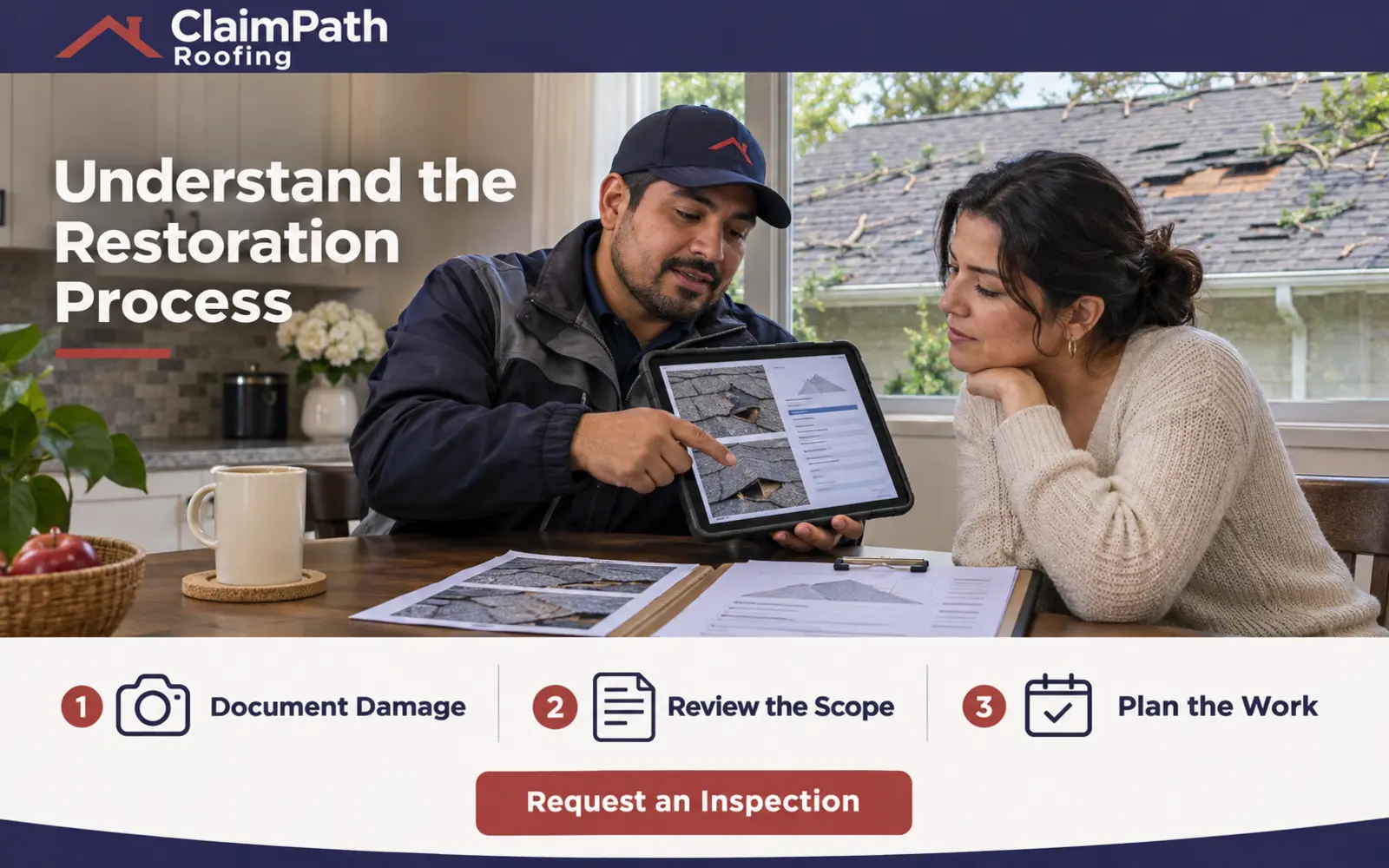
Customers often have questions about storm documentation, estimates, adjuster appointments, deductibles, and what information their insurer may request. This design provides a calm educational path that explains the roofing company’s role without promising coverage, claim approval, or a particular financial outcome.
The page can describe the inspection report, photographs, measurements, written scope, and other records the company provides. It should also clarify that policy interpretation and coverage decisions belong to the insurer and qualified professionals. State-specific requirements matter, so claims-related language should be reviewed for every market where the company operates.
Clear education can build trust even when the visitor ultimately pays outside an insurance claim. The most useful next step is usually an inspection or consultation that establishes the roof’s actual condition before assumptions are made about damage, scope, or payment.
5. Explain roof-replacement options without overwhelming visitors
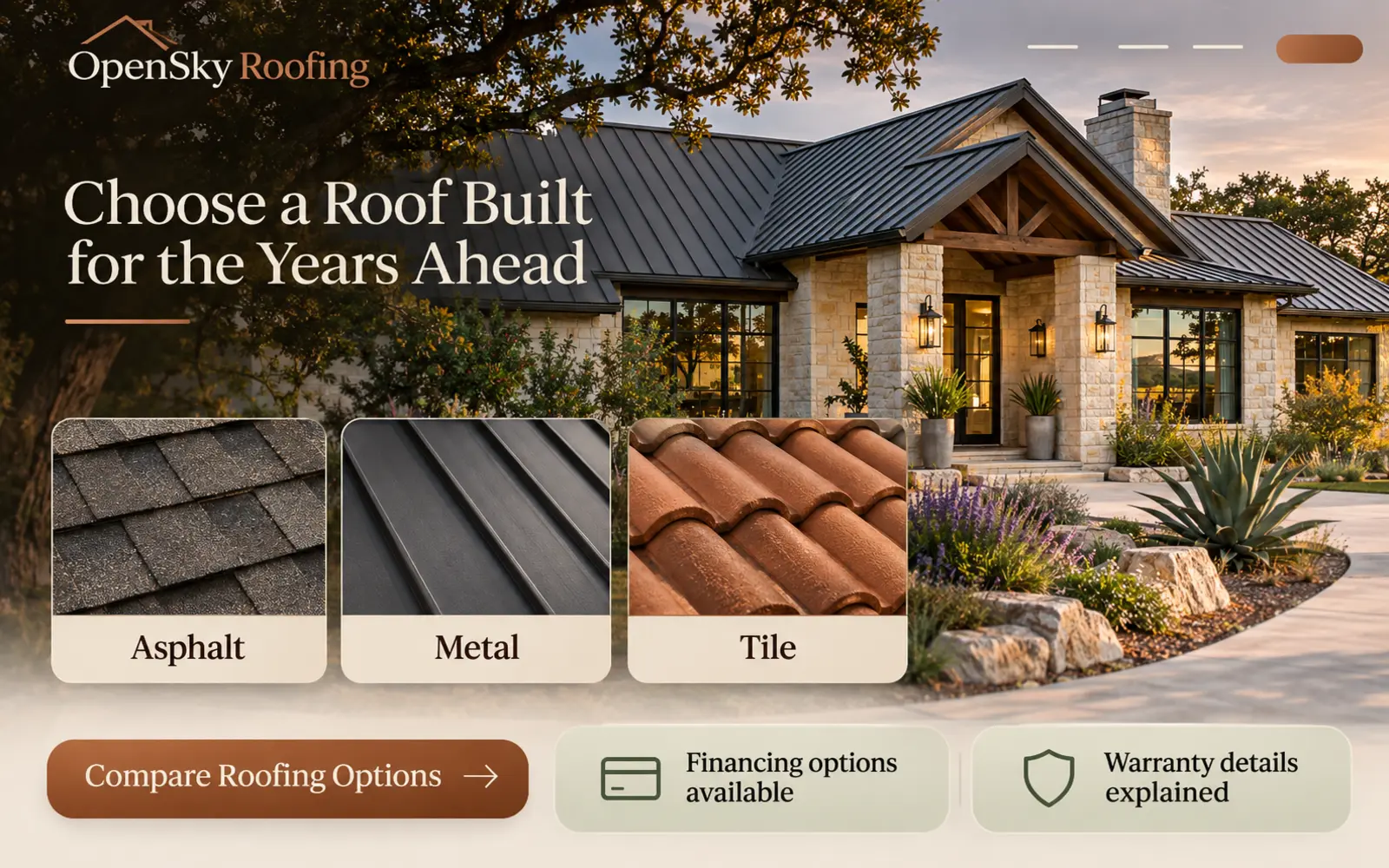
A roof replacement can involve material, ventilation, underlayment, flashing, property conditions, warranty options, budget, and long-term goals. This layout gives homeowners an understandable starting point by introducing common material categories and the factors that shape a recommendation without turning the hero into a technical catalog.
Each material page can explain appearance, appropriate applications, maintenance considerations, available warranty information, and what the installation process generally involves. If financing is offered, use accurate eligibility language and connect the visitor to the applicable terms rather than presenting unsupported payment claims.
A visible process reduces uncertainty. Show what happens from consultation and inspection through recommendations, scope review, scheduling, installation, cleanup, and follow-up. The goal is not to tell every visitor which roof to purchase; it is to help them prepare for a productive evaluation.
6. Build trust through people and operating standards
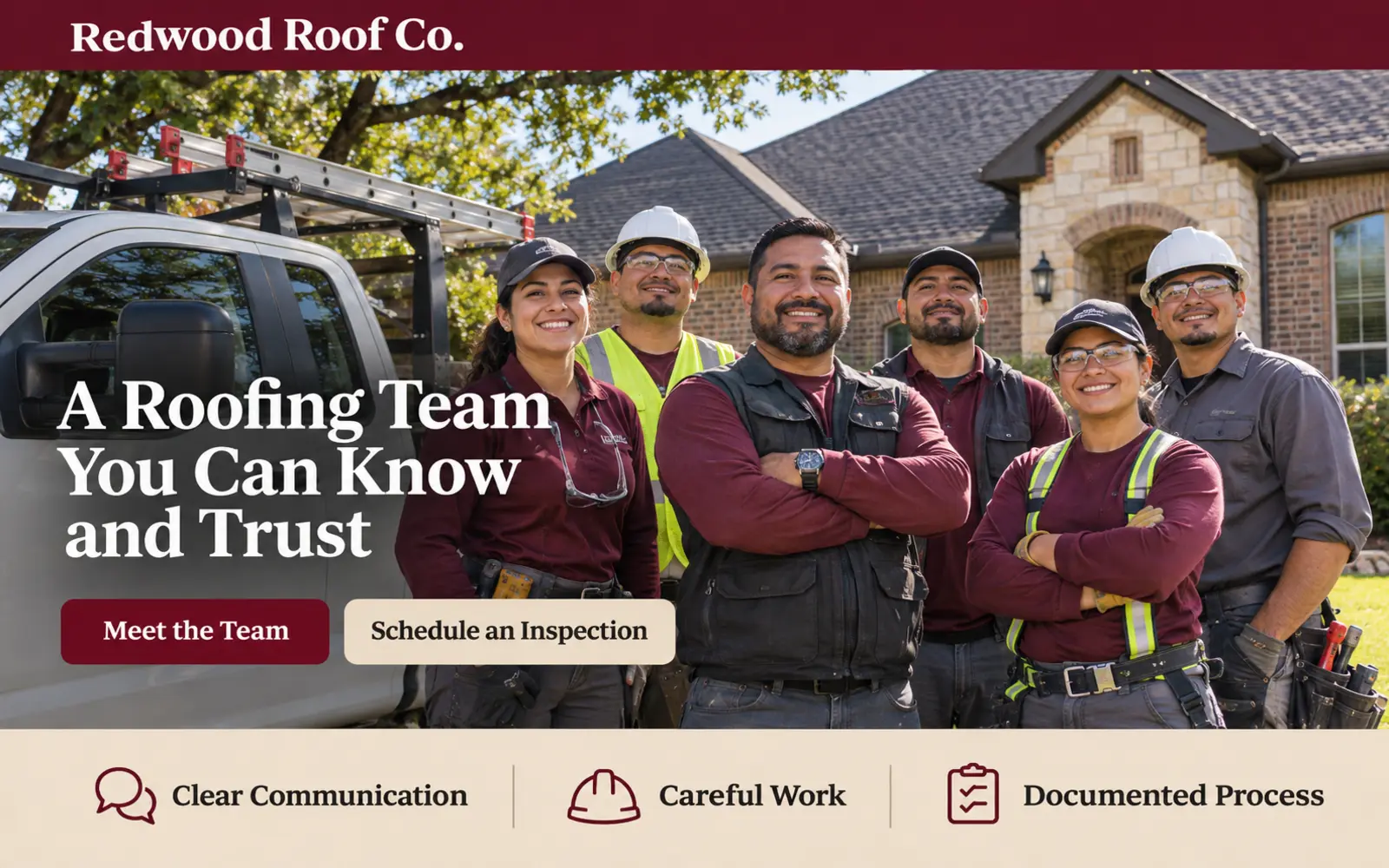
A roofing project affects a customer’s home, business, tenants, landscaping, vehicles, and daily routine. This design makes the people and standards behind the work visible. Authentic team photography, relevant qualifications, manufacturer relationships, reviews, warranties, and safety practices help visitors understand who may be working on the property.
Place trust signals where they support a specific decision. A review about cleanup belongs near property protection. A commercial reference can reinforce the commercial service path. Qualifications should be current and explained rather than presented as a row of unexplained badges.
Practical standards can be persuasive: arrival communication, site preparation, material delivery, landscape protection, magnetic cleanup, progress updates, final walkthroughs, and documentation. These details matter when they reflect the real operating process and are consistently delivered.
7. Establish Dallas–Fort Worth relevance immediately
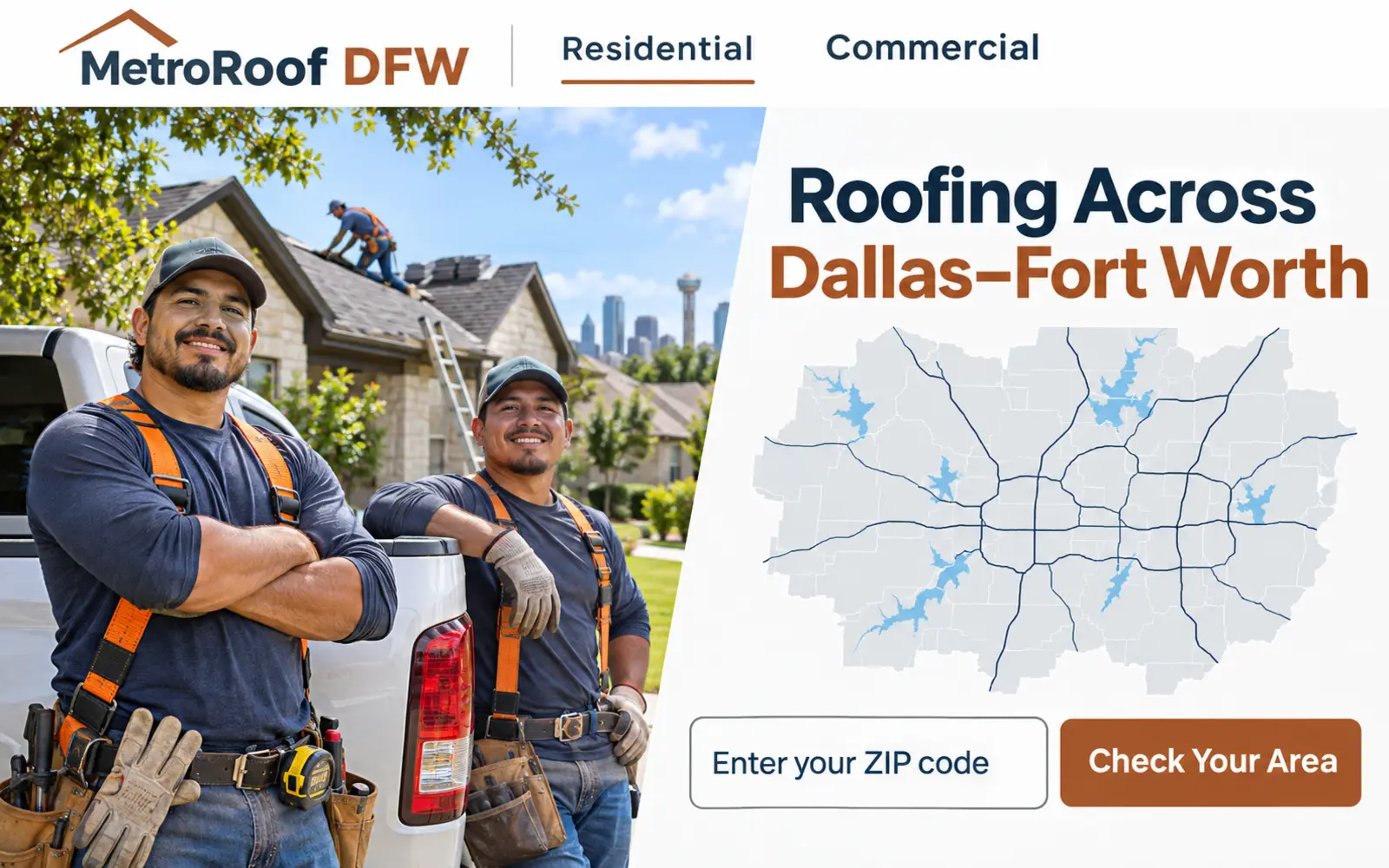
A property owner should not have to search the footer to determine whether a roofer serves the location. This design introduces Dallas–Fort Worth coverage near the opening message and provides a direct way to check availability or request an inspection.
Useful local pages go beyond repeating city names. They can explain the services offered in that market, property types supported, realistic coverage, relevant roof systems, nearby project experience, and the correct contact process. Every page should provide information specific enough to help the person searching there.
If the company serves multiple dispatch zones or offices, forms can route requests by address while preserving one consistent customer experience. Keep coverage current. Accurate local information supports usability and search visibility; inflated service-area lists create poor leads and weaken trust.
8. Separate residential and commercial roofing paths

Homeowners and commercial buyers may need related capabilities, but their priorities and approval processes can differ significantly. This design lets visitors choose the appropriate path early, then adjusts the services, proof, terminology, and contact experience to the property.
The residential path can emphasize repair, replacement, material selection, ventilation, financing, property protection, and household scheduling. The commercial path can focus on roof systems, inspections, maintenance, leak response, capital planning, safety documentation, warranties, phasing, and coordination with owners, facility teams, tenants, or general contractors.
The two paths should share one brand while providing meaningfully different information. A commercial page that repeats residential language with a flat-roof photograph does not give a property manager enough evidence to evaluate capabilities, capacity, or process.
9. Turn project photography into useful proof
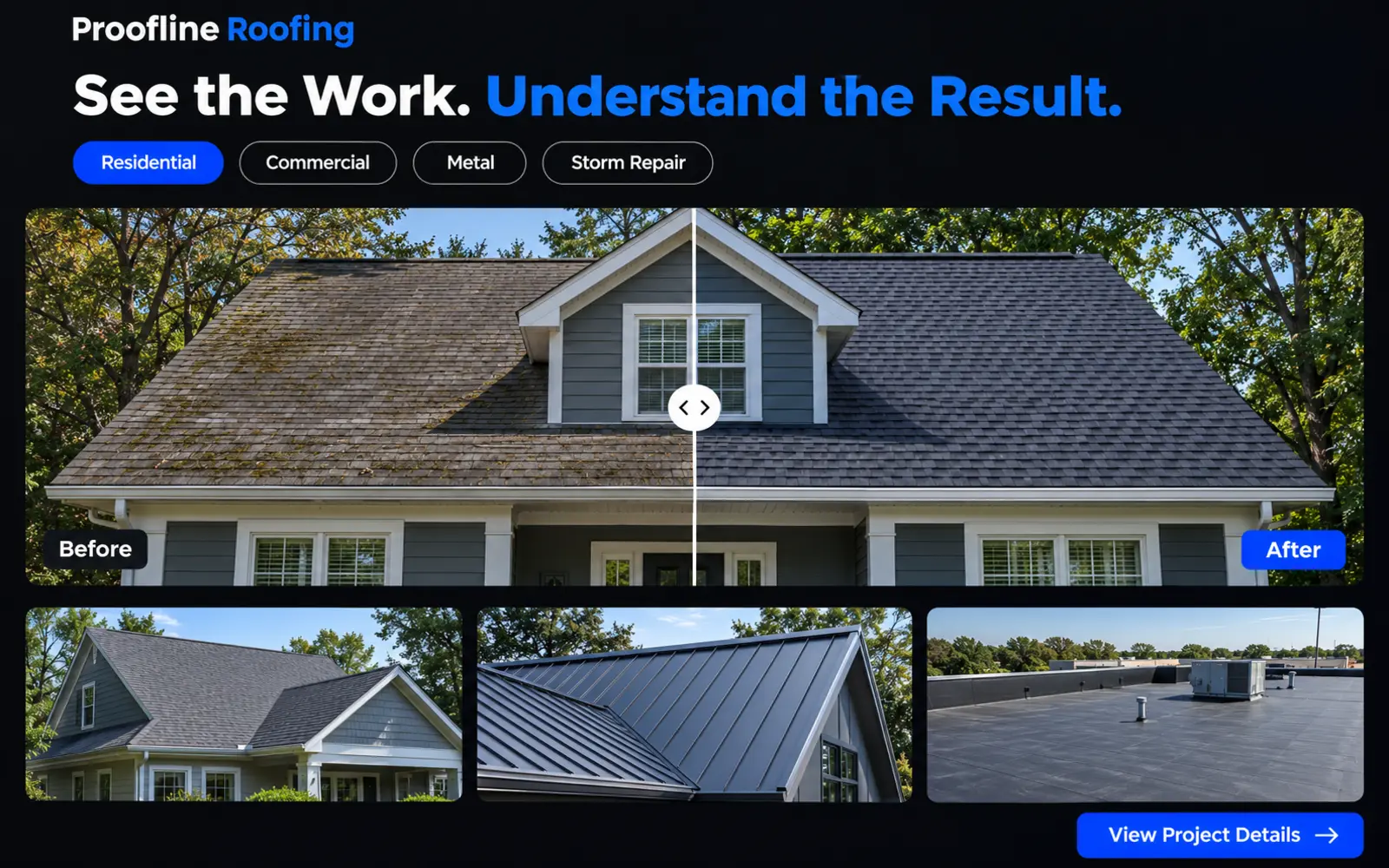
Roofing is highly visual, but a gallery becomes more persuasive when it provides context. This design organizes completed work by service, material, property type, and market so a visitor can quickly find projects that resemble the decision they are making.
A useful case study can identify the original concern, property conditions, recommended scope, selected system, major installation considerations, and final result. Before-and-after photographs, close details, and short explanations help demonstrate judgment and workmanship more effectively than a wall of unlabeled images.
Only publish work the company has permission to show, and avoid exposing customer information or exact residential addresses. For commercial projects, useful details might include building type, roof system, coordination requirements, safety planning, phasing, and how operations were considered during the work.
10. Create a complete bilingual roofing experience
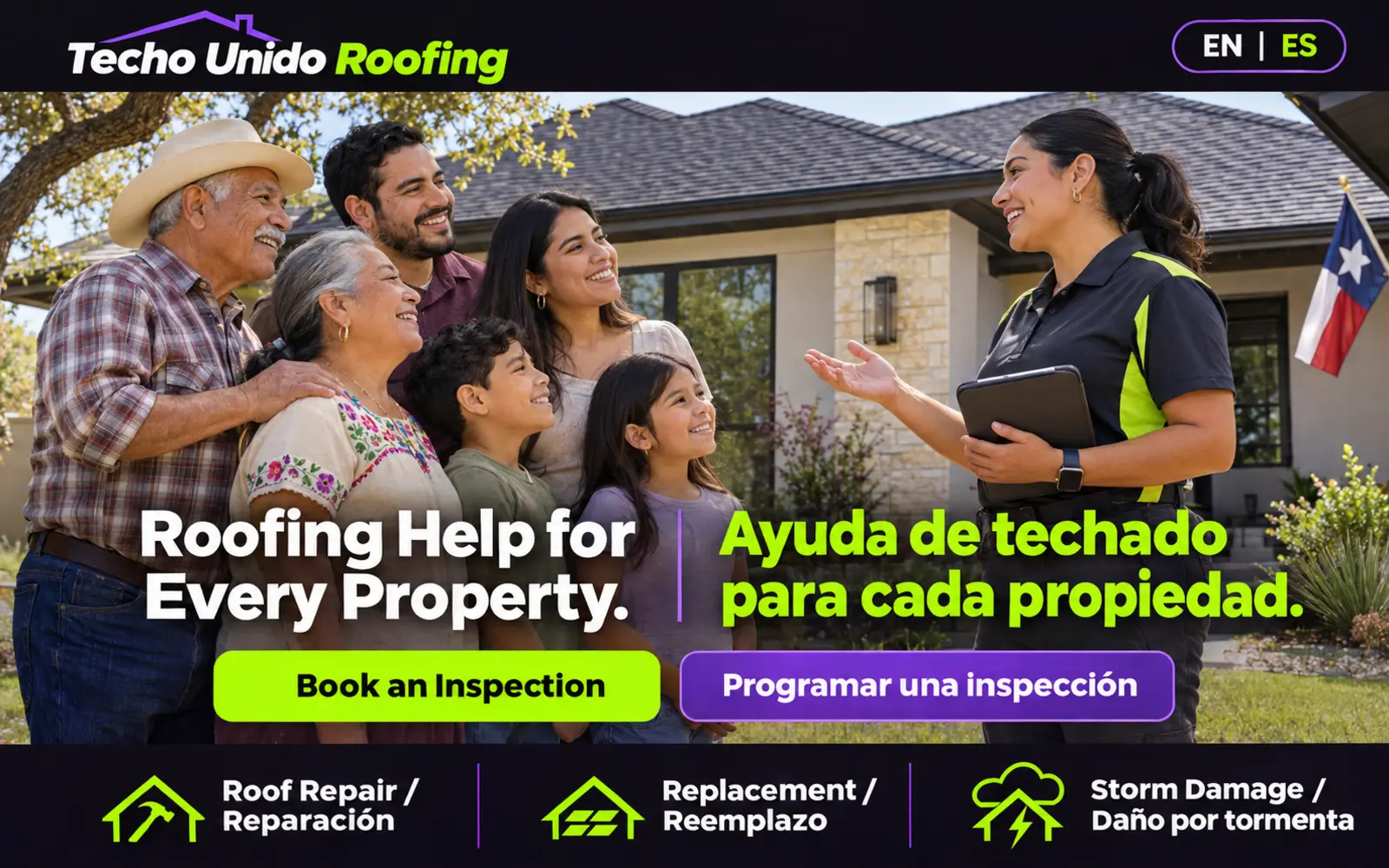
A language selector has limited value when only the opening headline is translated. This design gives English- and Spanish-speaking visitors equivalent access to services, qualifications, project information, inspection requests, forms, confirmation messages, and customer-support expectations.
Professional translation should account for roofing terminology, regional language, tone, and the decisions a property owner needs to make. Navigation labels, form errors, automated replies, phone prompts, proposals, and follow-up materials should remain consistent with the selected language.
The operational experience matters as much as the page. The company needs a dependable way to respond in the customer’s preferred language. Hispanos Marketing approaches bilingual work as part of a complete multicultural customer journey—not simply a translated paragraph.
Roofing website design checklist
Before launching or redesigning a roofing website, confirm that it supports the way property owners research, compare, and contact a contractor:
- The inspection, estimate, consultation, or phone action is visible on desktop and mobile.
- Storm and emergency language accurately reflects real availability and capabilities.
- Repair, replacement, storm-related work, commercial roofing, and maintenance have clear paths when offered.
- Projects are organized with enough context to demonstrate relevant experience.
- Forms are short, usable, and connected to a reliable follow-up workflow.
- Reviews, qualifications, team details, warranties, and service standards are authentic and current.
- Insurance, financing, pricing-process, and promotional language is accurate and understandable.
- Service areas are easy to confirm and supported by useful local information.
- Pages load quickly and remain readable and actionable on mobile devices.
- English and Spanish journeys are complete when bilingual service is offered.
- Calls, forms, inspection requests, and campaign sources are measured as business outcomes.
If the initial cost and upkeep of a traditional website are barriers, explore our managed website plans. They combine a professional website framework with hosting, routine maintenance, and technical support in one monthly plan.
Frequently asked questions about roofing website design
What should a roofing company website include?
A roofing website should clearly present services, roof and property types, service areas, inspection or estimate options, project proof, authentic trust signals, company information, and the process customers can expect. Depending on the business, it may also need storm guidance, financing, insurance education, warranties, maintenance programs, commercial capabilities, bilingual content, and educational resources.
How can a roofing website generate more qualified leads?
It connects focused pages to the services and problems property owners search for, provides enough information to establish relevance and trust, and gives visitors a clear next step. Search visibility, advertising, reviews, accurate tracking, responsive follow-up, and the website experience must work together to produce qualified opportunities.
Should roofing companies offer online inspection scheduling?
Online requests can reduce friction for customers who prefer not to call. The workflow should match the company’s operating capacity and clearly state whether a selected time is confirmed or requested. Keep a visible phone option for time-sensitive conditions, and do not ask the customer to access the roof or diagnose damage.
How many pages does a roofing website need?
There is no universal number. A focused residential roofer may begin with core pages for repair, replacement, materials, service area, company information, projects, and contact. A larger operation may need separate residential and commercial hubs, roof-system pages, location pages, maintenance, storm resources, financing, careers, case studies, and educational content. Page count should follow customer needs and search strategy.
How should a roofing website discuss insurance claims?
Explain the roofing company’s actual inspection, documentation, estimating, and communication process without promising that damage is covered or a claim will be approved. Coverage and policy decisions belong to the insurer and qualified professionals. Claims-related content should reflect current requirements in every state where the company operates.
How often should a roofing website be updated?
Update service areas, team information, qualifications, warranties, financing language, promotions, and service offerings whenever they change. Project galleries, forms, phone links, analytics, integrations, performance, and older educational content should also be reviewed routinely so the website remains accurate and useful.
Build a roofing website around the customer decision
The best roofing website is not the one with the loudest storm message or the most project photos. It is the one that helps the right property owner identify the service, understand the company, evaluate relevant proof, trust the process, and request an inspection or conversation with confidence.
Hispanos Marketing designs conversion-focused websites for roofing companies and service businesses in Dallas–Fort Worth and nationwide. We connect positioning, content, user experience, local relevance, and measurement so the website supports real growth. Explore our plumbing website design examples, HVAC website design examples, and construction website design examples for additional industry breakdowns, or review our website design service.
Book a call with Hispanos Marketing to discuss the right website structure for your roofing company.