An effective HVAC website should do three things quickly: confirm that the company provides the service a visitor needs, establish enough trust to earn the call, and make the next step effortless. The best HVAC website design examples combine clear service paths, prominent contact options, local proof, fast mobile performance, and focused offers that match how customers search.
The ten original concepts below show how different HVAC companies could organize those elements around a specific business goal. Each design emphasizes one conversion principle—from emergency click-to-call experiences and online scheduling to financing, maintenance memberships, service-area clarity, and bilingual customer journeys.
HVAC website design examples: quick overview
- Emergency service: Put the urgent action, phone number, and availability at the top of the mobile experience.
- Online scheduling: Let ready-to-book customers choose a service and request an appointment without searching for a form.
- System replacement: Explain financing and the replacement process in plain language.
- Seasonal tune-ups: Match the primary offer to the customer’s immediate seasonal concern.
- Maintenance memberships: Present recurring value clearly instead of burying the plan in a service menu.
- Trust: Use reviews, credentials, guarantees, and team visibility to reduce uncertainty.
- Residential and commercial: Separate the two customer journeys before their needs become mixed together.
- Heat pumps and efficiency: Educate homeowners while giving them a clear path to an estimate.
- Local service areas: Show where the company works and connect visitors to relevant local information.
- Bilingual experience: Make the entire customer journey understandable in the visitor’s preferred language.
What a high-performing HVAC website needs
HVAC customers often arrive with different levels of urgency. One homeowner may need immediate air-conditioning repair, while another is comparing replacement systems or planning routine maintenance. A high-performing website gives each visitor a clear route without forcing everyone through the same generic page.
| Website element | What it should accomplish |
|---|---|
| Clear primary action | Make calling, requesting service, or booking an appointment obvious on every device. |
| Service-specific pages | Explain repair, installation, maintenance, indoor air quality, and commercial capabilities separately. |
| Trust signals | Support the decision with authentic reviews, licenses, warranties, guarantees, and team information. |
| Local relevance | Clarify service areas and provide useful, original information for the communities the company serves. |
| Mobile speed | Load quickly and keep phone, scheduling, and form actions easy to use on a small screen. |
| Measurement | Track qualified calls, forms, bookings, and campaign sources—not traffic alone. |
A polished visual design supports these fundamentals, but it cannot replace them. The right website design strategy connects layout, messaging, search intent, proof, and lead capture into one customer journey.
1. Lead with emergency repair and click-to-call
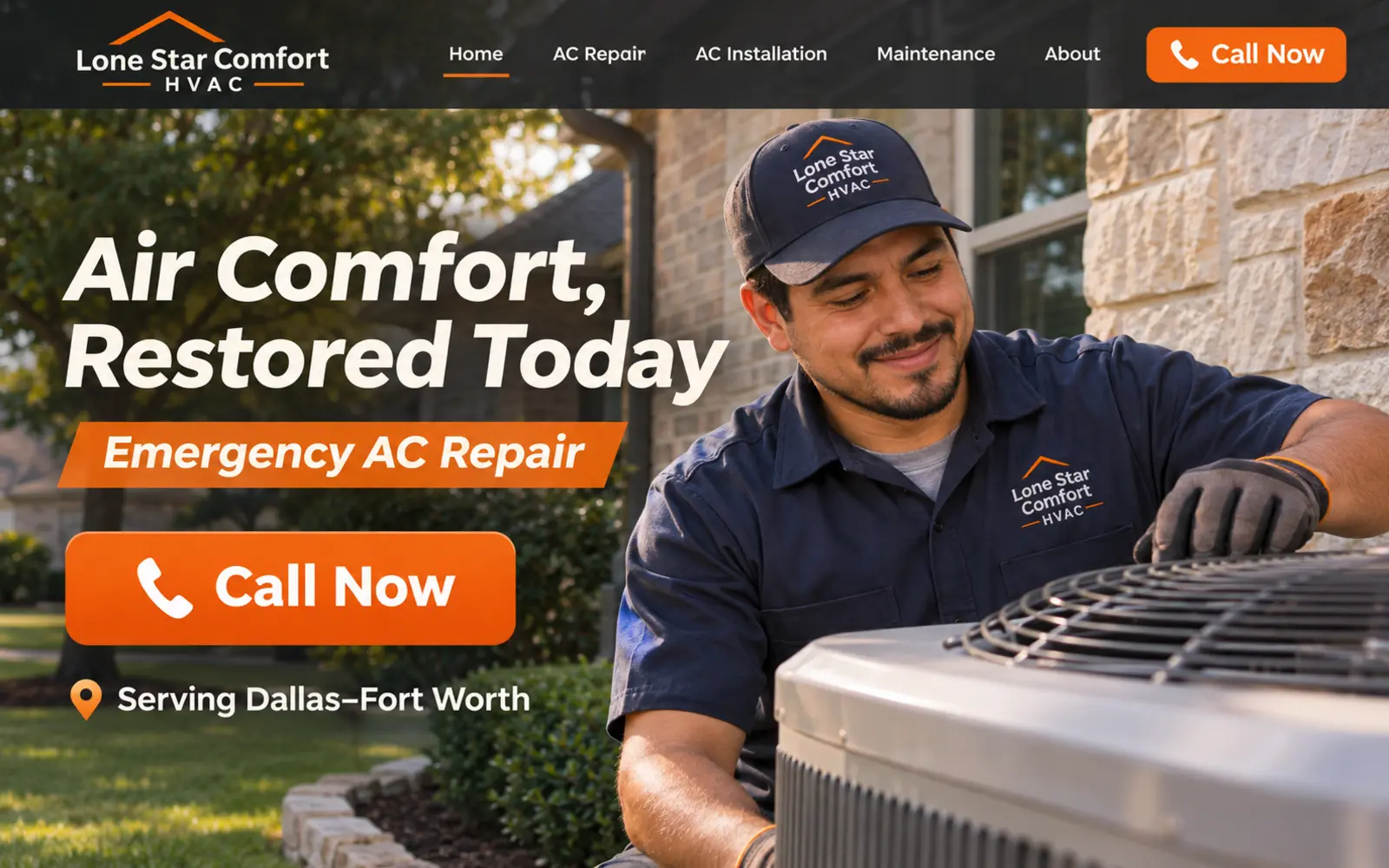
When a system stops cooling on a hot day, the visitor is not looking for a long company history. They want to know whether the company handles the problem, serves their area, and can be contacted now. This concept places the emergency service message, phone action, and service-request button in the first screen.
The urgency should come from clarity, not panic. A concise headline, a short description of the response process, and a truthful availability statement are more credible than exaggerated countdowns or unsupported promises. On mobile, the phone action should remain easy to reach without covering important content.
Below the hero, the page can quickly answer the next questions: which systems the team services, what happens after the call, which areas are covered, and why the company is qualified. That sequence helps a high-intent visitor act while still providing enough information for someone who needs reassurance.
2. Make online service scheduling effortless
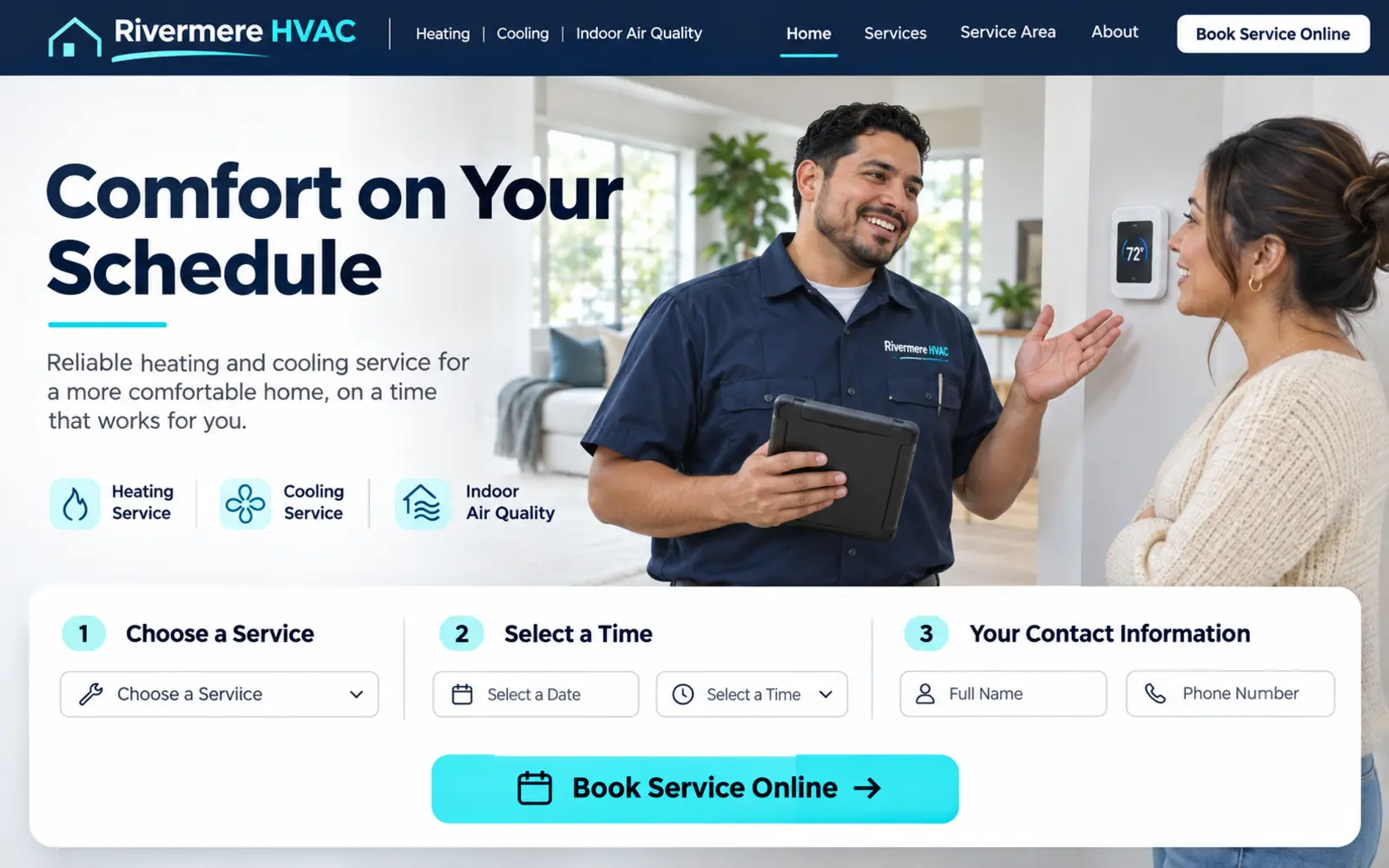
Not every customer wants to call during business hours. This concept makes scheduling a visible part of the website rather than a form hidden behind a contact link. The visitor can select a service category, provide basic details, and request a preferred appointment window in a short, understandable flow.
A booking experience should collect only the information the team needs to respond intelligently. Long forms create friction, especially on mobile. Start with the service type, location, contact details, and a concise description of the issue. Additional diagnostic questions can follow after the request is submitted or during confirmation.
The confirmation experience matters too. Set an honest expectation for what happens next and whether the requested time is confirmed or pending. Clear microcopy can prevent confusion while making the company feel organized and responsive.
3. Explain replacement options and financing clearly
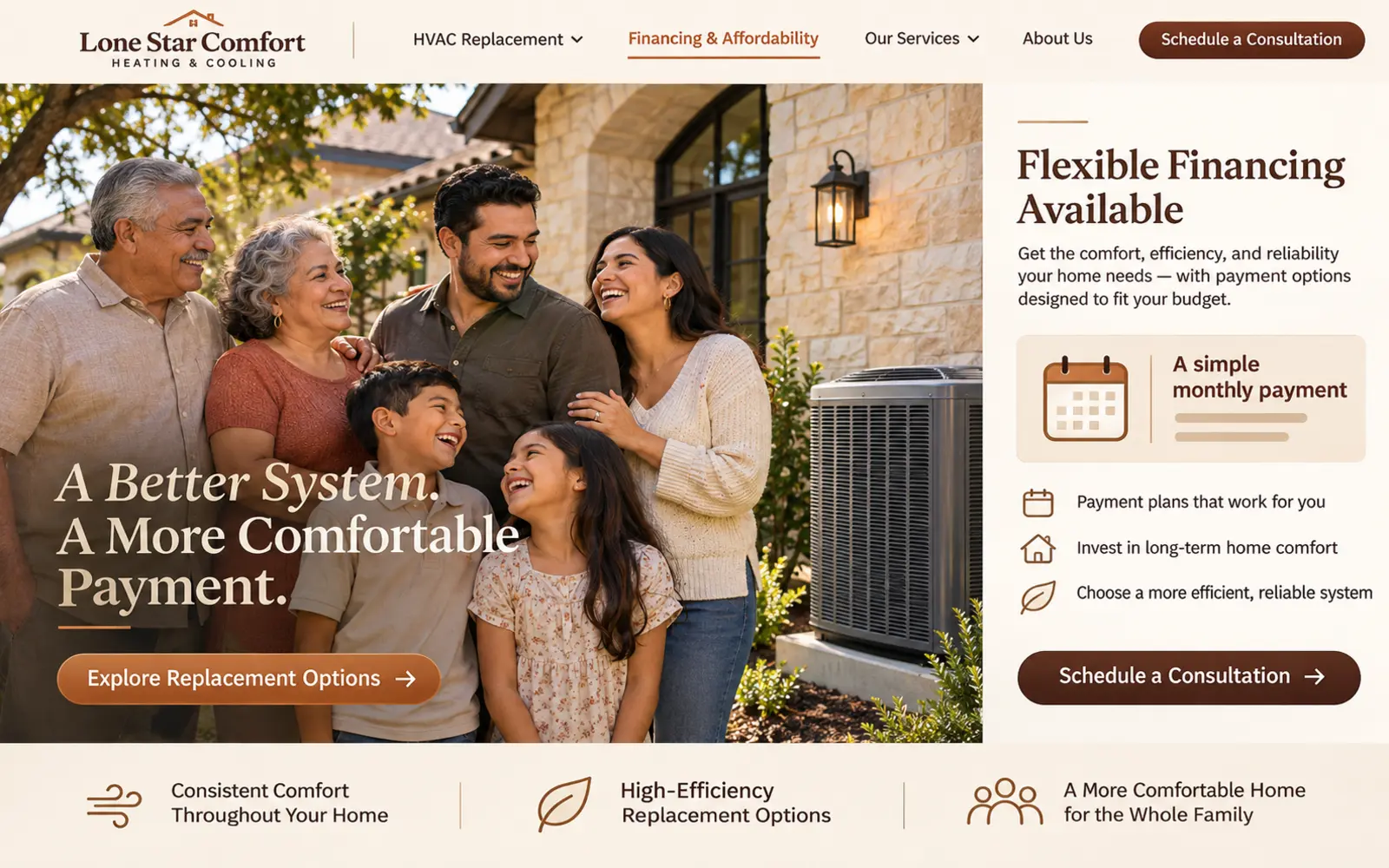
System replacement is a larger, more considered decision than a routine repair. This concept gives homeowners a structured path to understand system options, the replacement process, available financing, and the next step toward an estimate.
The website does not need to overwhelm visitors with technical specifications. It should explain the factors that affect a recommendation—home size, comfort concerns, existing equipment, efficiency goals, and budget—before inviting the visitor to schedule an assessment. If financing is available, the terms and eligibility language should be accurate and easy to find.
Strong replacement pages also address uncertainty. A concise process section can show what happens from consultation through installation, while authentic project photos, manufacturer relationships, warranties, and customer reviews can support confidence. The goal is to help the homeowner make an informed next step, not force a premature purchase.
4. Build the page around a seasonal tune-up offer

Customer priorities change with the weather. This concept gives a seasonal tune-up offer a focused landing experience with one message, one relevant service, and one primary action. It can support organic search, email, social media, or paid campaigns without sending every visitor to a broad homepage.
The offer should state what is included, who it is for, and whether any limitations apply. A short checklist of inspection points can make the service more tangible. The page can also explain how preventive maintenance supports reliability, comfort, and early issue detection without making guarantees the company cannot substantiate.
Seasonal pages should not become abandoned campaign assets. Update the offer, dates, availability, and supporting content as conditions change. A current page signals operational attention; an expired promotion does the opposite.
5. Turn maintenance membership into a clear value proposition
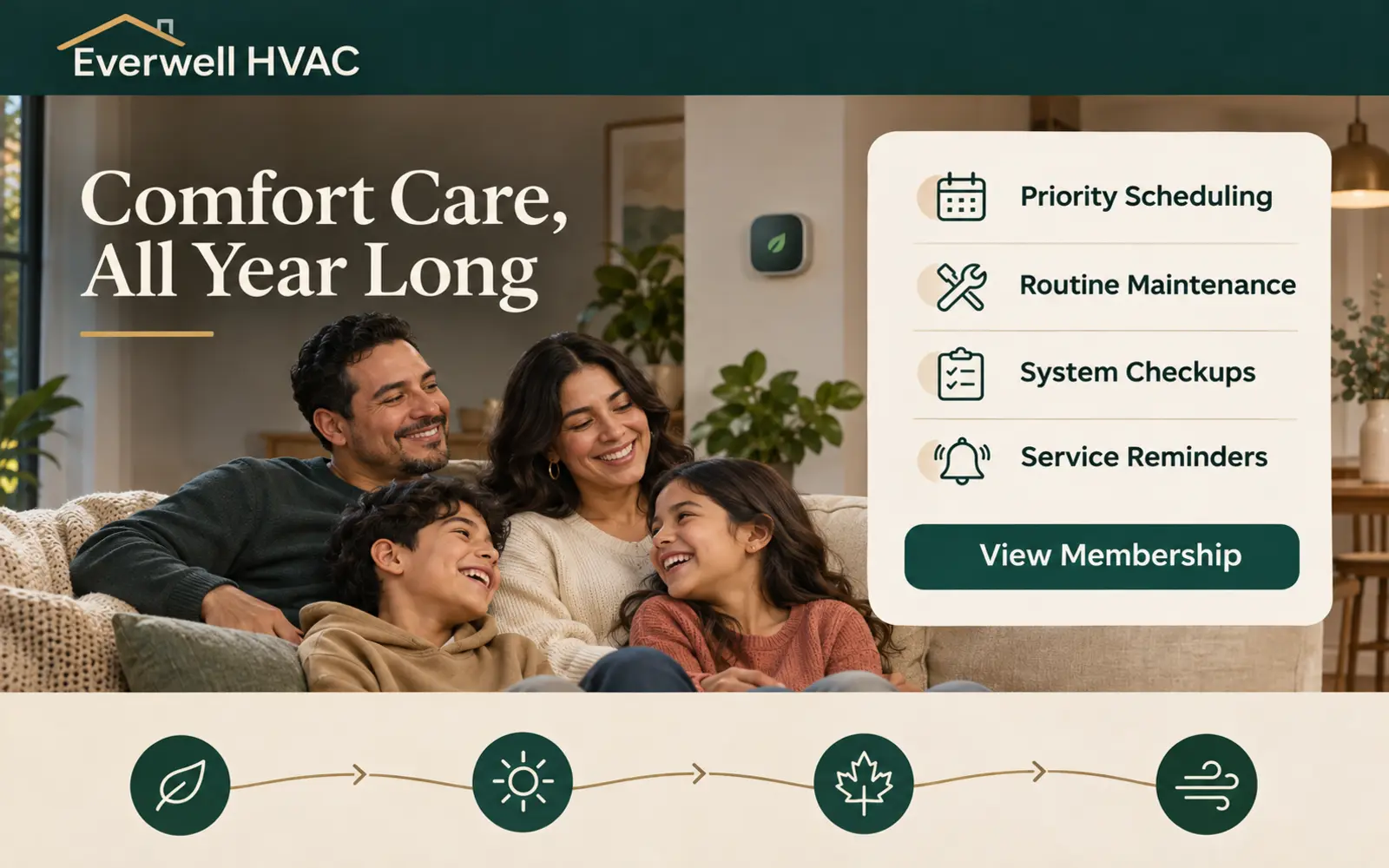
A maintenance plan is difficult to evaluate when its benefits are scattered across several pages. This concept treats the membership as a product: it names the plan, summarizes the recurring value, explains what is included, and gives the visitor a simple way to ask questions or enroll.
The strongest presentation is specific. Instead of relying on phrases such as “VIP service,” list the actual maintenance visits, scheduling benefits, discounts, reminders, or other provisions the company offers. If conditions apply, display them near the claim rather than hiding them in distant fine print.
A comparison between one-time service and membership can be useful when it is accurate and easy to understand. The page should also explain renewal, cancellation, property eligibility, and what happens after enrollment. Clarity helps the plan feel dependable instead of promotional.
6. Put technicians, reviews, and credentials to work
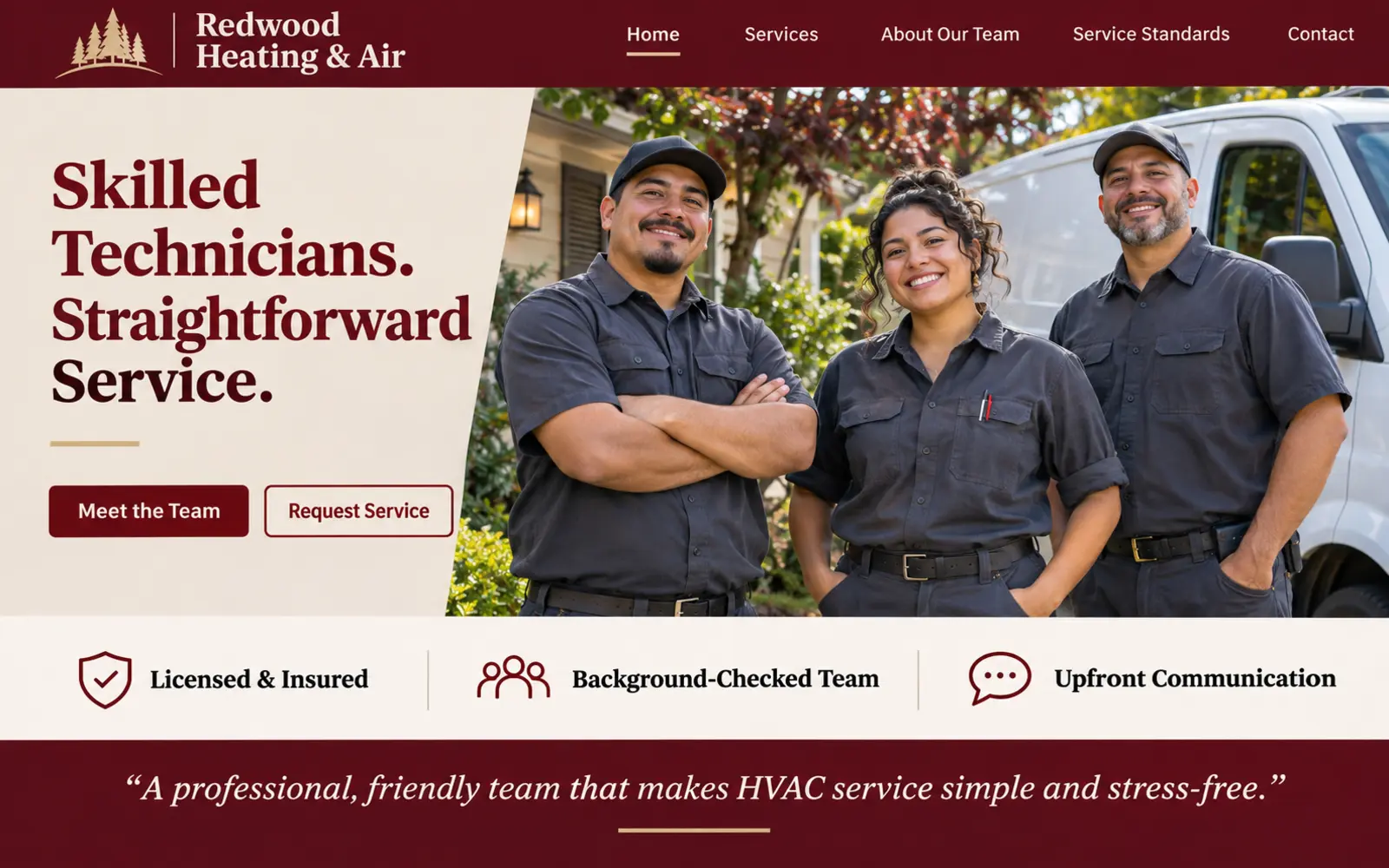
Inviting a technician into a home or business requires trust. This concept gives the company’s people and operating standards a central role. Real team photography, concise technician introductions, authentic customer feedback, and verifiable credentials help visitors understand who will arrive and what experience to expect.
Trust indicators should be contextual. Licensing details belong near service qualifications. Review excerpts can support the service or process they describe. Guarantees and warranties should link to clear terms. Logo rows and badges have less value when visitors cannot tell what they mean.
A well-designed team section can also differentiate the company without resorting to generic claims. Training, communication standards, background-check policies, arrival procedures, and respect for the property are meaningful when they accurately reflect the operation.
7. Separate residential and commercial customer paths
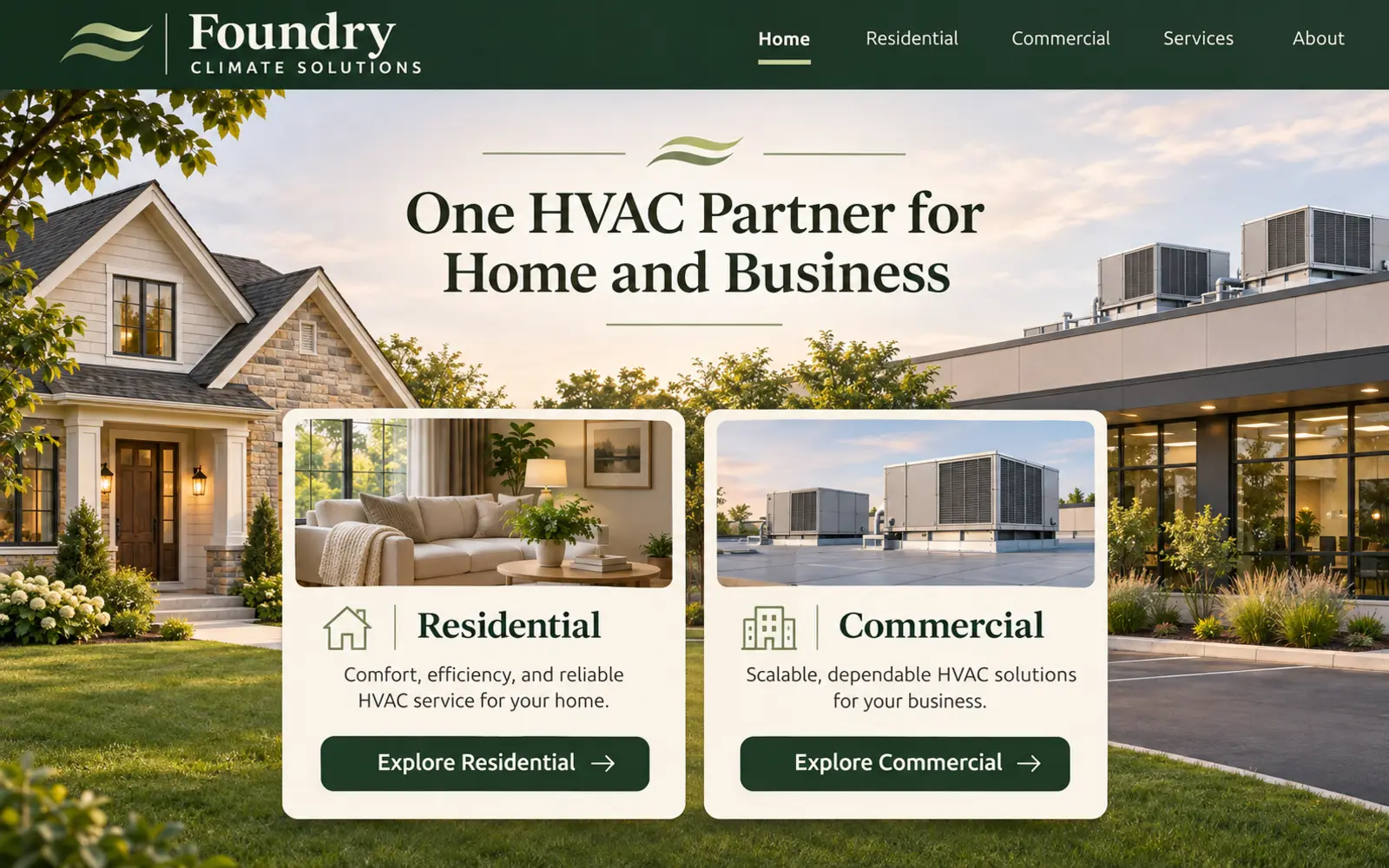
Residential and commercial customers may need the same technical expertise, but they evaluate providers differently. This concept asks visitors to choose the relevant path early, then adapts the services, proof, language, and contact action to their situation.
The residential path can emphasize home comfort, repair, replacement, indoor air quality, financing, and appointment convenience. The commercial path can focus on system capabilities, preventive programs, response procedures, facility requirements, documentation, and experience with relevant property types.
Separating the paths does not require two disconnected websites. A shared brand and navigation can lead to distinct service hubs with appropriate case studies and forms. This structure improves clarity for users and gives search engines more focused information about each capability.
8. Educate visitors about heat pumps and efficiency
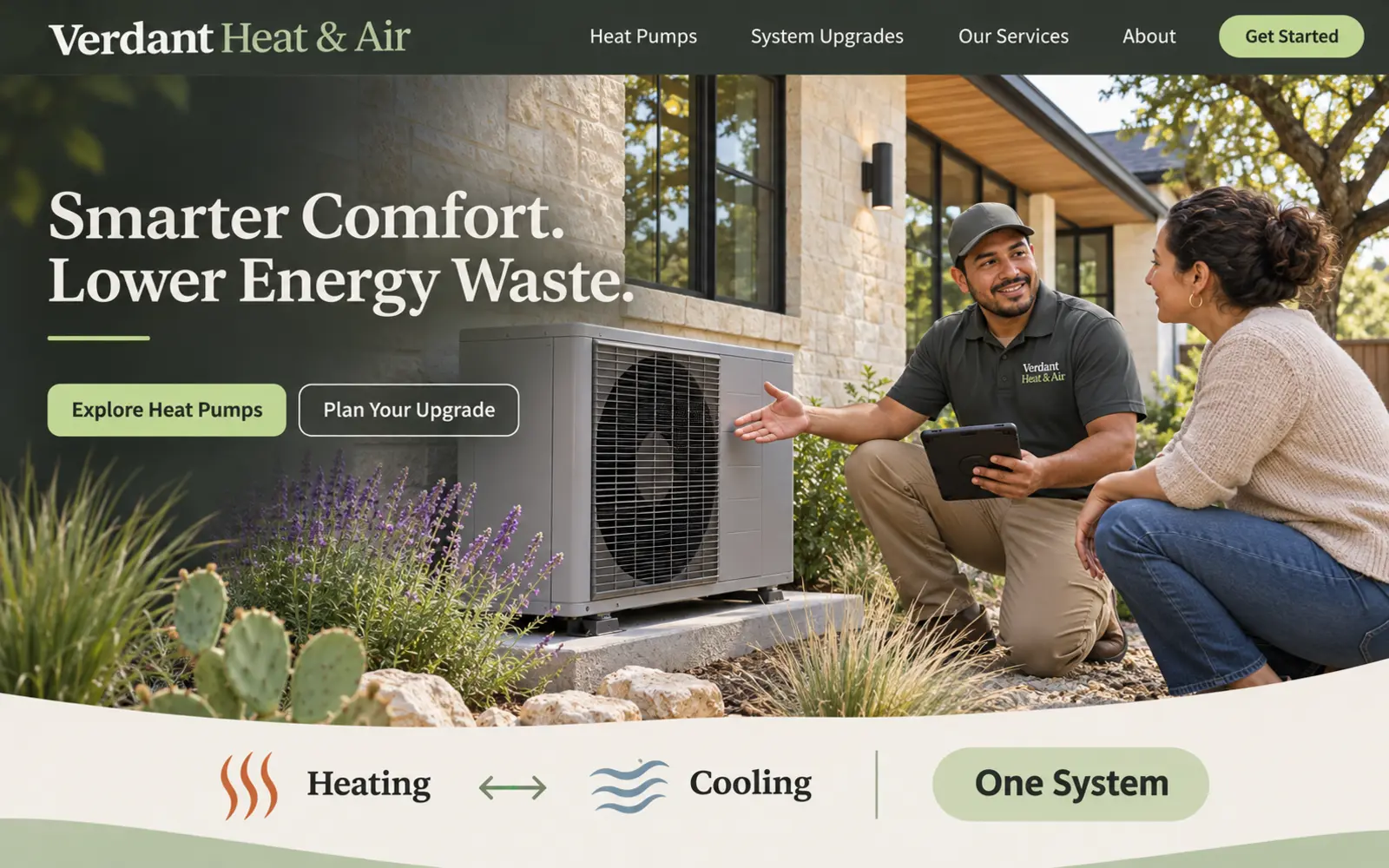
Customers researching heat pumps or higher-efficiency systems often need education before they are ready to request a quote. This concept combines a straightforward explanation, common suitability questions, and an assessment call to action.
Useful content can explain how the technology works, which home and climate factors influence a recommendation, and how installation quality affects results. Avoid presenting universal savings or performance claims. Actual outcomes depend on the property, equipment, usage, rates, and installation.
The page can support deeper research with comparison guides, FAQs, and related content while keeping the estimate path visible. This is where a thoughtful content system helps: the service page provides the conversion route, while supporting articles answer specific questions and build topical relevance over time.
9. Make local service-area availability unmistakable
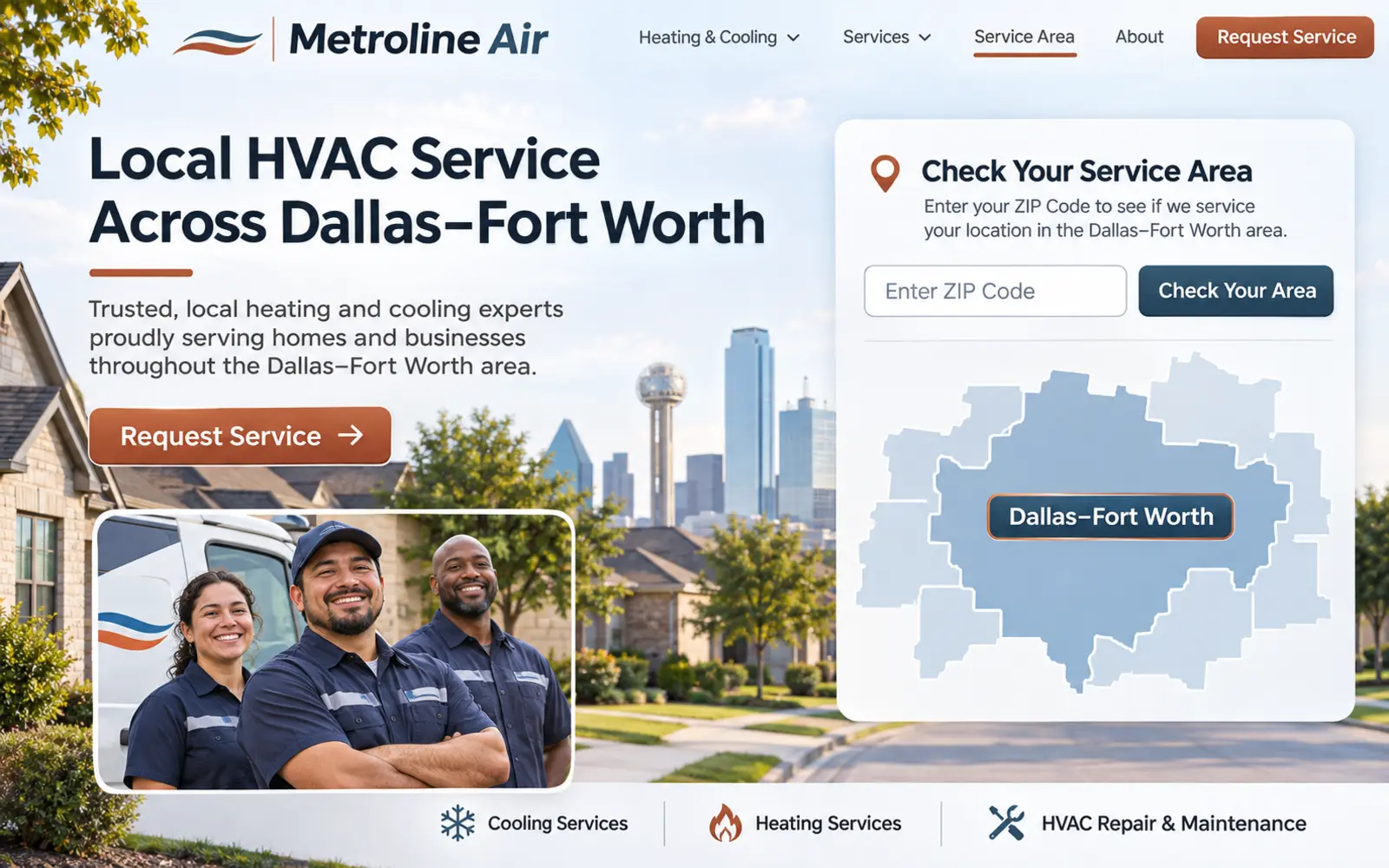
Local customers should not have to guess whether an HVAC company serves their address. This concept introduces service-area information near the top and provides a useful path to city or regional pages with relevant services, contact information, proof, and operating details.
Effective location content is more than a list of city names. Each important page should help the visitor understand availability, common needs, nearby work, and how to request service. Repeating the same paragraph across dozens of thin pages creates a poor experience and does little to demonstrate local relevance.
For companies serving Dallas–Fort Worth or multiple markets, navigation and forms should handle geography cleanly. The site can route the lead based on location while preserving one consistent brand experience. Local SEO and conversion design work best when the information is both discoverable and genuinely useful.
10. Create an authentic bilingual customer experience

A language toggle is only valuable when the experience behind it is complete. This concept gives English- and Spanish-speaking visitors equivalent access to services, trust information, forms, scheduling instructions, and confirmation messages.
Effective bilingual design uses professional translation and cultural context rather than word-for-word substitution. Navigation labels, buttons, error messages, phone prompts, automated replies, and follow-up materials should remain consistent with the selected language. The internal team also needs a clear process for handling the lead appropriately.
For HVAC companies serving multicultural communities, this can improve clarity and help the brand communicate respect. Hispanos Marketing approaches this work as a multicultural agency: the goal is not simply to translate pages, but to connect the company’s value with the people it wants to serve.
HVAC website design checklist
Before launching or redesigning an HVAC website, confirm that the experience supports the way customers actually choose and contact a provider:
- The primary phone, booking, or service-request action is visible on desktop and mobile.
- Emergency language accurately reflects real availability and response procedures.
- Repair, replacement, maintenance, indoor air quality, and commercial services have clear paths.
- Forms are short, usable, and connected to a reliable follow-up workflow.
- Reviews, licenses, warranties, team details, and other trust signals are authentic and current.
- Service areas are easy to understand and supported by useful local content.
- Financing, promotions, and membership terms are accurate and transparent.
- Pages load quickly and remain readable and actionable on mobile devices.
- Calls, forms, bookings, and source data are measured as business outcomes.
- English and Spanish journeys are complete when bilingual service is offered.
If the initial cost and upkeep of a traditional build are barriers, explore our managed website plans. They combine a professional website framework with hosting, routine maintenance, and technical support in one monthly plan.
Frequently asked questions about HVAC website design
What should an HVAC website include?
An HVAC website should include clear residential or commercial service information, prominent contact or scheduling actions, authentic trust signals, service-area details, mobile-friendly forms, and fast performance. Depending on the business, it may also need financing information, maintenance plans, emergency-service guidance, bilingual content, and educational resources.
How does an HVAC website generate more qualified leads?
It aligns each page with a specific customer need, answers the questions that influence trust, and makes the next step clear. Qualified lead generation also depends on search visibility, paid media, reviews, accurate tracking, and prompt follow-up. The website is the conversion center that connects those channels.
Should HVAC companies offer online booking?
Online booking can reduce friction for customers who prefer not to call, but the workflow must match the company’s operations. Clearly state whether a time is confirmed or requested, collect only necessary information, and provide a dependable confirmation and follow-up process.
How many pages does an HVAC company website need?
There is no universal number. A small company may begin with core pages for its primary services, service area, about information, and contact options. A larger operation may need separate residential and commercial hubs, detailed service pages, location pages, financing, memberships, careers, resources, and case studies. Page count should follow customer needs and search strategy—not an arbitrary target.
How often should an HVAC website be updated?
Update operational details, offers, team information, financing language, service areas, and seasonal content whenever they change. Technical performance, forms, analytics, and integrations should be reviewed routinely. Ongoing updates keep the site accurate and help the content remain useful.
Build an HVAC website around the customer decision
The best HVAC website is not the one with the most effects or the longest service list. It is the one that helps the right customer understand the company, trust the experience, and take the next step with confidence.
Hispanos Marketing designs conversion-focused websites for service businesses in Dallas–Fort Worth and nationwide. We connect positioning, content, user experience, local relevance, and measurement so the website supports real growth. See our construction website design examples for another industry-focused breakdown, or explore our website design service to plan your next site.
Book a call with Hispanos Marketing to discuss the right website structure for your HVAC company.