An engineering firm website should help a prospective client, public agency, developer, architect, contractor, or industry partner answer four questions quickly: does this team understand the project, can it demonstrate relevant technical experience, does it have the qualifications to deliver, and how should a serious opportunity move forward? The strongest engineering firm website design examples translate complex expertise into a clear, credible, and highly professional digital experience.
The ten concepts below show how civil, structural, MEP, transportation, infrastructure, environmental, and multidisciplinary engineering firms can present their work with precision. Each design uses disciplined grids, concise language, strong project imagery, useful technical context, and a direct path to qualifications, teaming, or project conversations.
Engineering firm website design examples: quick overview
- Precision-led positioning: State the firm's disciplines, markets, geography, and role without a dense corporate introduction.
- Discipline selection: Help visitors move directly into the engineering capability that applies to their project.
- Market experience: Organize work around the sectors, facilities, and infrastructure systems clients recognize.
- Technical case studies: Pair strong project imagery with scope, role, constraints, coordination, and outcomes.
- Qualifications access: Make statements of qualifications, certifications, teaming information, and RFP contacts easy to find.
- Quality process: Explain project delivery, reviews, QA/QC, documentation, and communication in a concise visual system.
- Regional project map: Connect geographic coverage to representative work instead of publishing a list of cities.
- Sustainability and resilience: Present relevant performance goals, analysis, and measurable project strategies accurately.
- People and careers: Show technical leadership, professional development, and the culture behind the work.
- Community communication: Support complete English and Spanish journeys when public engagement or multilingual service is offered.
What a high-performing engineering firm website needs
Engineering buyers do not need every calculation on the homepage. They need a fast way to determine relevance, risk, experience, and fit. A high-performing website uses a restrained visual system to make complex information easier to evaluate, then provides deeper technical detail for visitors who need it.
| Website element | What it should accomplish |
|---|---|
| Focused positioning | Identify the firm's actual disciplines, markets, geographic reach, and typical role on a project. |
| Relevant project proof | Connect representative projects to scope, responsibility, constraints, coordination, and completed outcomes. |
| Qualifications and credentials | Present current licenses, certifications, registrations, prequalifications, and ownership classifications accurately. |
| Clear project pathways | Give owners, agencies, developers, architects, contractors, and teaming partners an appropriate next step. |
| Technical authority | Use useful insights, standards, process information, and team expertise without turning the site into a technical manual. |
| Professional performance | Keep pages fast, accessible, mobile-responsive, secure, and easy for procurement teams to navigate. |
A strategic website design system can connect an engineering firm's expertise, project portfolio, qualifications, recruitment, and business development into one professional experience.
1. Lead with precision, discipline, and project relevance
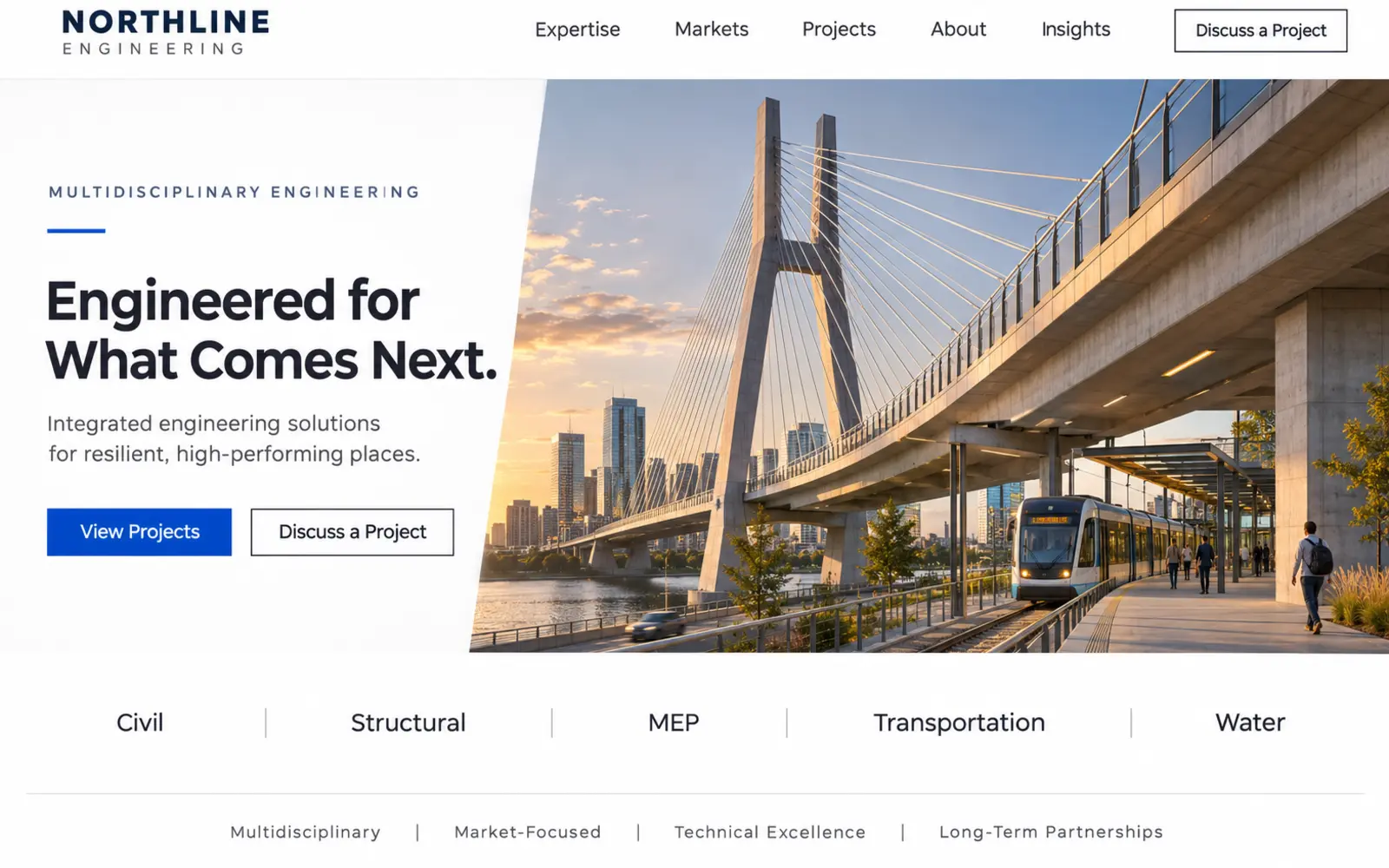
The opening screen should establish what the firm engineers, where it works, and why the visitor should continue. This concept uses one strong infrastructure or built-environment image, a concise statement, and a compact line identifying the firm's primary disciplines and markets. A dark navy and white palette, measured typography, and a precise grid communicate confidence without relying on excessive animation.
A multidisciplinary firm may highlight civil, structural, MEP, transportation, water, environmental, or other actual capabilities. A specialist should be even more specific. The message should reflect the work the firm is equipped and authorized to deliver rather than presenting every adjacent discipline as an in-house service.
Pair the statement with two deliberate actions, such as View Projects and Discuss a Project. A compact proof row can show verified registrations, years of experience, geographic coverage, or public and private market experience when those claims are current and supportable.
2. Organize technical services around clear engineering disciplines
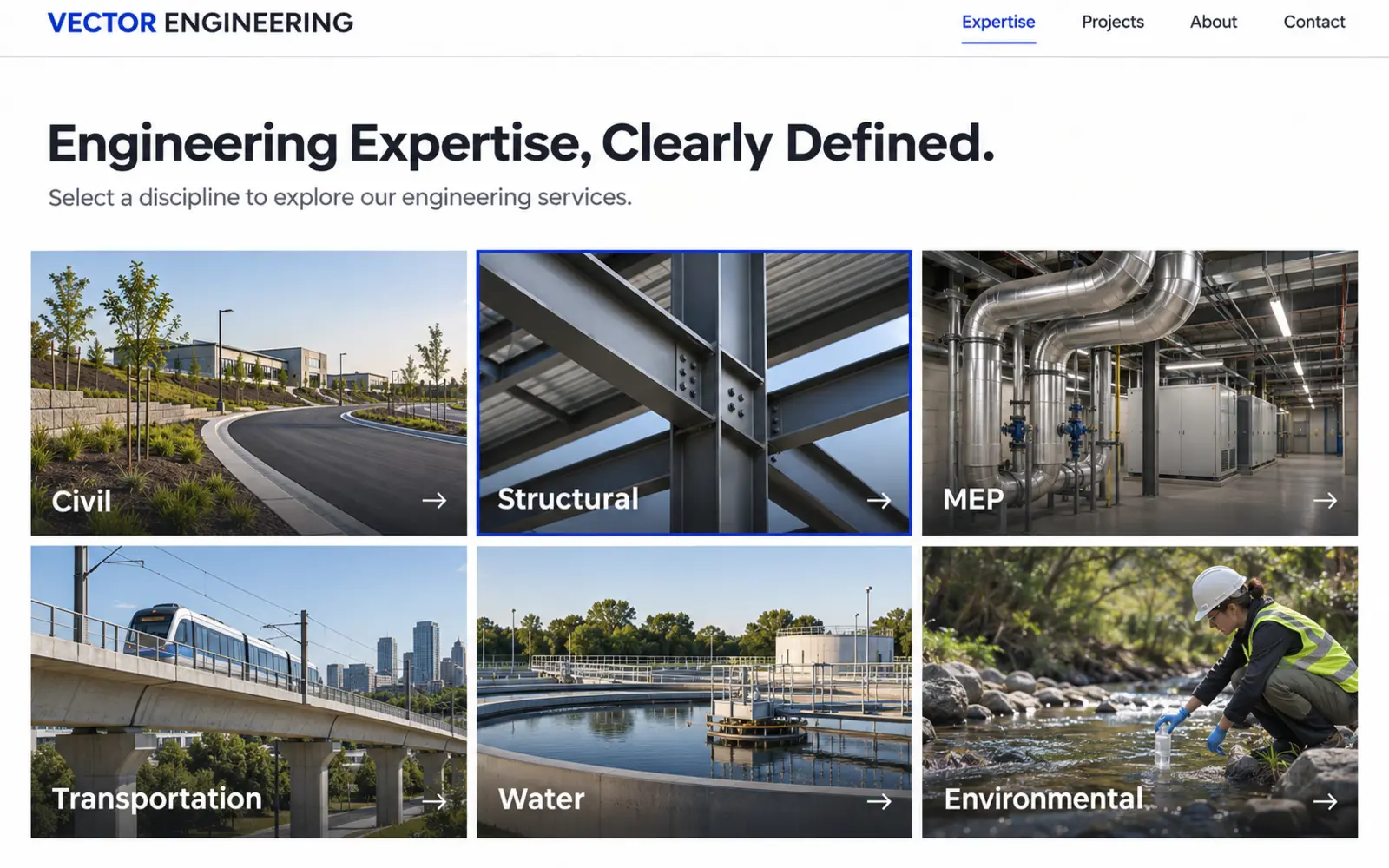
A long paragraph of engineering services makes it difficult for a visitor to identify the relevant expertise. This concept uses six restrained cards for the firm's core disciplines. Each card combines a clear title, one representative project image or technical graphic, and a short link into a focused capability page.
Each discipline page should explain the firm's role, common project types, representative services, coordination responsibilities, geographic limits, and relevant work. Civil engineering may lead into land development, utilities, drainage, or site design. Structural, MEP, transportation, water, and environmental pages should be equally specific to the firm's actual practice.
Organize services according to how clients procure and evaluate them. Avoid internal terminology that only employees understand, duplicate pages created for keywords, or a service menu so large that the firm's strongest capabilities become indistinguishable.
3. Let clients explore experience by market and project type
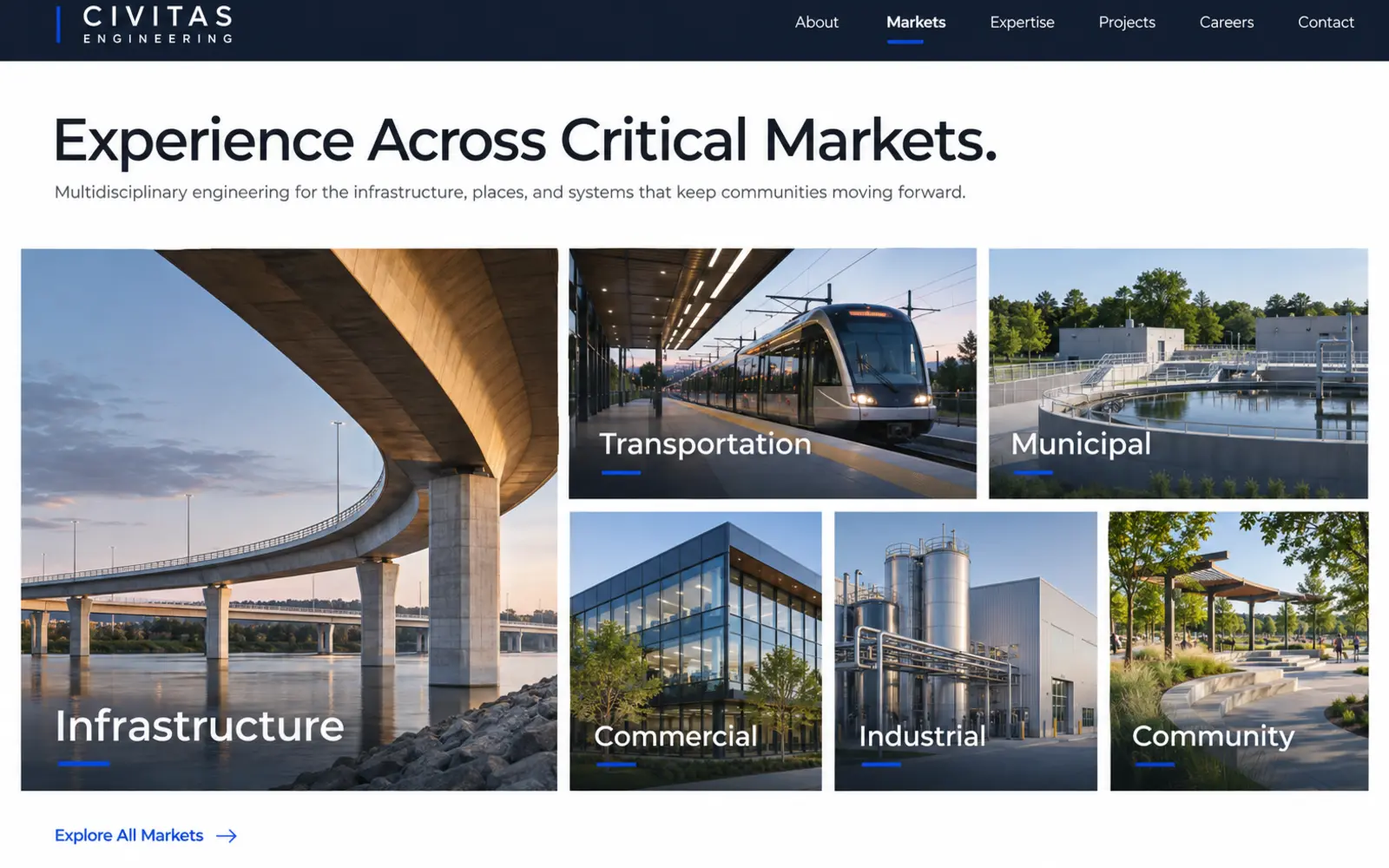
Engineering services become more persuasive when visitors can see where the expertise has been applied. This concept organizes experience around infrastructure, transportation, municipal, commercial, industrial, healthcare, education, energy, land development, or other sectors the firm genuinely serves.
Each market page can connect relevant disciplines, project types, delivery methods, client priorities, and case studies. A municipal buyer may look for procurement readiness, public engagement, funding coordination, and regulatory familiarity. A developer may prioritize entitlement, site constraints, utilities, permitting, schedule, and coordination with the larger design team.
Keep the homepage visual and concise. Use large sector imagery and short labels, then let deeper pages provide the technical detail. Do not claim market experience based on a single tangential project or use confidential client information without permission.
4. Turn project pages into useful technical case studies
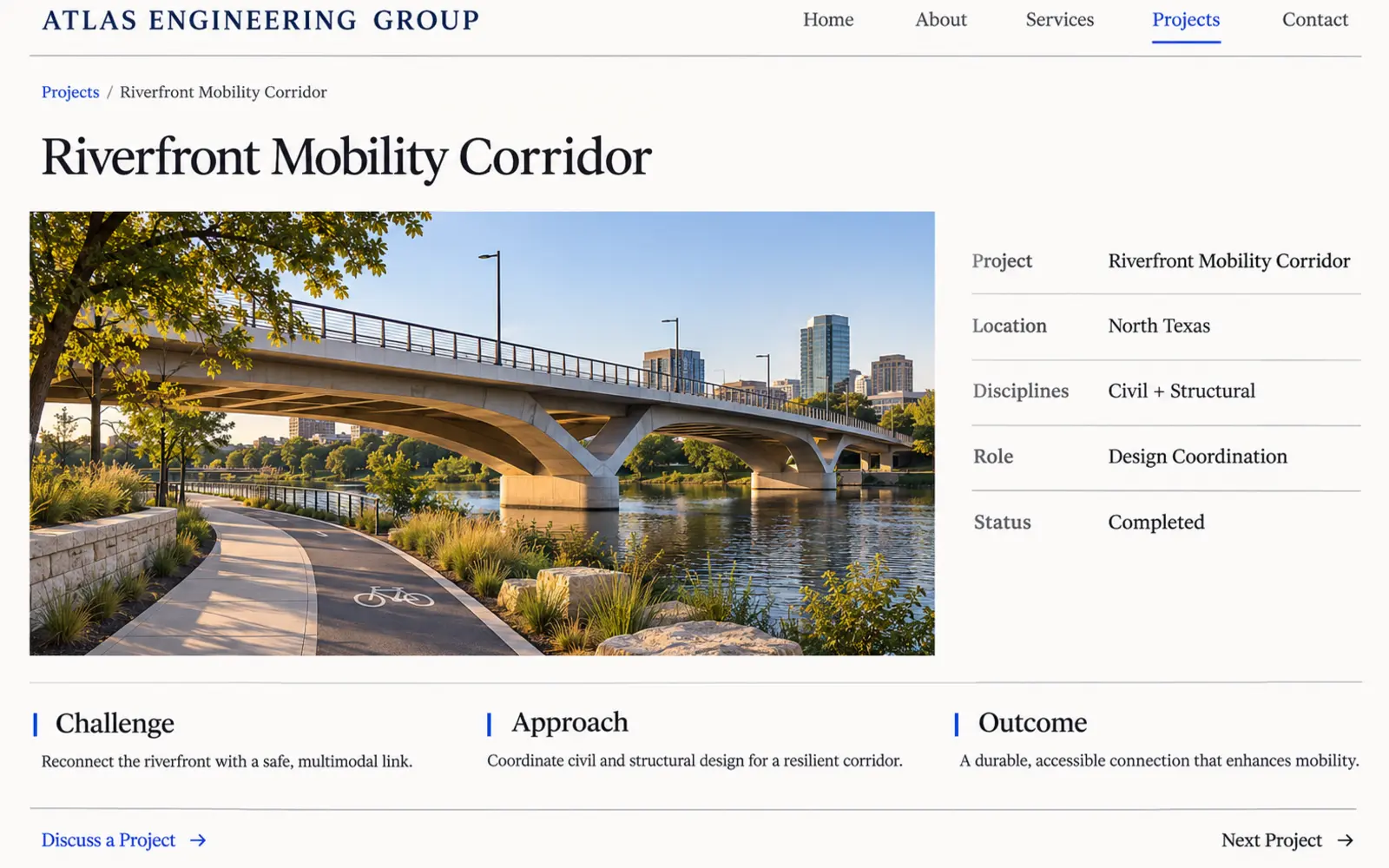
A gallery proves that a firm has been involved in projects, but a structured case study demonstrates how it contributed. This concept gives a representative project one large image or drawing, a concise project summary, and a technical facts panel covering location, market, client type, disciplines, role, delivery context, and completion status.
The body can explain the project objective, site or system constraints, engineering approach, interdisciplinary coordination, approvals, construction support, and completed result. Use measurable information only when it can be verified and attributed to the firm's actual scope. Clearly distinguish firm-wide experience from an individual's prior experience.
Allow visitors to filter projects by discipline, market, location, project type, or service. Consistent case-study fields make a large portfolio easier for procurement teams, teaming partners, recruits, and prospective clients to scan.
5. Build a qualifications and procurement center
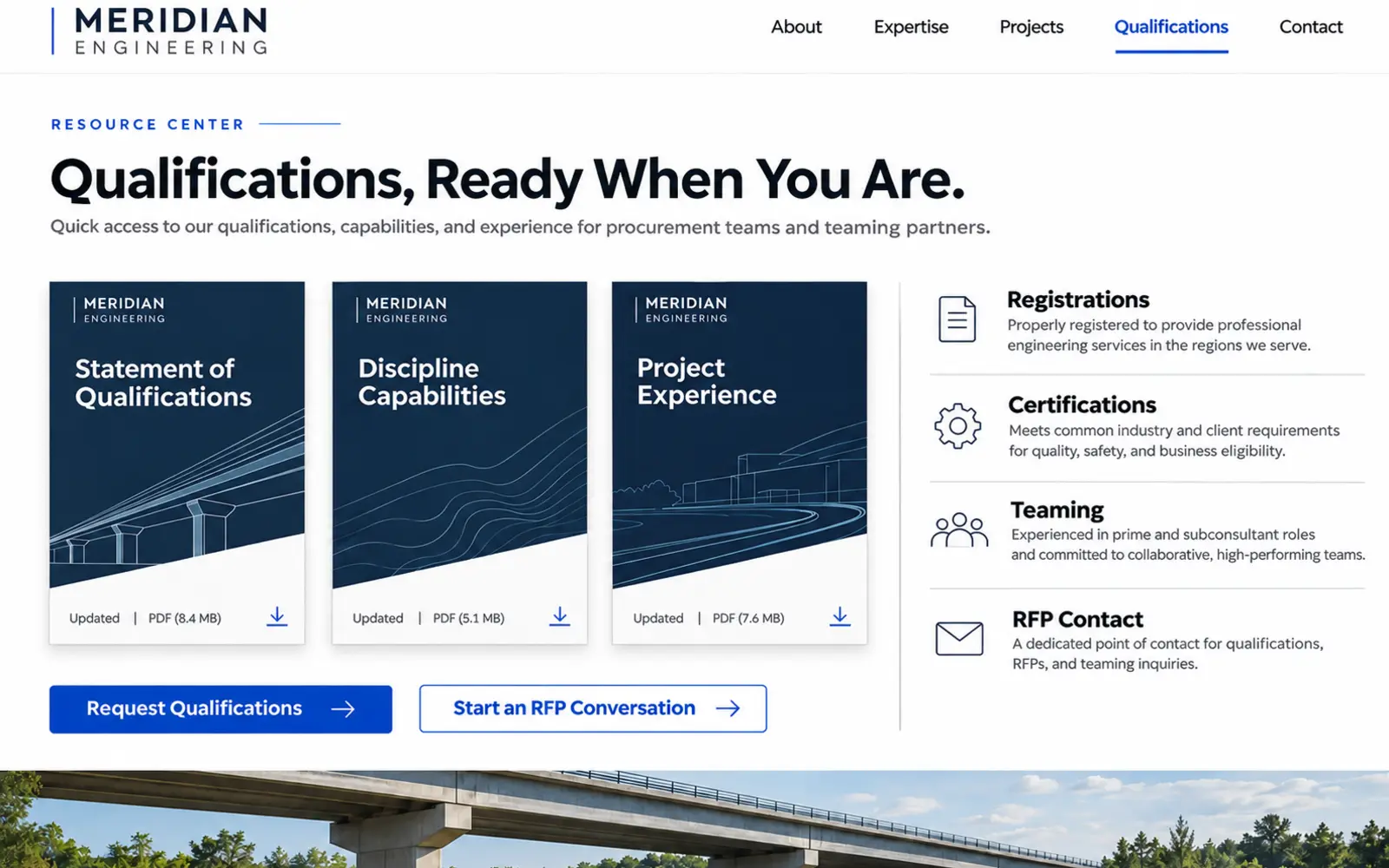
Professional buyers often arrive with a procurement task rather than a general marketing question. This concept creates a dedicated qualifications center with the firm's current statement of qualifications, discipline summaries, geographic registrations, ownership or supplier-diversity certifications, safety or quality information, and a direct business-development contact.
Separate public information from documents that require a request. Add clear revision dates so visitors know whether a PDF is current. If the firm uses different qualification packages by market or office, provide a simple selector rather than one oversized download.
A short teaming form can collect agency or client, solicitation number, project name, discipline needed, due date, required certifications, and contact details. Avoid publishing license numbers, classifications, prequalifications, or certifications that are expired, incomplete, or not applicable to the entity being represented.
6. Explain project delivery and QA/QC as a visible system
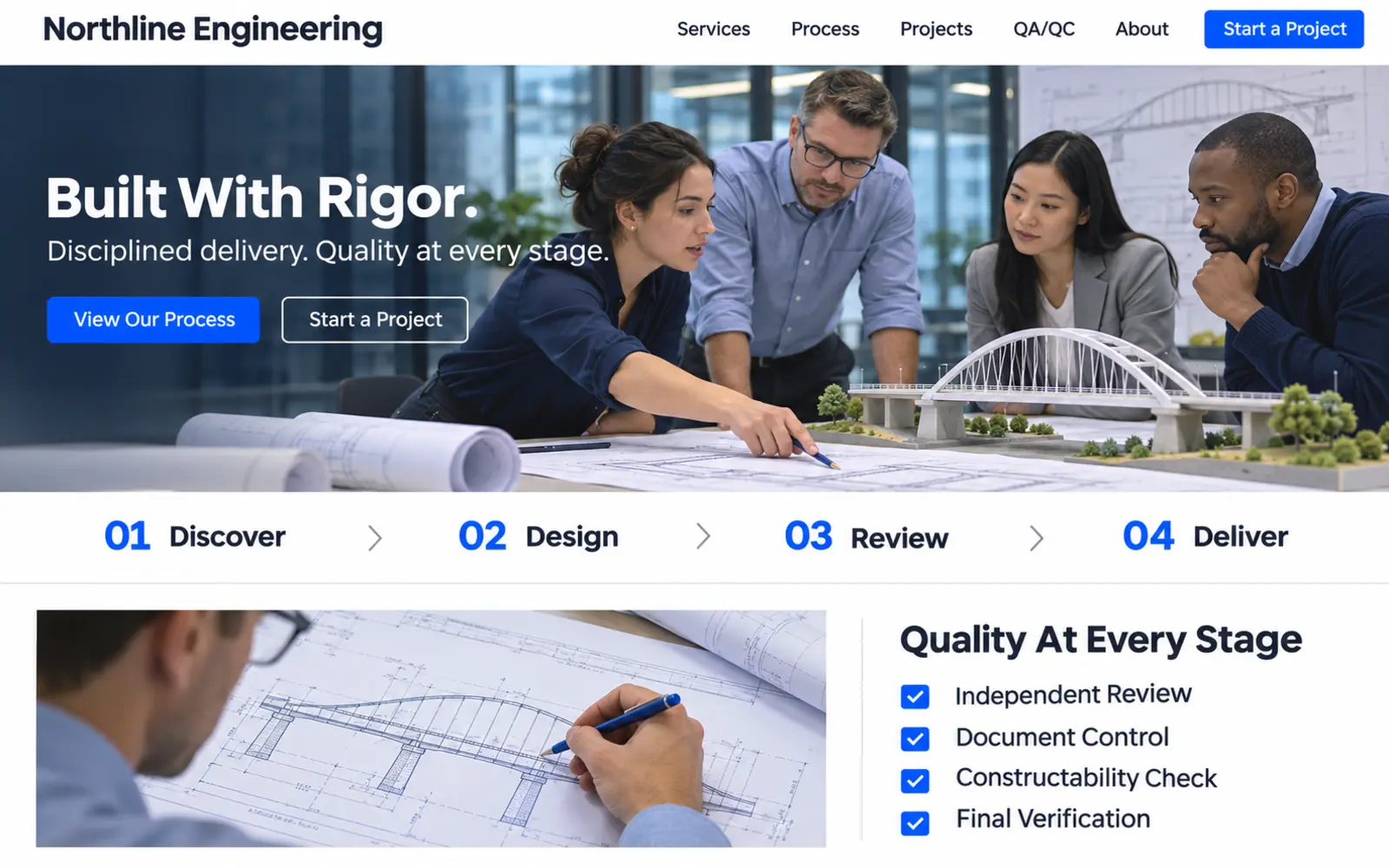
Clients want confidence in the process behind the final documents. This concept presents a concise delivery system: Understand, Analyze, Design, Coordinate, Review, and Support. Each stage uses one sentence and a restrained technical graphic so the section remains easy to scan.
Explain how the firm establishes scope, manages assumptions, coordinates disciplines, documents decisions, reviews deliverables, addresses comments, and supports later phases. The website should describe a real operating process rather than a generic sequence created only for marketing.
QA/QC language should remain accurate and proportional. Identify independent review, standards, checklists, constructability input, document control, or other practices only when the firm consistently performs them. Sensitive internal procedures can be summarized without publishing proprietary details.
7. Connect geographic reach to an interactive project map
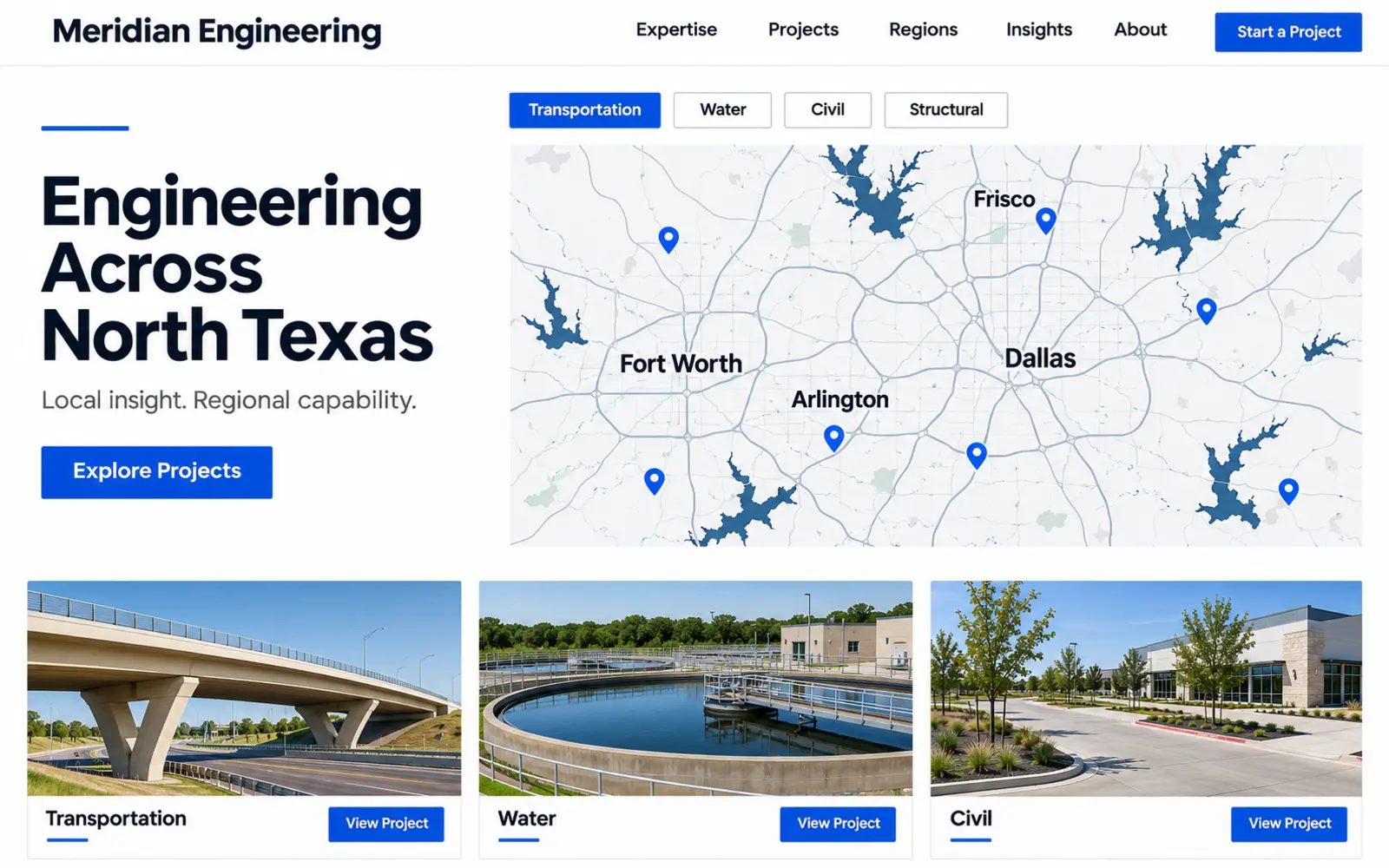
A list of offices and states does not show how geographic reach translates into relevant experience. This concept uses a clean regional map with filters for discipline, market, office, and project type. Selecting a location reveals representative work, the firm's role, and a direct link to the case study.
The map can distinguish licensed practice areas, office locations, completed projects, and project-based travel. That distinction matters because an office, project, or registration does not automatically mean every service is available in every jurisdiction.
For Dallas–Fort Worth firms, market pages can connect local infrastructure, development, municipal, transportation, and commercial work to the specific teams serving the region. Avoid creating thin location pages that repeat the same corporate copy with a different city name.
8. Present sustainability and resilience with measurable context
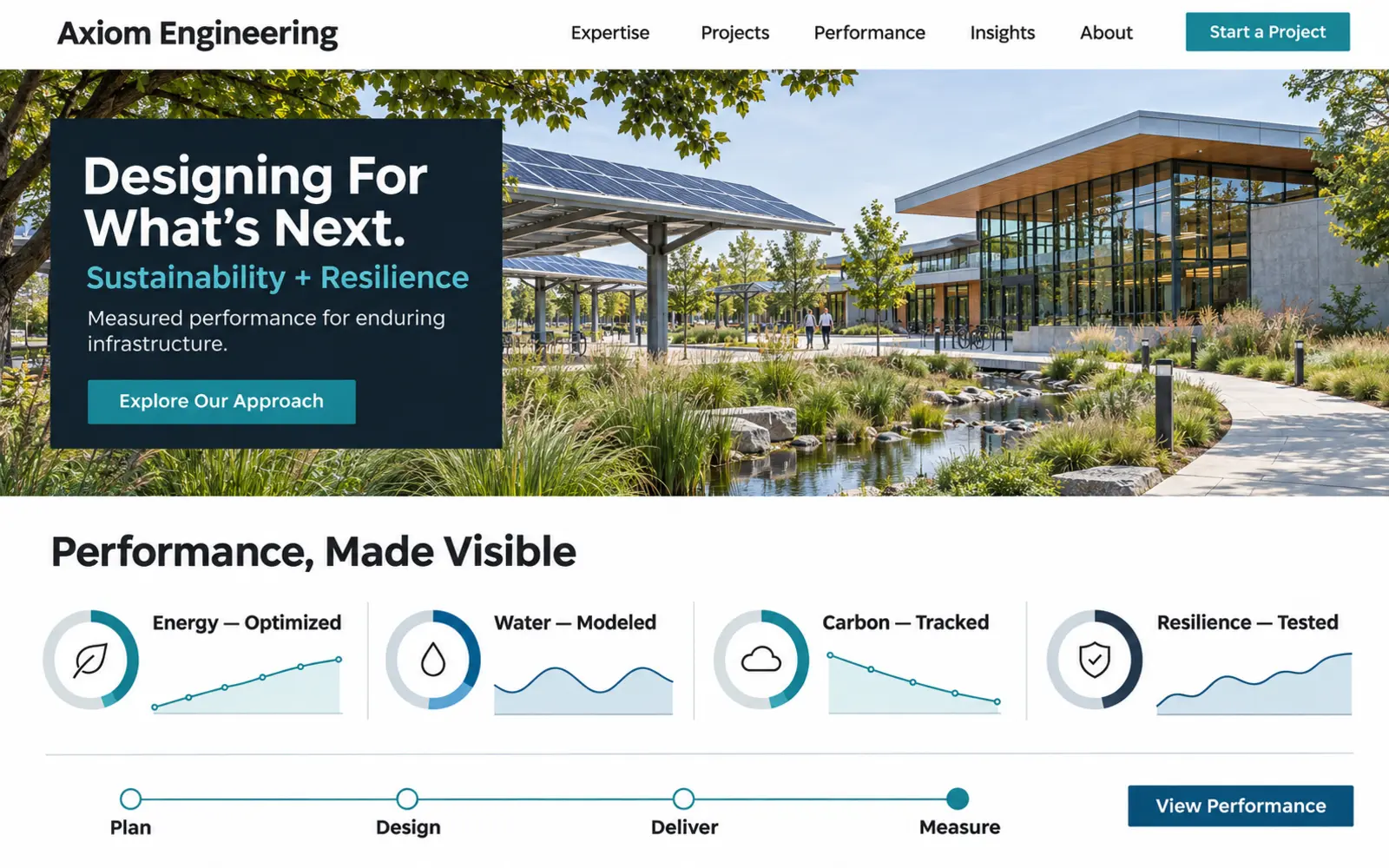
Sustainability pages often rely on broad promises. This concept uses a restrained performance dashboard to connect relevant strategies to actual project work: water management, energy analysis, material efficiency, resilience, lifecycle thinking, heat mitigation, or other services the firm provides.
Each metric should state the project, baseline, method, and responsible scope. If a result belongs to the full design or construction team, the case study should not imply that the engineering firm produced it alone. Certifications and frameworks should be used according to their actual requirements.
Pair high-level data with concise project stories, diagrams, and expert insights. The objective is not to overwhelm visitors with charts; it is to show how the firm's engineering decisions support performance, compliance, durability, and long-term value.
9. Present technical leadership and recruiting in one credible experience
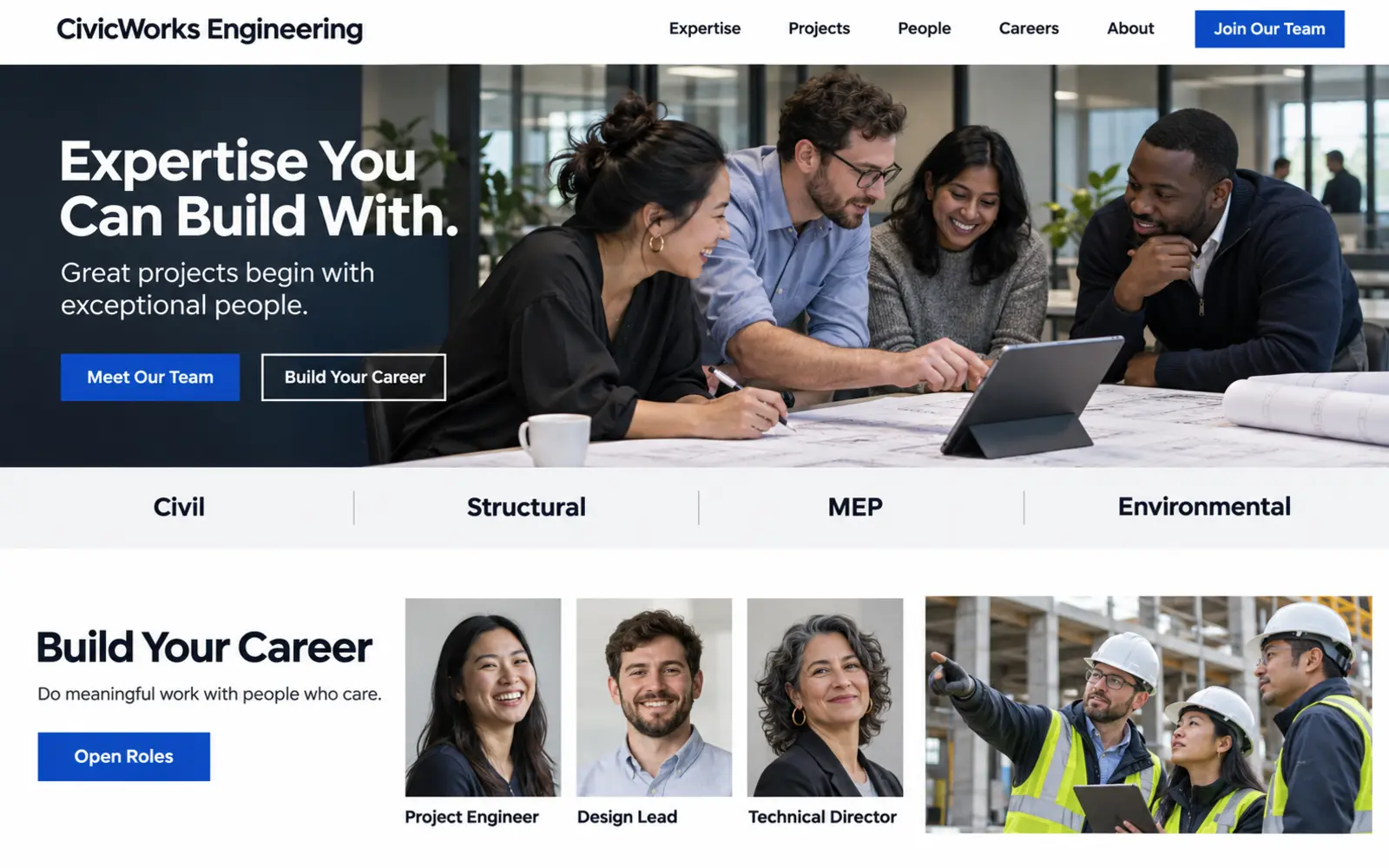
Clients hire expertise, and candidates evaluate the people and systems behind it. This concept gives technical leaders concise profiles connected to disciplines, markets, representative projects, registrations, and published insights. A parallel careers path presents open roles, office locations, mentorship, development, and the work environment.
Use authentic team photography and current roles. Explain how early-career professionals learn, how technical leadership supports projects, and what the recruiting process involves. Employee stories should be specific and voluntary rather than generic statements about culture.
Keep professional credentials current and avoid implying that one person's license covers the entire firm or every jurisdiction. Accessible job listings, clear application steps, and realistic position descriptions make the experience more useful to qualified candidates.
10. Support bilingual public and community engagement when the work requires it
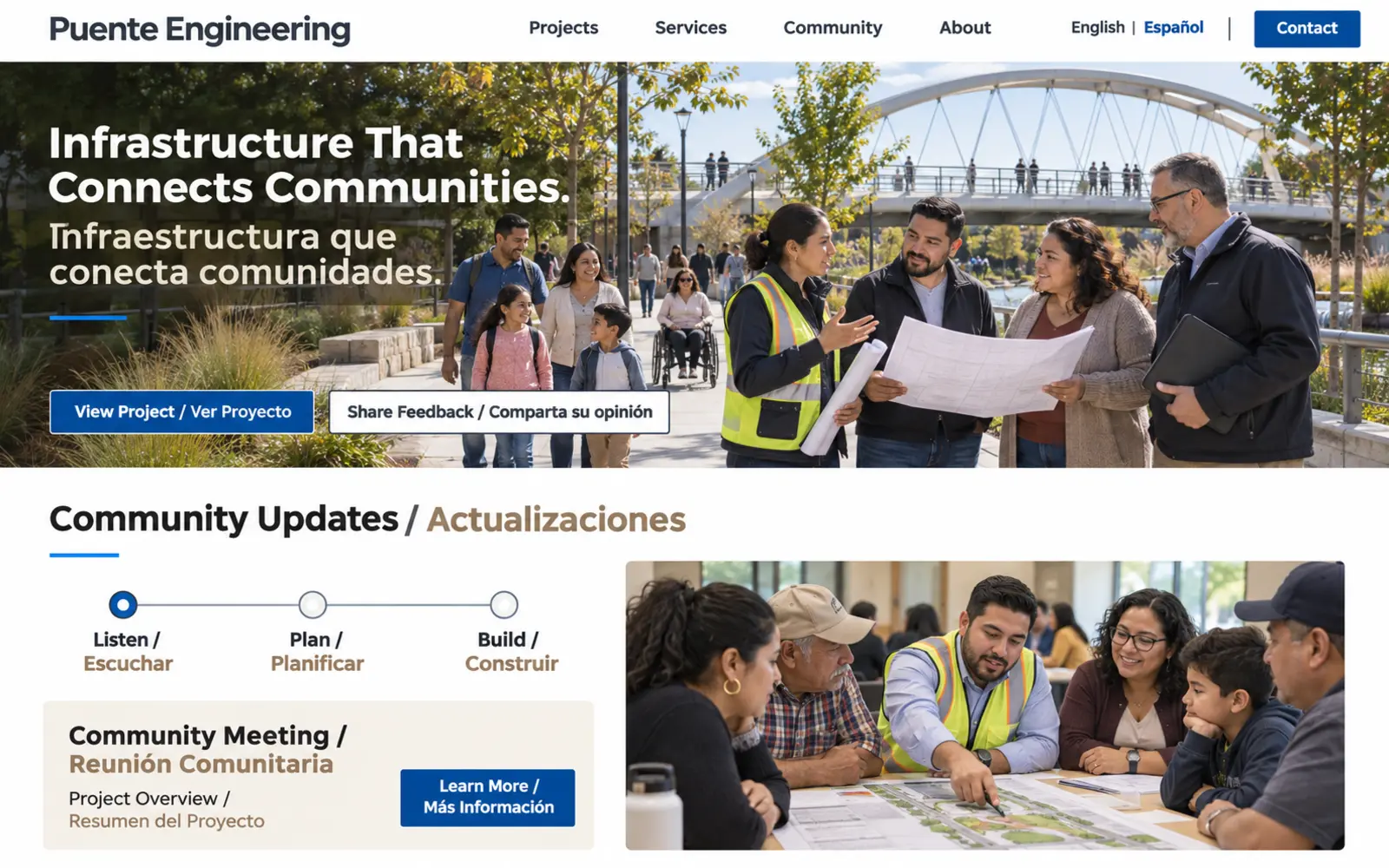
Infrastructure and public-facing projects may require communication with residents, businesses, property owners, agencies, and community partners. This concept provides complete English and Spanish access to project summaries, maps, timelines, meeting information, notices, FAQs, feedback forms, and updates.
Professional translation should account for regional language and technical terminology while remaining understandable to non-engineers. Interactive maps, documents, accessibility labels, confirmation messages, and future updates should remain consistent with the selected language.
The project team must be prepared to receive, route, and respond to feedback appropriately. Bilingual design should support the actual engagement plan rather than function as a decorative toggle disconnected from the project's operations.
Engineering firm website design checklist
- The opening screen states the firm's actual disciplines, markets, geography, and primary next step.
- Each important discipline has a focused page with services, project types, proof, and relevant contacts.
- Market pages connect client priorities to appropriate disciplines and representative projects.
- Case studies identify the firm's role, scope, constraints, coordination, and outcomes accurately.
- Qualifications, registrations, certifications, and downloadable documents are current and dated.
- RFP, teaming, and project inquiries reach the correct business-development or technical contact.
- The project delivery and quality process reflects real practice.
- Geographic claims distinguish offices, projects, registrations, and available services.
- Performance and sustainability claims include useful context and avoid overstating the firm's contribution.
- Team profiles and career listings are current, accessible, and connected to the work.
- The site is fast, secure, accessible, and easy to use on mobile devices.
- English and Spanish project journeys are complete when multilingual communication is offered.
If ongoing website management is a barrier, explore our managed website plans. They combine a professional website framework with hosting, routine maintenance, content assistance, and technical support in one monthly plan.
Frequently asked questions about engineering firm website design
What should an engineering firm website include?
An engineering website should clearly present disciplines, markets, representative projects, team expertise, geographic reach, qualifications, registrations, process, careers, and contact pathways. Depending on the firm, it may also need an RFP center, public-engagement resources, publications, client portals, office pages, and multilingual content.
How should engineering projects be presented online?
Use consistent case studies that identify the project, location, market, client type, firm role, disciplines, constraints, coordination, and completed result. Include only information the firm is permitted to publish, and distinguish the firm's contribution from the work of the larger project team.
Should an engineering website provide downloadable qualifications?
Yes, when the documents are current and appropriate for public distribution. Date each file, organize packages by discipline or market, and provide a clear request path for information that should not be openly published. Assign someone to replace outdated documents promptly.
How can an engineering website support business development?
Help prospective clients and partners confirm relevance quickly, review comparable work, understand the firm's qualifications, identify technical leaders, and submit a properly routed opportunity. Track project inquiries, qualification downloads, teaming requests, and the content that influences serious conversations.
How many pages does an engineering firm website need?
There is no universal number. A specialist may need focused service, market, project, company, team, careers, insights, and contact pages. A multidisciplinary or multi-office firm may require deeper discipline, sector, location, qualification, leadership, and resource structures.
How often should an engineering website be updated?
Update projects, qualifications, registrations, certifications, leaders, offices, careers, and technical insights as information changes. Review downloads, links, forms, analytics, accessibility, security, mobile usability, and performance routinely.
Build an engineering website that makes expertise easier to evaluate
The strongest engineering website is not the one with the most technical language. It is the one that helps the right client understand the firm's relevance, review credible experience, verify qualifications, and move a serious opportunity to the correct team.
Hispanos Marketing designs conversion-focused websites for engineering firms, professional service companies, contractors, and growth-minded businesses across Dallas–Fort Worth and nationwide. Explore our construction company website examples, concrete contractor website examples, remodeling company website examples, and land surveying website examples, or review our website design service.
Book a call with Hispanos Marketing to plan a professional engineering firm website built around your expertise, markets, and business-development goals.