A strong deck and patio company website should help homeowners answer four questions quickly: can this company create the kind of outdoor space I want, does it work in my area, can I trust its design and construction process, and what is the next step? The best deck builder and patio contractor website design examples combine inspiring project photography with clear service paths, material guidance, practical planning tools, and an easy way to request a consultation.
The ten examples below show how deck and patio companies can organize a website around the way customers actually plan outdoor-living projects. Each concept highlights a different conversion opportunity—from transformation-focused heroes and material comparisons to guided project planners, case studies, service-area maps, and bilingual customer journeys.
Deck and patio website design examples: quick overview
- Results-first positioning: Lead with a finished outdoor space that reflects the projects the company wants to build.
- Clear project categories: Separate decks, patios, pergolas, covered spaces, resurfacing, and complete outdoor-living projects.
- Material education: Help customers compare composite, wood, pavers, concrete, porcelain, railings, and shade options.
- Guided project planning: Collect project type, approximate size, priorities, timing, and photos without promising an instant final quote.
- Detailed case studies: Pair project photography with location, scope, materials, constraints, and the completed result.
- Process transparency: Explain consultation, design, site preparation, permitting context, construction, and walkthrough.
- Design visualization: Show how renderings, samples, and layout decisions help customers understand the proposed space.
- Outdoor-living strategy: Organize the project around dining, cooking, lounging, shade, lighting, and circulation.
- Local relevance: Connect services and projects to the Dallas–Fort Worth communities the company actually serves.
- Bilingual experience: Offer complete English and Spanish paths from research through consultation and follow-up.
What a high-performing deck and patio website needs
Outdoor-living customers are making a visual, financial, and practical decision. They may be comparing a composite deck with a paver patio, deciding whether to add a pergola, or trying to understand how a multilevel yard can become more usable. A high-performing website combines inspiration with enough structure to help the right customer move forward.
| Website element | What it should accomplish |
|---|---|
| Clear service architecture | Separate decks, patios, shade structures, resurfacing, repairs, and complete outdoor-living projects using customer-friendly language. |
| Authentic project proof | Show completed spaces with project type, city, materials, design goals, site conditions, and useful construction context. |
| Material and design guidance | Explain meaningful differences without declaring one option universally best for every property, budget, or preference. |
| Qualified consultation intake | Collect the information needed to route and prepare for an inquiry while keeping the mobile experience simple. |
| Process and expectations | Explain design decisions, site preparation, schedule factors, communication, and what happens after the first call. |
| Local search relevance | Connect real services and project examples with the DFW cities and property types the company serves. |
Beautiful imagery can earn attention, but a focused website design strategy is what connects inspiration, service clarity, project proof, local visibility, consultation intake, and follow-up into one conversion-focused system.
1. Lead with the outdoor transformation
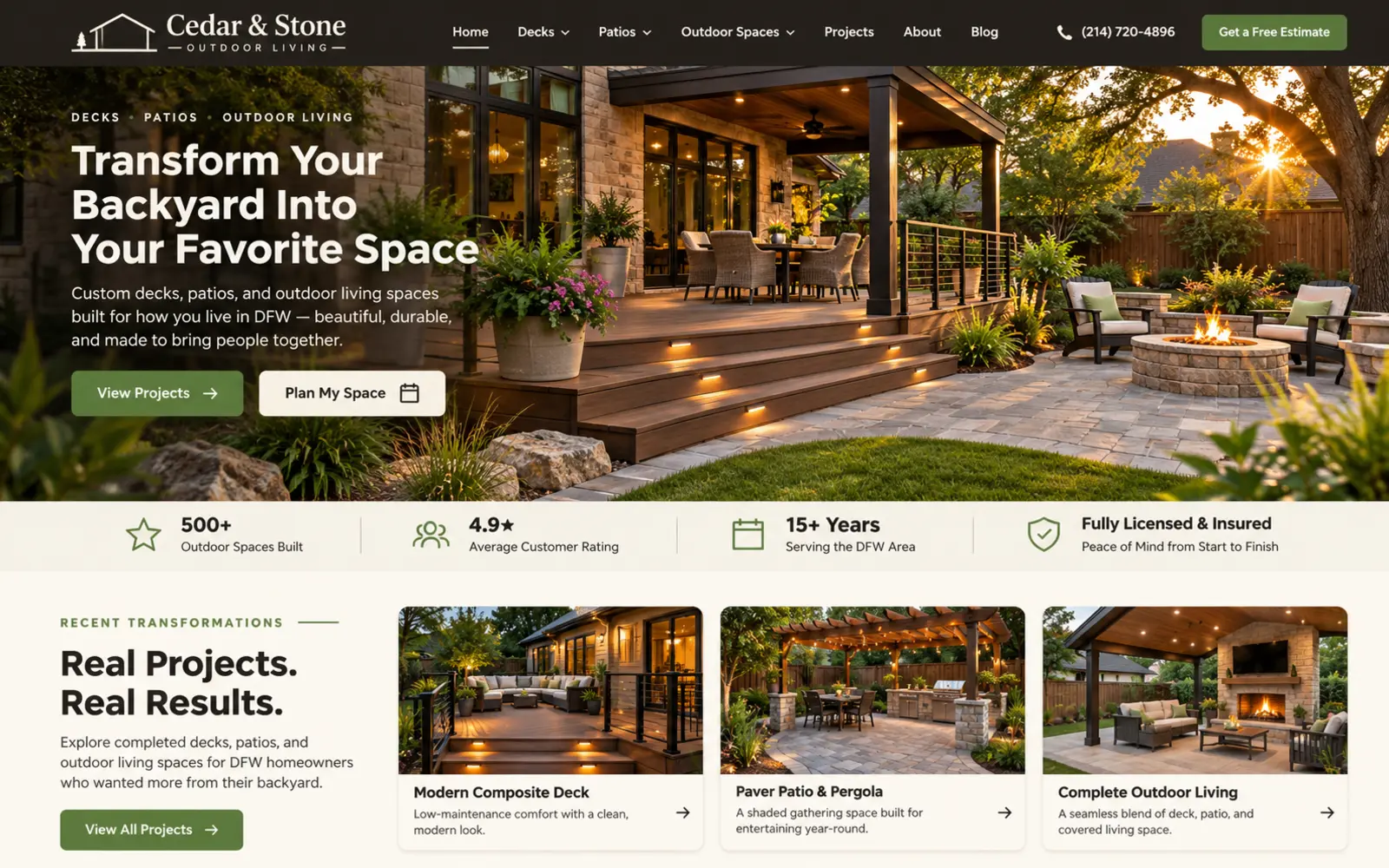
A deck and patio contractor's opening screen should make the finished result tangible before asking the visitor to study construction details. This concept leads with a wide, carefully photographed space where the deck, patio, lighting, planting, and gathering areas feel connected. A direct message identifies the project type and service area, while actions such as “View Projects” and “Plan My Space” give visitors two useful paths.
The photography should represent the type and scale of work the company wants to win. A contractor focused on composite decks should not lead with an unrelated luxury pool. A company that creates complete outdoor-living spaces can show how several elements work together. Place real ratings, project volume, years of relevant experience, and applicable insurance or credentials near the first action only when those claims are current and verifiable. Compress large photographs and video carefully so the visual impact does not compromise mobile speed.
2. Build a service selector around the project customers have in mind
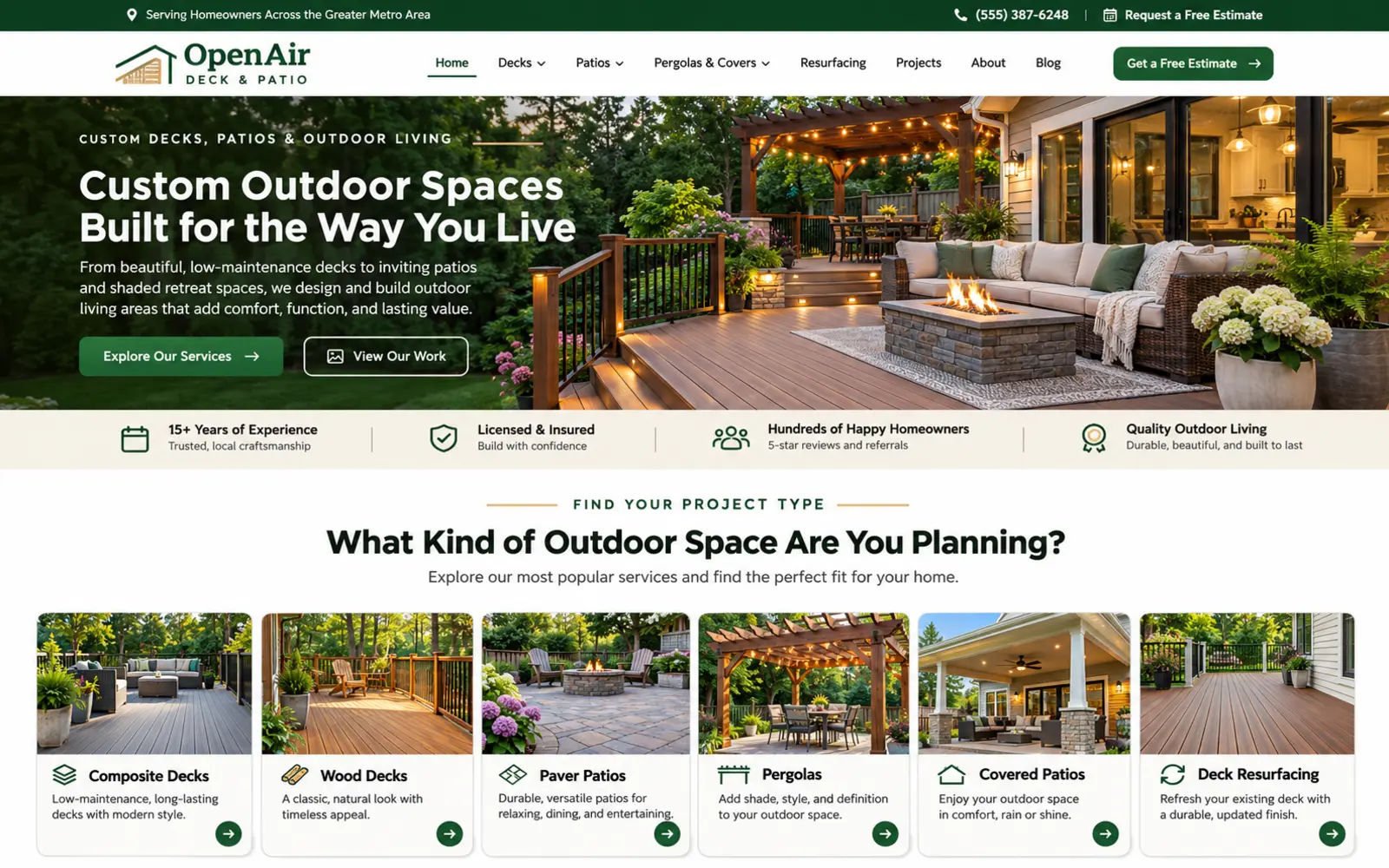
Customers often begin with a result—more room to gather, shade near the house, a lower-maintenance deck, or a durable patio—rather than a technical construction term. This concept gives each major project type a clear visual path: composite decks, wood decks, paver patios, pergolas and shade structures, covered patios, resurfacing, and complete outdoor-living projects.
Each service should lead to a focused page with relevant photography, applications, materials, process information, common questions, and a consultation action. Keep repair and resurfacing separate from new construction when the evaluation process differs. Clear service architecture helps visitors find relevant information quickly and gives search engines a more precise understanding of what the company offers.
3. Help homeowners compare outdoor materials with confidence
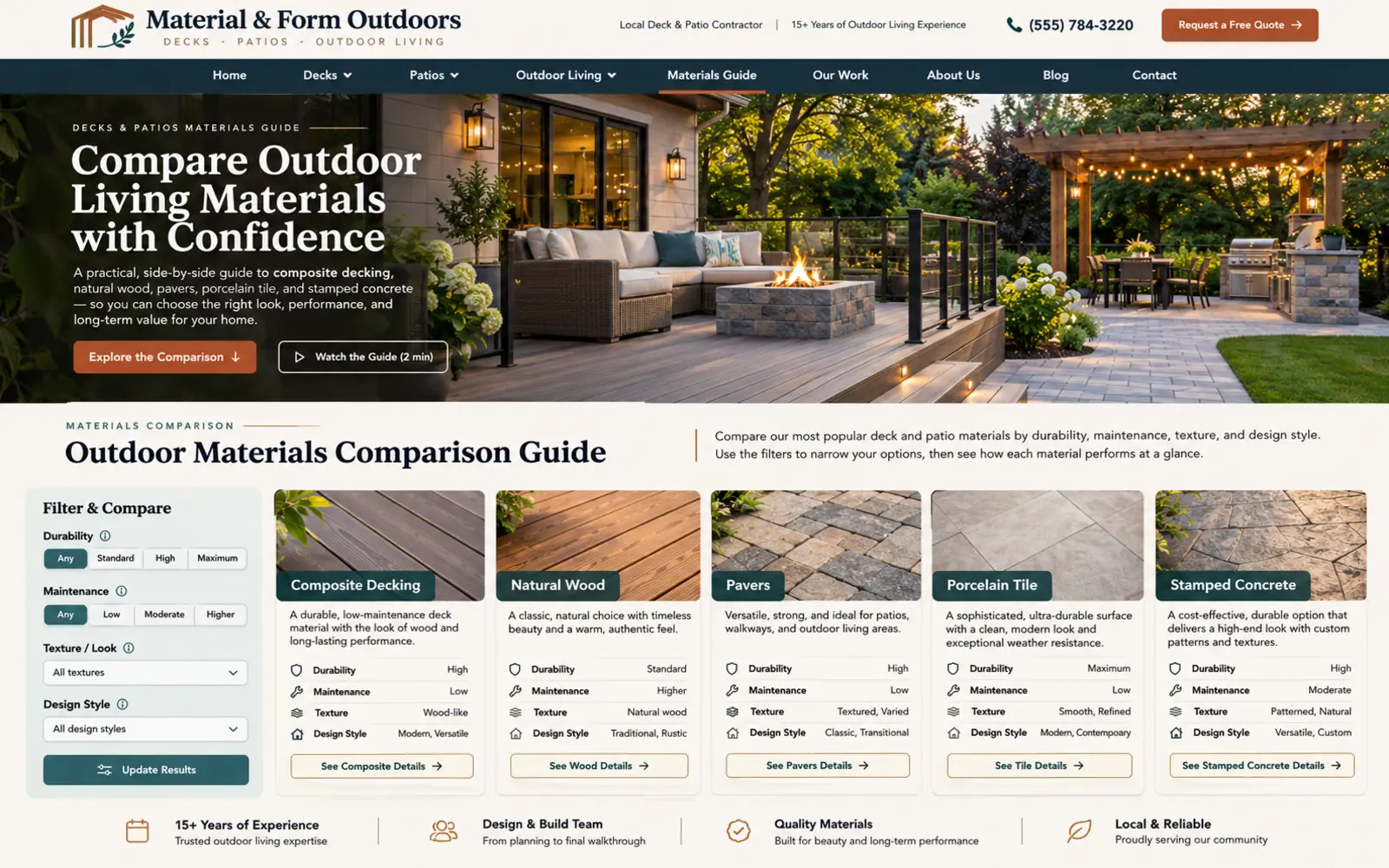
Material choice affects appearance, maintenance, surface temperature, durability, installation requirements, and long-term ownership. This concept turns the website into a useful comparison guide for composite decking, natural wood, pavers, porcelain tile, stamped concrete, railings, and related finish options. Filters help visitors compare by design style, maintenance preference, and intended use.
Use plain language and explain tradeoffs honestly. Avoid calling one material “maintenance-free” or universally superior. Performance varies by product, installation, exposure, use, drainage, care, and site conditions. Show representative samples, close details, and completed projects, then invite the customer to review physical samples and project-specific recommendations during a consultation.
4. Turn the estimate form into a guided project planner
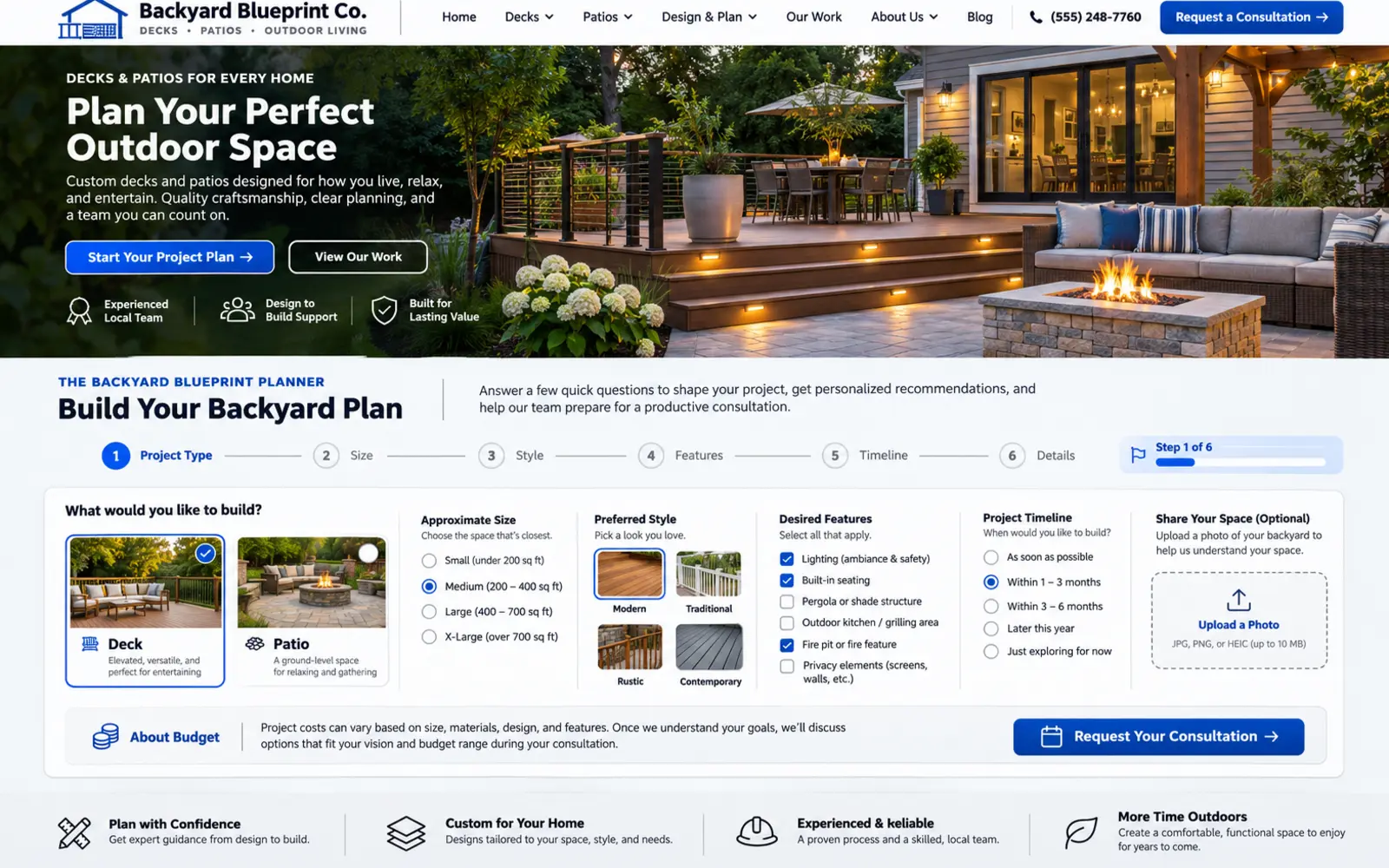
A generic contact form creates extra back-and-forth, while a long technical questionnaire can discourage a homeowner who is still exploring options. This concept finds the middle ground. The planner asks whether the customer is considering a deck, patio, shade structure, resurfacing, or combined project; then collects approximate size, preferred style, desired features, location, timeline, and optional photographs.
Conditional questions keep the experience relevant. A deck inquiry may ask about height, stairs, railing, and current structure. A patio inquiry may ask about the existing surface, drainage concerns, and desired use. Explain that the information helps prepare for a conversation and that site conditions, design, engineering, product selections, and required approvals may affect final scope and pricing. The tool should qualify the opportunity without pretending to replace a professional review.
5. Turn the project gallery into detailed case studies
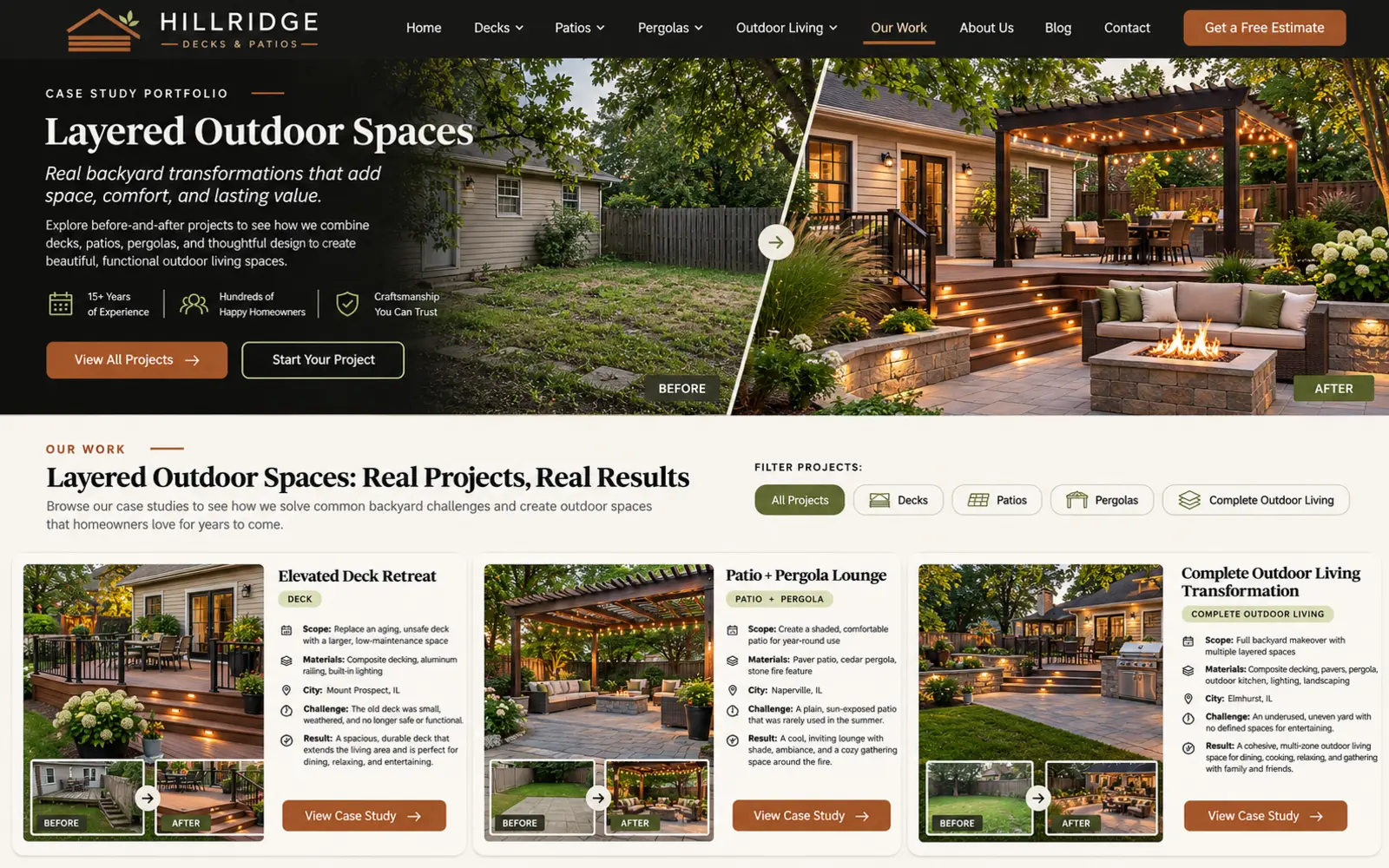
A gallery of beautiful backyards inspires visitors, but unlabeled photographs do not establish whether the company has solved a similar design or site challenge. This concept presents each project as a case study with the city or market, project type, approximate scope, materials, homeowner goals, site constraints, design decisions, and completed result.
Use before-and-after comparisons when they accurately show the transformation. Include wide views that explain the layout and close details that show stairs, railings, board or paver patterns, transitions, drainage solutions, lighting, and finish quality. Filters for decks, patios, pergolas, resurfacing, and complete outdoor spaces make the portfolio more useful. Authentic, well-organized proof is more persuasive than a wall of unrelated stock images.
6. Explain the design and construction process
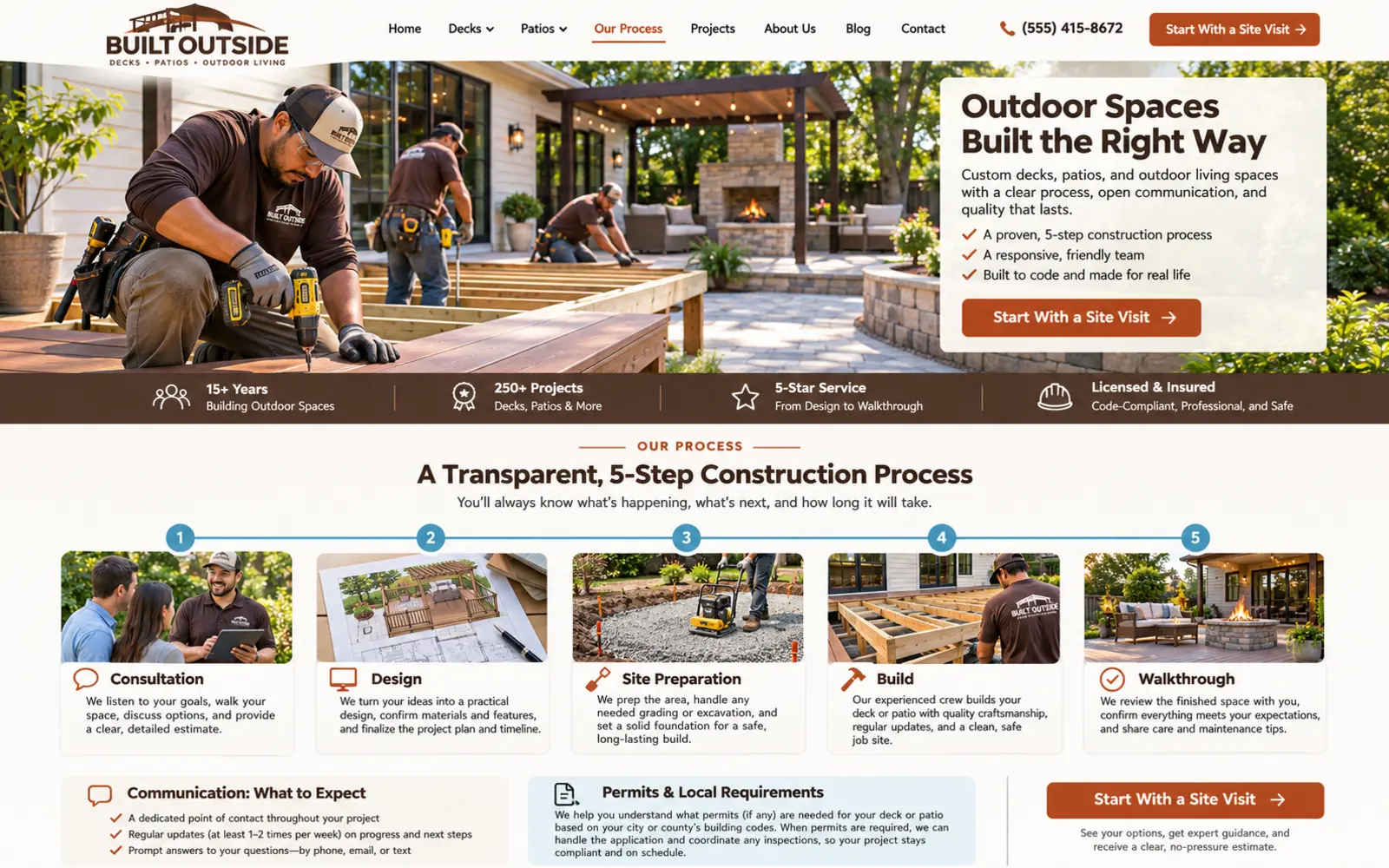
Outdoor projects can involve measurement, design, product selection, site preparation, utilities, drainage, structural conditions, permitting, inspections, construction, cleanup, and a final walkthrough. This concept organizes the experience into a clear sequence: consultation, design and scope, preparation and approvals, construction, and project closeout.
Each step should explain what the company typically handles, what information or decisions the homeowner provides, how updates are communicated, and which factors can affect the schedule. Avoid universal completion promises that ignore weather, inspections, material availability, changes, or field conditions. A transparent process helps customers understand the value behind the work and reduces uncertainty before the first appointment.
7. Show how design visualization improves the planning experience
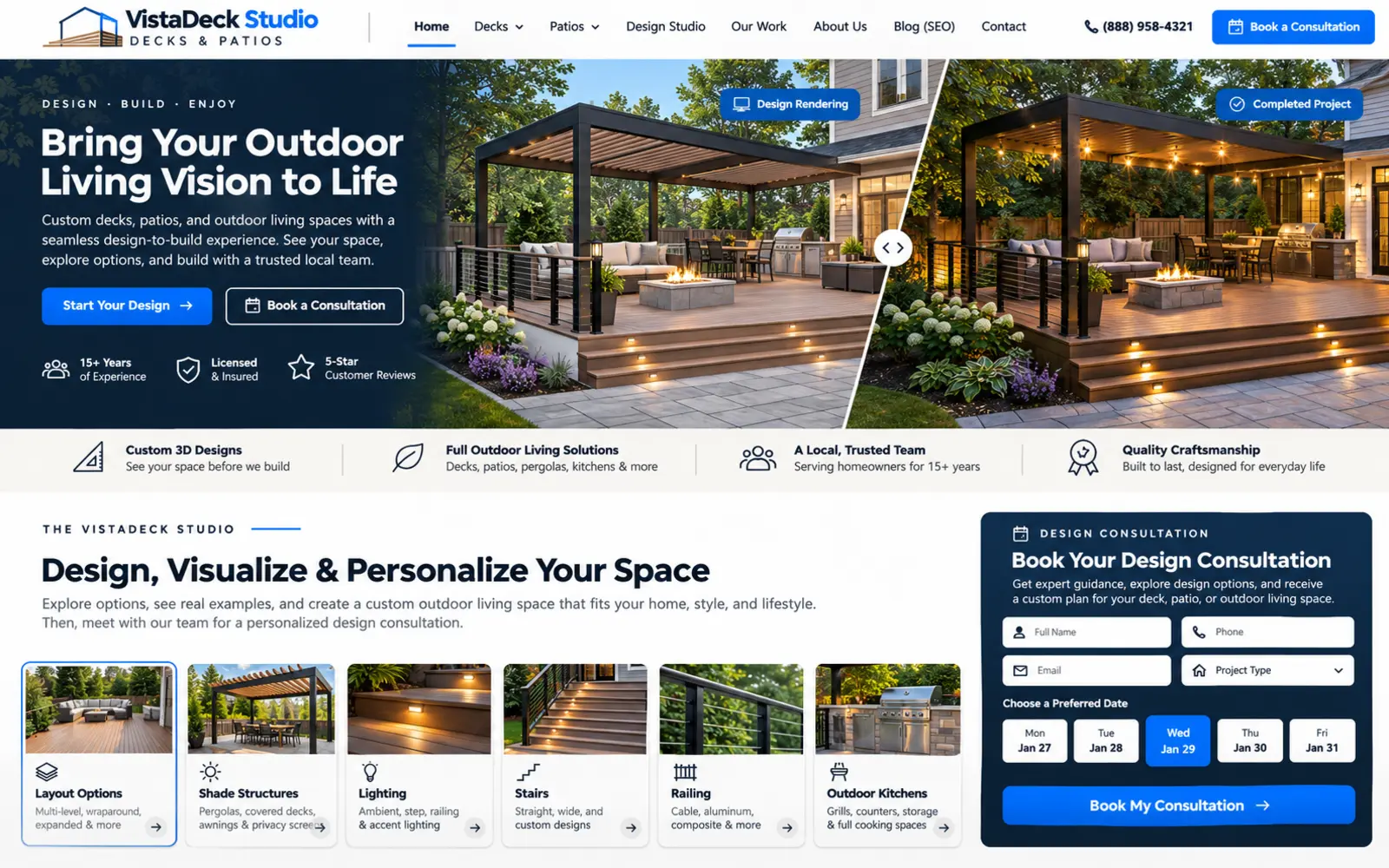
Many homeowners struggle to imagine scale, circulation, and how several features will fit together. This concept explains how sketches, layouts, product samples, and project renderings can support design conversations. Visitors can explore options for stairs, railings, shade structures, lighting, seating, outdoor kitchens, privacy, and the transition between the house, deck, patio, and yard.
Keep the experience accurate. Concept images and renderings should be identified as design tools, not guaranteed finished outcomes. Explain when visualization is included, whether it is part of a paid design phase, how many revisions are typical, and when engineering or field verification may be required. A clear consultation module lets the customer share priorities before a designer begins developing recommendations.
8. Organize complete outdoor living around how the space will be used

A deck or patio is rarely an isolated surface. Customers may want a place to cook, dine, lounge, gather around a fire feature, stay shaded, and move comfortably between the house and yard. This concept organizes the website around those real-life uses and shows how a coordinated plan can connect surfaces, shade, lighting, furniture zones, landscaping, and other improvements.
Package-style examples can help visitors understand possibilities, but they should not imply that every property receives the same design or fixed price. Show how the company adapts the plan to the household, existing architecture, grade, drainage, access, priorities, and available space. Lifestyle photography works best when paired with practical project information and a clear path to a design consultation.
9. Build local service pages around nearby projects
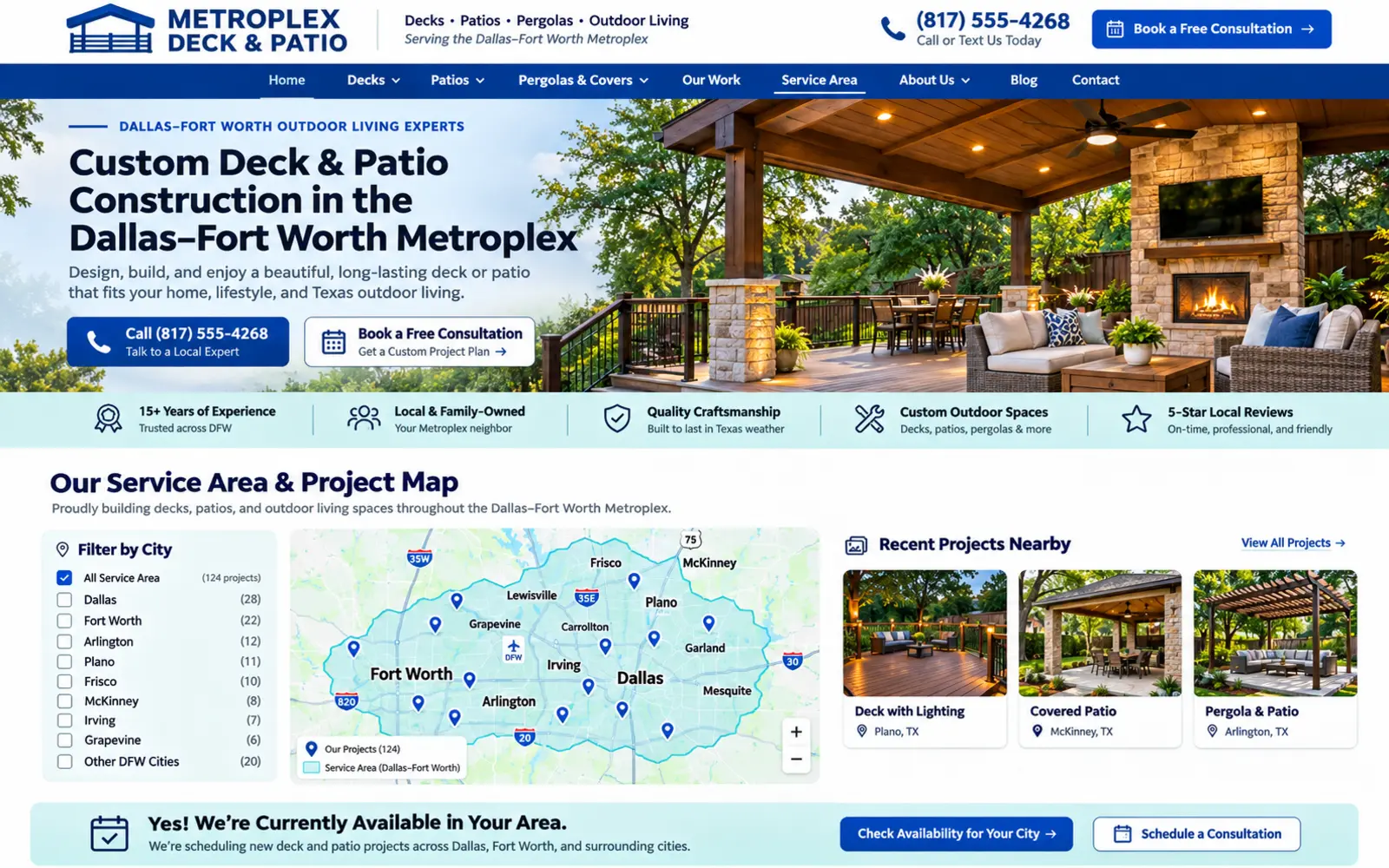
A useful service-area page should do more than insert a different city name into duplicate copy. This concept combines a Dallas–Fort Worth service map with nearby deck and patio projects, the services offered in each market, project considerations, and a simple way to confirm whether a property is within the company's current coverage.
City pages can answer local questions about common property types, access, outdoor-living goals, and the company's process without making unsupported code, permitting, soil, engineering, or neighborhood claims. Connect each location to authentic projects and keep coverage accurate. Prominent mobile actions for calling or requesting a consultation help visitors move forward after confirming service availability.
10. Create a complete bilingual outdoor-living customer journey
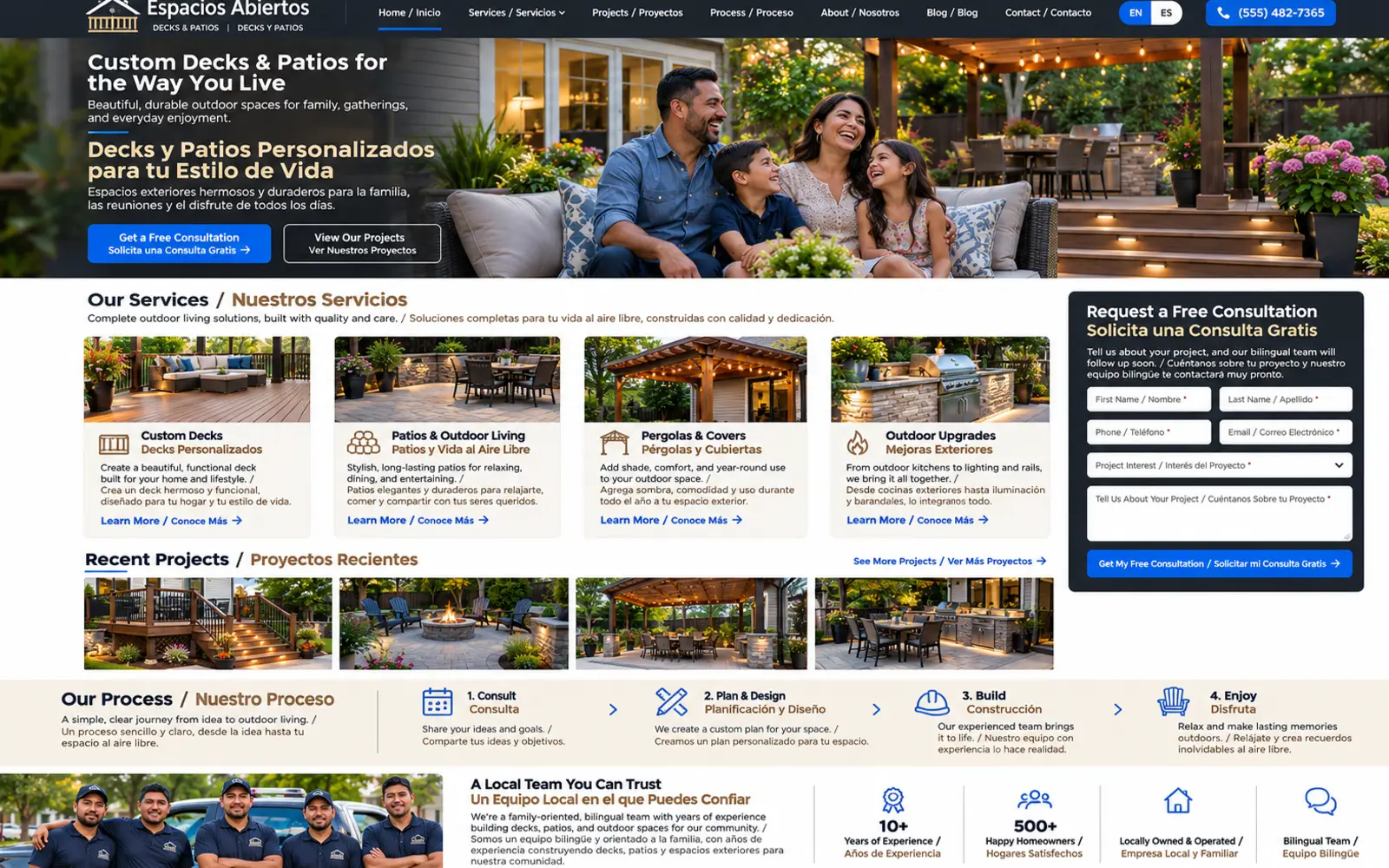
A translated headline does not create a complete bilingual experience. This concept gives English- and Spanish-speaking visitors equal access to project types, material information, case studies, the design process, consultation forms, appointment details, confirmations, and follow-up expectations.
Professional translation should account for construction, design, product, and estimating terminology while remaining clear to the homeowner. The operational experience must support the website: inquiries need to reach someone who can respond accurately in the selected language. Hispanos Marketing treats bilingual communication as part of a complete multicultural customer journey—not as a decorative language switch.
Deck and patio company website design checklist
Before launching or redesigning a deck and patio company website, confirm that it supports the way homeowners evaluate inspiration, materials, project experience, and the next step:
- Decks, patios, shade structures, resurfacing, repairs, and complete outdoor-living services have clear paths when offered.
- Every core service has a focused page with applications, options, process context, related projects, and a clear action.
- The portfolio uses authentic photography and identifies project type, scope, location, materials, or design challenge.
- Material content explains meaningful tradeoffs without making unsupported performance promises.
- The consultation form collects useful details without requiring the homeowner to diagnose technical conditions.
- The process explains design, approvals, preparation, construction, communication, and realistic schedule factors.
- Service-area pages contain useful local information and nearby proof rather than near-duplicate city copy.
- Ratings, reviews, years of experience, insurance, credentials, warranties, and product claims are current and verifiable.
- Pages load quickly despite large project galleries, maps, comparison tools, and visualization content.
- English and Spanish journeys are complete when bilingual service is offered.
- Calls, forms, consultation requests, qualified opportunities, and lead sources are measured.
- Mobile visitors can reach the most important actions without navigating a dense desktop experience.
If the upfront cost and upkeep of a traditional website are barriers, explore our managed website plans. They combine a professional website framework with hosting, routine maintenance, and technical support in one monthly plan.
Frequently asked questions about deck and patio website design
What should a deck and patio company website include?
A deck and patio website should clearly present the services offered, service area, project gallery, materials, design and construction process, company information, reviews, consultation options, and contact details. Depending on the business, it may also need resurfacing or repair information, shade structures, outdoor-living packages, design visualization, financing information, warranties, service-area pages, and bilingual content.
How can a deck builder or patio contractor website generate more qualified leads?
Help customers identify the correct service, view comparable projects, understand material and process considerations, confirm the service area, and submit useful project details. Focused service pages, local search visibility, strong case studies, well-structured consultation forms, call tracking, and responsive follow-up work together to produce better opportunities.
Should a deck and patio company show prices online?
Show pricing only when the company can keep it accurate and clearly explain what it represents. Project cost varies with size, layout, demolition, access, structural requirements, grading, drainage, materials, railing, stairs, shade, lighting, permitting, design, labor, and other site factors. Educational ranges can be useful, but they should not be presented as a final quote without the necessary project review.
What projects should appear in a deck and patio portfolio?
Feature the work the company wants to win and organize it by recognizable project type. Include composite and wood decks, patios, pergolas, resurfacing, multilevel spaces, or complete outdoor-living projects when offered. Provide useful context such as city, scope, materials, design goal, site challenge, or completed result. Authentic, well-labeled projects are more persuasive than generic imagery.
How many pages does a deck and patio company website need?
There is no universal number. A focused contractor may need core pages for services, projects, materials, process, service area, company, FAQs, and contact. A company with multiple specialties or a broad territory may need individual service pages, material guides, project case studies, city pages, design resources, financing information, warranty guidance, recruiting content, and bilingual pages. Page count should follow the services, audiences, and search opportunities.
How often should an outdoor-living website be updated?
Add completed projects, reviews, service changes, service-area updates, product information, team details, credentials, forms, and seasonal planning guidance whenever they change. Review older pages, tracking, integrations, calls to action, accessibility, mobile usability, and page speed routinely so the website reflects what the company can currently deliver.
Build a deck and patio website around the homeowner's project decision
The best deck and patio website is not simply the one with the largest photo gallery. It is the one that helps the right customer imagine a relevant result, understand the company's capabilities, compare useful options, and request a well-informed consultation with confidence.
Hispanos Marketing designs conversion-focused websites for deck builders, patio contractors, outdoor-living companies, and professional service businesses in Dallas–Fort Worth and nationwide. We connect positioning, content, user experience, local relevance, and measurement so the website supports real growth. Explore our landscaping company website design examples, home builder website design examples, concrete contractor website design examples, and construction company website design examples for additional industry breakdowns, or review our website design service.
Book a call with Hispanos Marketing to discuss the right website structure for your deck and patio company.